



Income Tax 2026: Future of Facial Recognition and Biometrics in Tax
Income Tax 2026: Future of Facial Recognition and Biometrics in Tax
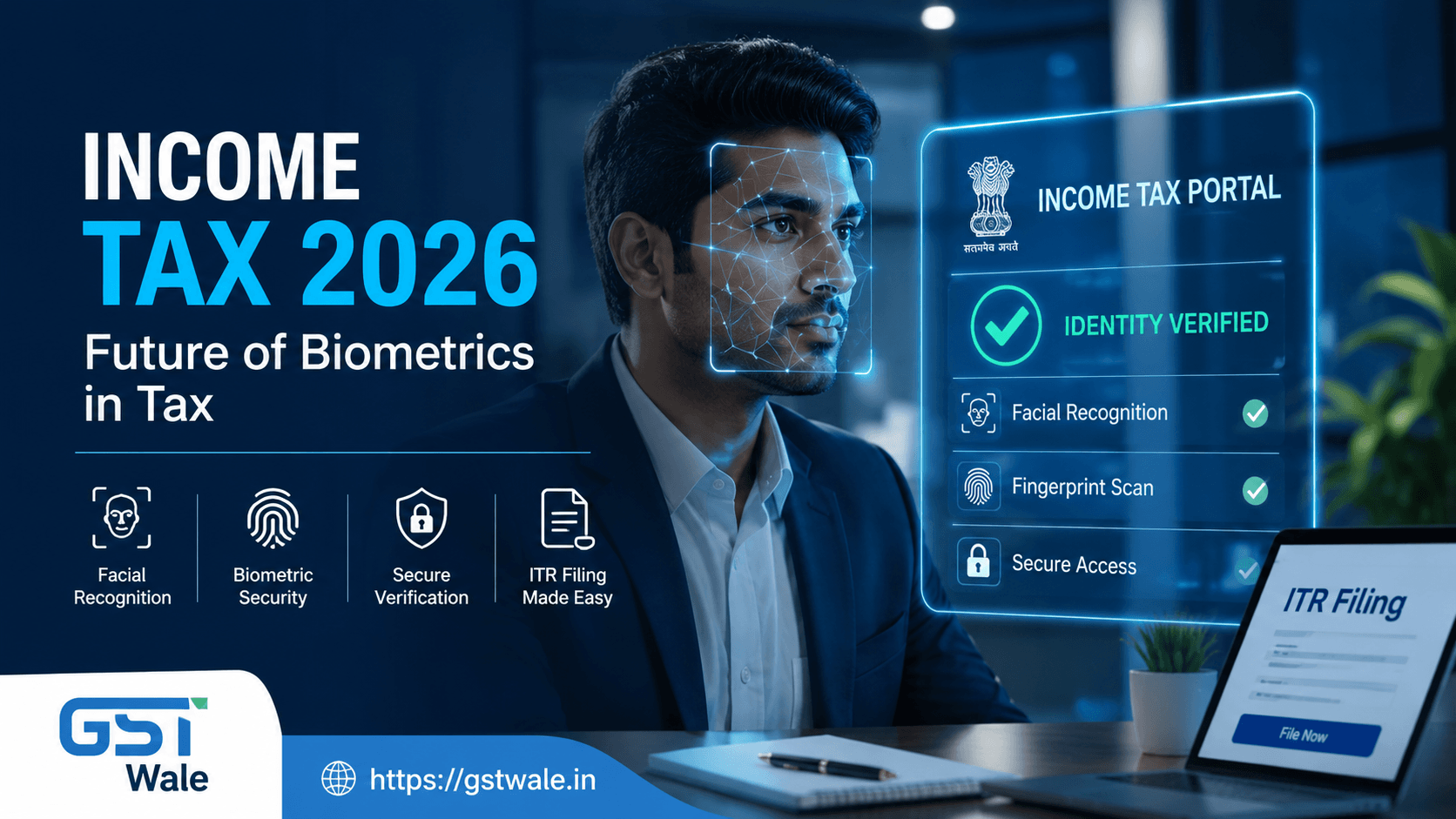
India’s taxation system is evolving rapidly, and Income Tax 2026 is expected to bring a major shift in the way taxpayers interact with the Income Tax Department. With the government focusing heavily on Digital India and e-governance, technologies like facial recognition and biometric identity verification are likely to become an important part of tax compliance and administration.
For salaried individuals, freelancers, startups, and business owners, this transformation could make tax filing faster, safer, and more transparent. At the same time, it also raises important questions around privacy, tax security, and data protection.
At GST Wale, we have already seen how faceless assessment and digital verification systems have changed the taxation landscape in recent years. Taxpayers who regularly complete their ITR Filing online are familiar with Aadhaar OTP verification and e-verification methods. Now, Income Tax 2026 may take this digital journey a step further with advanced biometric systems.
Understanding the Role of Biometrics in Income Tax 2026
Biometrics refers to the use of unique physical characteristics for identity verification. This includes:
- Facial recognition
- Fingerprint scanning
- Iris scanning
- Voice recognition
Under Income Tax 2026, these technologies may be integrated into various tax-related activities to improve authentication and reduce fraud.
Why Is the Government Moving Towards Biometrics?
India’s digital ecosystem is growing rapidly. The government’s focus on e-governance aims to reduce paperwork, improve transparency, and eliminate fake identities.
Biometric verification can help in:
- Preventing fake PAN registrations
- Reducing identity theft
- Stopping fraudulent refunds
- Enhancing tax security
- Speeding up taxpayer authentication
For example, instead of waiting for physical verification, taxpayers may simply verify their identity through facial recognition during login or return filing.
How Facial Recognition Could Work in Income Tax 2026
Facial recognition technology matches a live image of a person with official records stored in databases.
Possible Use Cases in Income Tax 2026
Login Authentication
Taxpayers may log in to the income tax portal using face authentication instead of passwords or OTPs.
High-Value Transaction Verification
For sensitive activities such as:
- Large refunds
- Updating bank accounts
- Changing registered mobile numbers
- Accessing business tax records
additional biometric verification may be required.
Secure e-Verification
Currently, taxpayers use Aadhaar OTP or bank account validation. In Income Tax 2026, facial recognition may become an additional layer of identity verification.
Prevention of Tax Fraud
Fake refund claims and shell company operations can be reduced through biometric authentication systems.
Income Tax 2026 and Faceless Assessment
India has already introduced faceless assessment to reduce corruption and increase transparency in tax administration.
How Biometrics Can Strengthen Faceless Assessment
Under the faceless assessment system:
- Taxpayers do not need to physically visit tax offices
- Notices are issued digitally
- Responses are submitted online
Adding facial recognition to Income Tax 2026 can further strengthen this process by ensuring that only authorized taxpayers access assessment proceedings.
This may help:
- Eliminate impersonation
- Protect confidential tax data
- Improve trust in digital tax administration
For businesses handling large financial transactions, this could create a more secure compliance environment.
Benefits of Biometrics in Income Tax 2026
Faster Tax Processes
Biometric verification can reduce delays caused by manual document checks.
Taxpayers may experience:
- Faster login approvals
- Quick refund processing
- Instant identity validation
Improved Tax Security
Cyber fraud and identity theft are growing concerns in the digital era.
Biometric systems are harder to manipulate compared to passwords or OTPs.
Better User Experience
Many taxpayers struggle with forgotten passwords, mobile OTP issues, or mismatched details.
Facial recognition could simplify access to tax portals and make compliance easier.
Reduced Fake Claims
The Income Tax Department can identify duplicate or suspicious profiles more effectively through biometric mapping.
Challenges and Concerns Around Income Tax 2026
While the future looks technologically advanced, there are also practical concerns that taxpayers should understand.
Data Privacy Issues
Biometric information is extremely sensitive.
If data security systems are weak, there is a risk of:
- Unauthorized access
- Data leaks
- Misuse of personal information
The government will need strong cybersecurity measures to protect taxpayer data.
Technology Accessibility
Not all taxpayers are comfortable using advanced technology.
Senior citizens and small business owners in rural areas may face challenges in using biometric systems.
Internet and Device Limitations
Facial recognition systems require:
- Good internet connectivity
- Smartphone or webcam access
- Proper lighting and device compatibility
This may create difficulties for some users.
Possibility of Technical Errors
Even advanced systems can fail due to:
- Poor image quality
- Facial mismatches
- Software glitches
Tax authorities must ensure alternative verification options remain available.
Impact of Income Tax 2026 on Businesses
Businesses are likely to experience major operational changes under Income Tax 2026.
Stronger Compliance Monitoring
Biometric verification may help authorities track unauthorized activities more effectively.
This could reduce:
- Fake GST registrations
- Bogus invoices
- Shell entities
Secure Access for Authorized Personnel
Companies may need biometric authentication for directors or authorized signatories accessing tax records.
Improved Trust in Digital Tax Systems
A secure tax ecosystem encourages better compliance and transparency among businesses.
The Connection Between Digital India and Income Tax 2026
The Digital India initiative is pushing every government department toward digital transformation.
The Income Tax Department is already using:
- AI-driven data analytics
- Online notices
- Digital assessments
- Automated compliance systems
Biometric integration in Income Tax 2026 is a natural extension of this digital journey.
India’s taxation system is becoming:
- Paperless
- Faster
- More transparent
- Technology-driven
For taxpayers, this means adapting to smarter compliance practices.
How Taxpayers Should Prepare for Income Tax 2026
Keep Aadhaar and PAN Details Updated
Biometric systems rely heavily on accurate identity records.
Ensure your:
- Aadhaar details are correct
- Mobile number is active
- PAN information matches official records
Use Secure Devices
Avoid accessing tax portals from public devices or unsecured networks.
Stay Digitally Aware
Understanding basic cybersecurity practices will become increasingly important.
Maintain Proper Documentation
Even with biometric systems, maintaining proper tax records remains essential.
FAQs on Income Tax 2026
Will facial recognition become mandatory for tax filing?
As of now, there is no official confirmation. However, Income Tax 2026 may gradually introduce biometric verification for enhanced security.
Is biometric verification safe for taxpayers?
Biometric systems can improve tax security, but strong data protection measures are necessary to ensure taxpayer privacy.
How will Income Tax 2026 affect small businesses?
Small businesses may experience better compliance systems, faster verification, and more secure tax administration.
What is the role of faceless assessment in Income Tax 2026?
Faceless assessment reduces physical interaction with tax officers and improves transparency through digital tax processing.
Can biometric verification reduce tax fraud?
Yes, identity verification through biometrics can significantly reduce fake registrations, refund fraud, and impersonation.
The future of taxation in India is becoming increasingly digital, secure, and technology-driven. Income Tax 2026 could introduce a new era where facial recognition and biometric identity verification become standard tools for improving compliance and tax security.
While these advancements offer faster processing, stronger fraud prevention, and better user convenience, taxpayers must also stay aware of privacy concerns and cybersecurity responsibilities.
At GST Wale, we believe that adapting early to digital tax systems is the key to smooth compliance in the coming years. Whether you are a salaried employee, freelancer, startup founder, or business owner, staying informed about Income Tax 2026 will help you remain prepared for the future of Indian taxation.
Need expert assistance with tax compliance and return filing? Connect with GST Wale today for reliable, professional, and hassle-free tax solutions tailored to your business needs.
 Previous