


How to Claim Maximum Deductions Under income tax return itr
How to Claim Maximum Deductions Under income tax return itr
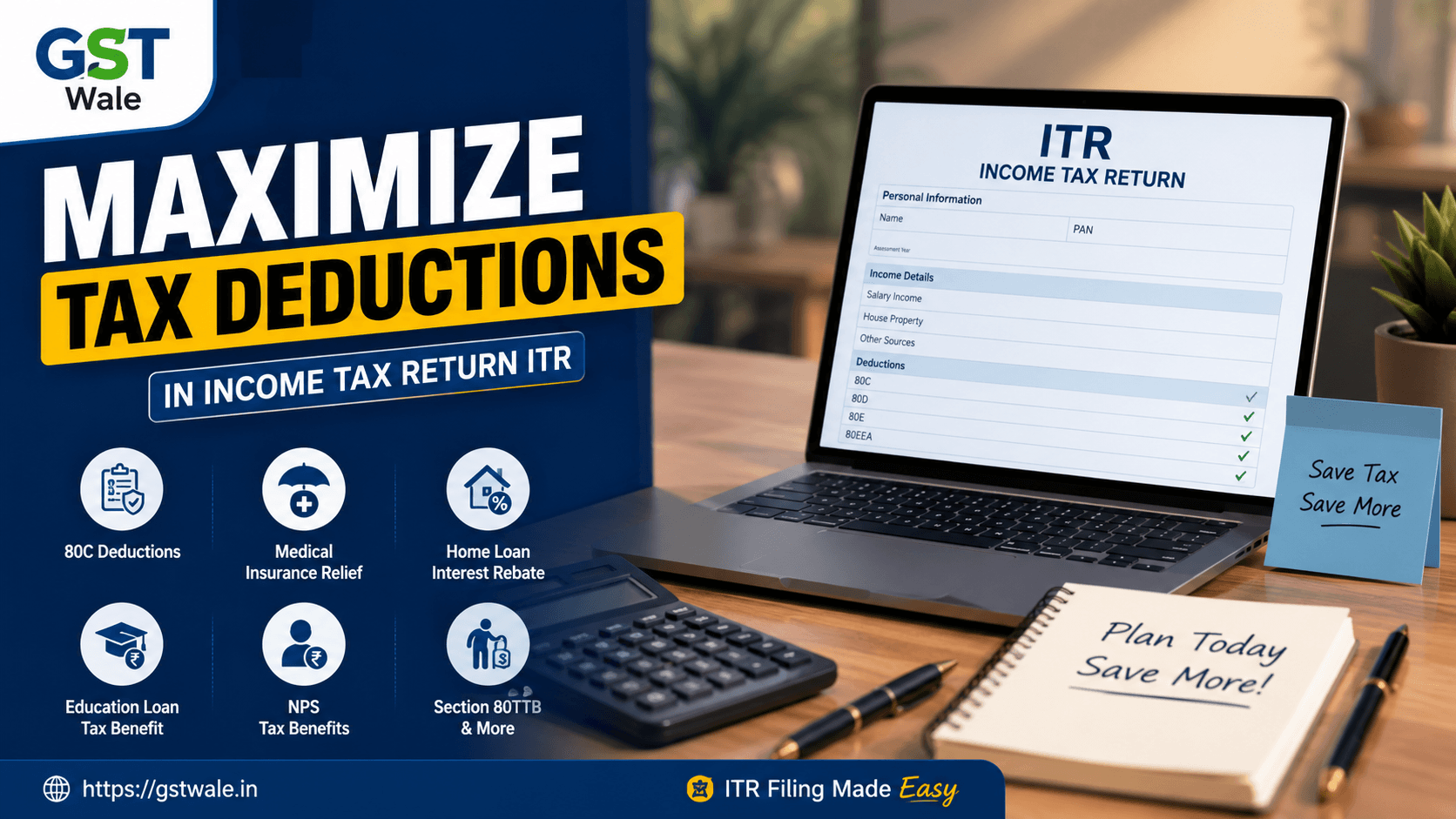
Filing your income tax return itr is not just a legal requirement—it is also one of the smartest ways to reduce your tax burden legally. Many taxpayers in India end up paying more tax simply because they are unaware of the deductions and exemptions available under the Income Tax Act.
At GST Wale, we regularly help salaried employees, freelancers, professionals, and business owners identify hidden tax-saving opportunities while filing their returns. If you want to maximize your refunds and minimize your tax liability, understanding deductions is extremely important.
Whether you are filing your return yourself or using professional ITR Filing services, proper tax planning can make a significant difference in your savings.
In this guide, we will explain how to claim maximum deductions under income tax return itr in a simple and practical manner.
Why Proper Deduction Planning Matters in Income Tax Return ITR
Many taxpayers focus only on filing before the deadline. However, the real benefit of an income tax return itr comes when you claim all eligible deductions correctly.
Benefits of proper deduction planning include:
- Lower tax liability
- Higher tax refunds
- Better financial planning
- Reduced chances of notices from the Income Tax Department
- Improved documentation for loans and visas
A well-planned income tax return itr can save thousands or even lakhs of rupees annually.
Section 80C Deductions: The Most Popular Tax Saving Option
One of the biggest opportunities for tax savings comes under Section 80C deductions. You can claim deductions up to ₹1.5 lakh annually under this section.
Eligible Investments and Expenses Under Section 80C
You can include:
- Public Provident Fund (PPF)
- Employees’ Provident Fund (EPF)
- Life insurance premium
- ELSS mutual funds
- Tax-saving fixed deposits
- Tuition fees for children
- Principal repayment of home loan
- Sukanya Samriddhi Yojana
Practical Tip from GST Wale
Do not invest blindly at the end of the financial year just to save tax. Choose instruments that align with your long-term financial goals.
For example:
- Young professionals may prefer ELSS for wealth creation.
- Conservative investors may choose PPF or tax-saving FDs.
Proper planning improves both investment growth and tax savings.
Claim Medical Insurance Tax Relief Under Section 80D
Healthcare expenses are increasing every year. Thankfully, the government provides medical insurance tax relief under Section 80D.
Deduction Limits Under Section 80D
You can claim:
- Up to ₹25,000 for self, spouse, and children
- Additional ₹25,000 for parents below 60 years
- Additional ₹50,000 for senior citizen parents
If both you and your parents are senior citizens, the deduction can go up to ₹1 lakh.
Important Points
- Payment should be made through non-cash methods.
- Preventive health checkups are also eligible.
- Keep premium receipts safely for income tax return itr documentation.
This deduction is often ignored by taxpayers despite being highly beneficial.
Home Loan Interest Rebate Can Reduce Major Tax Liability
Buying a home not only creates an asset but also provides substantial tax benefits.
The home loan interest rebate under Section 24(b) allows deductions up to ₹2 lakh annually on self-occupied property.
Additional Benefits
You can also claim:
- Principal repayment under Section 80C
- Additional deductions under Section 80EE or 80EEA for eligible first-time buyers
Example
Suppose Mr. Sharma pays:
- ₹1.8 lakh as home loan interest
- ₹90,000 as principal repayment
He can claim:
- ₹1.8 lakh under Section 24(b)
- ₹90,000 under Section 80C
This significantly lowers taxable income in his income tax return itr.
Education Loan Tax Benefit Under Section 80E
Higher education is expensive, but taxpayers can claim relief through the education loan tax benefit under Section 80E.
Key Features
- Deduction available on interest paid
- No upper limit on deduction
- Available for 8 years
- Applicable for higher education loans
This benefit can be claimed for:
- Self
- Spouse
- Children
- Legal guardian
GST Wale Expert Advice
Maintain proper loan statements from the bank or NBFC. During income tax return itr filing, interest certificates are important supporting documents.
National Pension Scheme Tax Benefits You Should Not Ignore
The national pension scheme tax deduction is becoming increasingly popular among salaried and self-employed individuals.
Deductions Available Under NPS
Section 80CCD(1)
- Included within the overall 80C limit
- Maximum deduction: ₹1.5 lakh
Section 80CCD(1B)
- Additional deduction of ₹50,000
- Exclusive benefit over and above Section 80C
Why NPS Is Valuable
NPS offers:
- Retirement planning
- Long-term wealth creation
- Additional tax savings
A taxpayer investing ₹50,000 in NPS can directly reduce taxable income while filing income tax return itr.
Section 80TTB for Senior Citizens
Senior citizens often depend on interest income after retirement. Section 80TTB provides relief on such income.
Deduction Allowed
Senior citizens can claim up to ₹50,000 deduction on:
- Savings account interest
- Fixed deposit interest
- Post office deposit interest
This section is especially useful for retirees filing income tax return itr.
Additional Deductions Many Taxpayers Miss
Donations Under Section 80G
Charitable donations made to approved institutions qualify for deductions.
Always collect:
- Donation receipts
- PAN of the trust
- Registration details
Savings Account Interest Under Section 80TTA
Non-senior citizens can claim up to ₹10,000 deduction on savings account interest.
Interest on Electric Vehicle Loan
Under Section 80EEB, taxpayers can claim deductions on EV loan interest.
As electric vehicles gain popularity, this deduction is becoming increasingly relevant.
Common Mistakes While Claiming Deductions in Income Tax Return ITR
Many taxpayers lose deductions due to avoidable mistakes.
Avoid These Errors
- Not keeping investment proofs
- Claiming incorrect deduction amounts
- Missing employer declarations
- Selecting wrong tax regime
- Ignoring AIS and Form 26AS reconciliation
Old vs New Tax Regime
Before filing income tax return itr, compare both tax regimes carefully.
The old regime offers deductions like:
- Section 80C deductions
- medical insurance tax relief
- home loan interest rebate
The new regime provides lower tax rates but fewer deductions.
Choosing the wrong regime can increase your tax liability unnecessarily.
Step-by-Step Approach to Maximize Tax Savings
Step 1: Organize Financial Documents
Collect:
- Salary slips
- Form 16
- Investment proofs
- Loan certificates
- Insurance receipts
Step 2: Identify Eligible Deductions
Review all possible sections carefully.
Step 3: Reconcile Income Details
Match details with:
- Form 26AS
- AIS
- TIS
Step 4: Choose Correct Tax Regime
Compare tax liability under both systems.
Step 5: File Accurate Income Tax Return ITR
Ensure all deductions are claimed properly before submission.
FAQs on Income Tax Return ITR
Can I claim both Section 80C and NPS deductions?
Yes. You can claim ₹1.5 lakh under Section 80C and an additional ₹50,000 under Section 80CCD(1B) for NPS.
Is health insurance mandatory for tax deduction?
Yes, deduction under Section 80D is available only if you purchase eligible medical insurance policies.
Can I claim home loan benefits for an under-construction property?
Home loan interest benefits are generally available after construction completion, subject to conditions.
What documents are required for income tax return itr deductions?
You may need:
- Investment proofs
- Insurance premium receipts
- Loan statements
- Donation receipts
- Interest certificates
Which tax regime is better for maximum deductions?
Usually, the old tax regime is more beneficial if you claim multiple deductions and exemptions.
A properly planned income tax return itr can help you save substantial tax legally while improving your overall financial health. From Section 80C deductions to medical insurance tax relief, home loan interest rebate, education loan tax benefit, and national pension scheme tax benefits, there are multiple ways to reduce your taxable income.
The key is proper documentation, timely planning, and choosing the right tax regime based on your financial profile.
At GST Wale, we help taxpayers file accurate returns while maximizing eligible deductions and refunds. Whether you are salaried, self-employed, or running a business, our experts ensure your income tax return itr is filed correctly with complete compliance and maximum tax savings.
Connect with GST Wale today and make your tax filing stress-free and financially smarter.
 Previous