


Understanding the 3-Year Bar: Why You Can No Longer File Old GST Returns
Understanding the 3-Year Bar: Why You Can No Longer File Old GST Returns
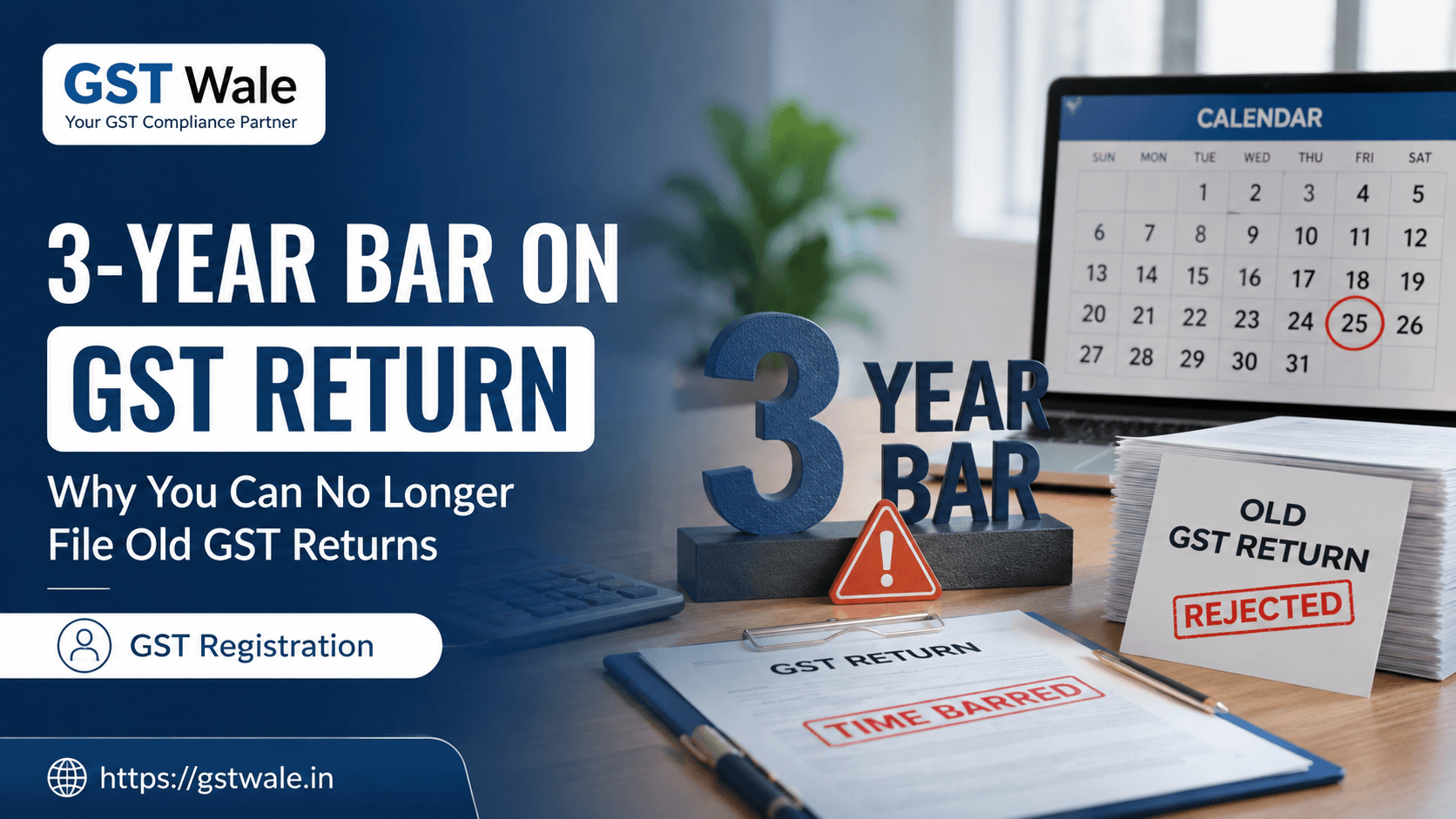
Understanding the 3-Year Bar on GST Return Filing
For many businesses, an old gst return may seem like something that can be filed whenever the books are finally updated. That assumption is no longer correct. The GST framework now places a three-year time limit on filing certain pending returns, which means taxpayers cannot simply keep postponing their compliance indefinitely. If you have missed a return for several years, it is important to check the applicable deadline immediately.
This change is particularly important for businesses that have delayed gst filing because of accounting problems, business closure, lack of transactions, or incomplete records. If you are also reviewing your compliance status or need help with GST Registration, understanding this three-year rule can help you avoid bigger problems later.
What Is the 3-Year Bar on a GST Return?
The three-year bar means that certain GST returns cannot be furnished once three years have passed from their prescribed due date. The restriction was introduced through the Finance Act, 2023 and made effective from October 1, 2023, through Notification No. 28/2023-Central Tax.
According to the GST Council's official taxpayer update, the restriction covers returns under Sections 37, 39, 44 and 52 of the CGST Act. In practical terms, this includes important compliance forms such as returns relating to outward supplies, regular tax payment returns, annual returns and certain collection-related returns.
This is why taxpayers should not treat an overdue gst return as an ordinary pending task. Once the applicable three-year period expires, the GST portal may no longer permit the return to be filed.
Why Has the Government Introduced This Rule?
GST compliance involves maintaining records, reporting transactions and ensuring that tax liabilities are properly accounted for. Keeping returns open for an unlimited period creates problems for taxpayers as well as the tax administration.
The three-year restriction provides a defined compliance window. It encourages taxpayers to regularise their GST records within a reasonable period instead of allowing returns to remain pending for many years.
It also creates greater certainty around the GST compliance system. However, taxpayers should understand one important point: the three-year bar on filing a return is not the same thing as saying that every tax-related issue automatically disappears after three years.
The department can have separate powers relating to assessment, recovery, scrutiny and other proceedings under the GST law. Therefore, ignoring an old liability simply because a gst return can no longer be filed is not a safe compliance strategy.
How Does the 3-Year Rule Work?
Suppose a business was required to file a particular GST return with a due date in July 2022.
The three-year period is generally calculated from the applicable due date. Therefore, the taxpayer should not assume that the return will remain available forever merely because the GST registration is still active.
A simple way to understand the process is:
- Identify the tax period for which the return is pending.
- Check the original statutory or extended due date.
- Calculate the applicable three-year period from that due date.
- Check whether the return is still available for filing on the GST portal.
- If it is still available, complete the return and pay applicable tax, interest and late fee penalties as required.
- If the return has become time-barred, obtain professional advice on the appropriate compliance and tax treatment.
The exact treatment can depend on the type of return and the taxpayer's circumstances, so businesses should not rely only on the age of the return.
What Are Time-Barred Returns?
Time-barred returns are returns that have crossed the legally prescribed period within which they can be furnished.
For example, imagine a business stopped operating but never filed several GST returns. The owner may later decide to close the books and submit all pending returns together. If some of those returns have already crossed the three-year filing window, the normal online filing route may no longer be available.
This can create a serious compliance complication.
The first step should be identifying exactly which tax periods are pending. A taxpayer should download the GST return filing history, compare it with the accounting records and determine whether tax was actually payable during those periods.
Do not assume that a return with no business activity can simply be ignored. Under Section 39, registered taxpayers generally have filing obligations for each applicable tax period, including periods where there may have been no supplies.
What Happens to GSTR-3B After Three Years?
For regular taxpayers, GSTR 3B is one of the most important GST compliance returns because it reports tax liability, input tax credit and tax payment for the relevant period.
If an old GSTR-3B crosses the applicable three-year filing restriction, the issue becomes more complicated than simply paying a late fee and submitting the form.
A business should first determine:
- Whether GSTR-3B was actually pending.
- Whether GSTR-1 or other corresponding returns were filed.
- Whether any tax was collected from customers.
- Whether input tax credit was involved.
- Whether there was any outstanding tax liability.
- Whether notices have already been issued by the department.
- Whether the return has crossed the three-year filing window.
The GST portal's filing status should also be checked because system availability can be important when determining the practical next step.
Does the 3-Year Bar Remove Tax Liability?
No. This is one of the most important points.
The inability to file an old gst return through the normal filing facility does not automatically mean that tax liability, interest or other legal consequences have disappeared.
For instance, suppose a company collected GST from customers but failed to report the transactions for several years. The company should not conclude that the tax obligation has vanished merely because the return has become time-barred.
The GST law contains separate provisions dealing with tax that has not been paid or has been short-paid. Therefore, businesses with substantial old liabilities should get the position reviewed by a qualified tax professional rather than simply treating the return as closed.
GST Council Rule and the Practical Impact on Businesses
The three-year restriction is often casually described as a gst council rule, but technically the change was brought into effect through the statutory amendment and notification framework.
The GST Council has played an important role in recommending GST law and compliance changes, while the legal effect comes through the relevant legislation, notifications and rules.
The restriction was implemented from October 1, 2023, following Notification No. 28/2023-Central Tax. The GST Council's own newsletter specifically advised taxpayers about the barring of returns after three years from their due dates.
For businesses, the message is simple: GST compliance should be handled regularly rather than postponed.
What Should You Do If Your Old GST Return Is Pending?
If you discover several old returns, do not panic and do not immediately try random filing options on the portal.
Follow a structured approach.
Step 1: Check Your GST Filing History
Log in to the GST portal and identify all filed and pending returns. Prepare a month-wise list so that no period is missed.
Step 2: Reconcile Your Books
Compare the GST records with sales invoices, purchase records, bank statements and accounting books. This helps determine whether tax was actually payable.
Step 3: Identify the Age of Each Return
Calculate the applicable three-year period from the relevant due date. Remember that an extended due date can affect the calculation where officially applicable.
Step 4: Separate Current and Time-Barred Returns
Returns that are still within the permitted filing period should generally be addressed without further delay. Returns that have crossed the statutory filing restriction require a different compliance assessment.
Step 5: Review Tax, Interest and Late Fees
Where filing is still legally possible, calculate the applicable tax, interest and late fee penalties before submitting the return.
Step 6: Take Professional Advice for Old Cases
If the return is time-barred, there is substantial unpaid tax, or the department has already issued a notice, speak to a GST professional or CA before taking further action.
How Does This Affect Old Tax Clearing?
Many business owners use the phrase old tax clearing when they decide to clean up years of pending GST compliance.
That is a good objective, but it should be done systematically.
Old records should be reviewed period by period instead of simply attempting to file every available return. A proper review can reveal whether there are unpaid taxes, incorrect input tax credit claims, mismatches, notices or other issues that need separate attention.
For businesses that have been inactive for years, this review is especially important before deciding whether to continue, cancel or otherwise regularise their GST registration.
Can You Still Correct an Old GST Mistake?
The answer depends on the nature and age of the mistake.
GST law has specific timelines for amendments, rectification and reporting of errors. Section 39 itself provides rules concerning correction of omissions and incorrect particulars, subject to prescribed limitations.
Therefore, if you discover an old mistake, do not automatically assume that you can correct it through the next gst return.
The appropriate solution may depend on whether the mistake relates to outward supplies, tax payment, input tax credit, an invoice, an annual return or another compliance issue.
FAQs About the 3-Year GST Return Bar
Can I file a GST return after three years?
Generally, returns covered by the three-year restriction cannot be furnished after three years from their applicable due dates. The GST Council has confirmed that the restriction covers specified returns under Sections 37, 39, 44 and 52.
Does the three-year rule mean my GST liability is cancelled?
No. The filing restriction and tax liability are separate matters. If tax was actually payable, taxpayers should obtain professional advice regarding the appropriate legal and compliance action.
Does the rule apply to GSTR-3B?
GSTR-3B is a return furnished under Section 39, so it falls within the category affected by the three-year restriction. Always check the specific tax period and applicable due date before reaching a conclusion.
What should I do if my return has become time-barred?
First reconcile your books and GST records, determine whether any tax was payable and check for notices or other proceedings. Then consult a GST professional about the available course of action.
Can late fees still apply to an old GST return?
Where a return is filed after its normal due date and remains legally available for filing, applicable late fees and interest may arise subject to the law and relevant notifications. The statutory framework provides for late fees for delayed returns.
Do Not Wait to File Your GST Return
The three-year bar has changed the way businesses should approach an overdue gst return. Old returns can no longer be treated as an administrative task that can be postponed indefinitely. Once the permitted period expires, normal filing may no longer be possible.
At GST Wale, we recommend reviewing pending GST compliance regularly, reconciling your books with GST records and addressing old liabilities before they become more difficult to resolve. Whether you have a pending GSTR-3B, years of incomplete GST filing or questions about time-barred returns, taking professional advice early can save considerable time and unnecessary complications.
 Previous