


How to Correctly Match Your GST and HSN Code to Avoid Tax Penalties
How to Correctly Match Your GST and HSN Code to Avoid Tax Penalties
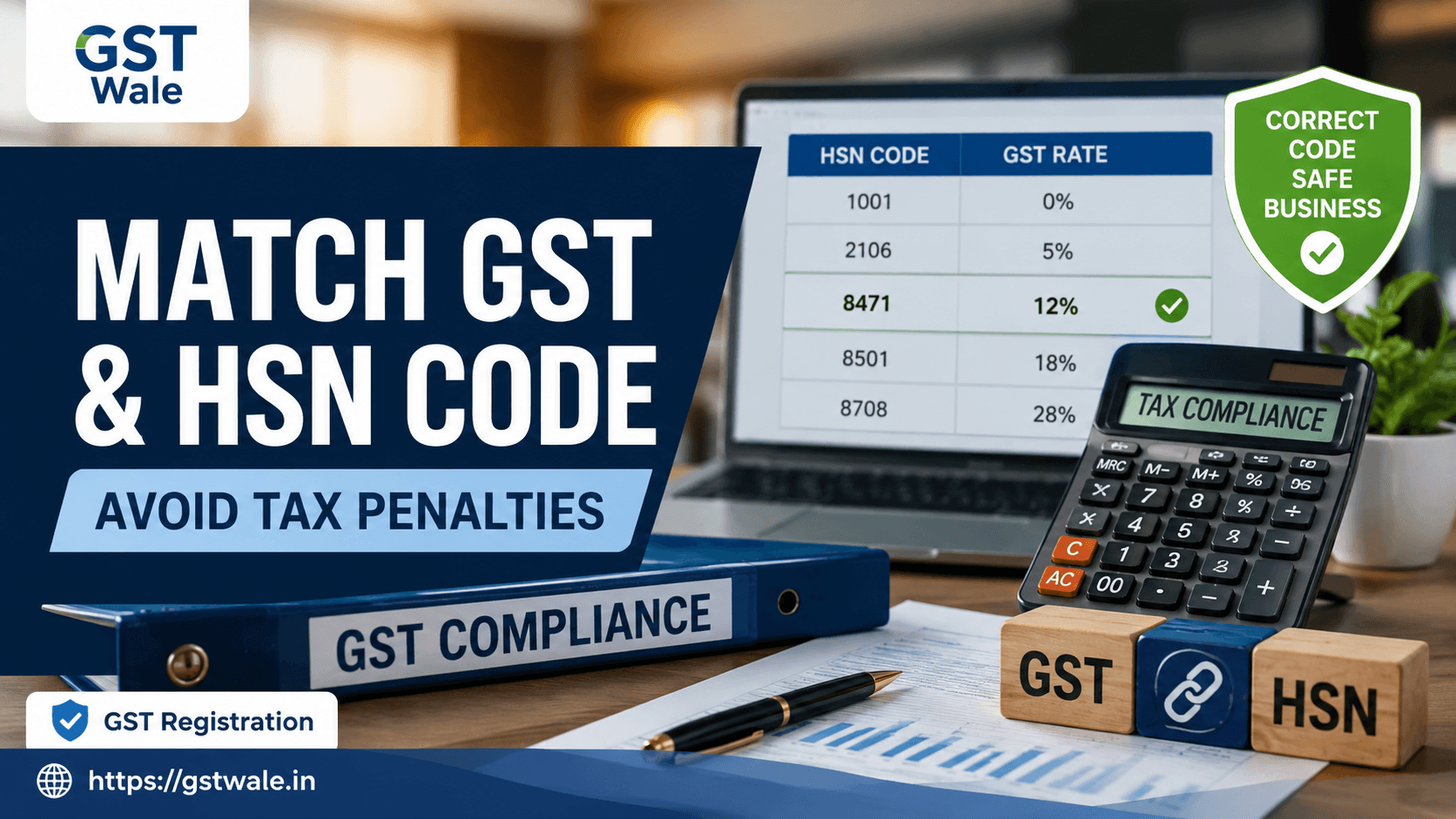
For any business registered under GST, getting the gst and hsn code right is more important than simply putting a code on an invoice. The correct classification of your goods or services determines the applicable GST rate, affects the tax charged to customers, and supports accurate reporting in GST returns. A small classification mistake can therefore create tax rate errors, excess tax payment, short payment, or even compliance issues during an assessment.
This becomes especially important when a business is newly registered or starts selling new products. Businesses completing their GST Registration should also establish the correct product classification and billing process from the beginning. At GST Wale, we regularly see businesses focus on registration but overlook the importance of correctly mapping their products with the appropriate gst hsn code.
The good news is that avoiding these problems does not require complicated accounting knowledge. You need a systematic approach to identify the product, verify its classification, confirm the applicable rate, and ensure the same information appears consistently in your business invoice and GST records.
What Is the GST and HSN Code?
The Harmonized System of Nomenclature, commonly called HSN, is a standardized system used to classify goods. Under GST, businesses use HSN codes to identify the nature and category of products being supplied.
The gst and hsn code relationship is straightforward: the HSN code helps establish what the product is, while GST law determines the tax treatment applicable to that classification.
For services, businesses generally use SAC, or Service Accounting Code, rather than an HSN code. Therefore, the first step is to establish whether your transaction relates to goods or services.
A gst hsn code should not be selected simply because it looks similar to the product name. Two products that appear similar to a business owner may have different classifications based on their composition, use, manufacturing process, or technical characteristics.
Why Correct GST and HSN Code Matching Matters
Correct classification is a fundamental part of statutory billing. When your product classification is wrong, the GST rate applied to the transaction can also be wrong.
For example, imagine a trader sells a particular type of electrical equipment. The business assumes that a particular product attracts 18% GST and uses that rate on every invoice. Later, it is discovered that the exact product classification attracts a different rate under the relevant GST notification.
The problem is not limited to the invoice. The business may need to review past transactions, calculate the difference in tax, make corrections, and potentially deal with interest or other consequences.
Correct gst and hsn code mapping helps businesses:
- Apply the appropriate GST rate.
- Prepare accurate tax invoices.
- Report transactions correctly in GST returns.
- Reduce the possibility of tax rate errors.
- Maintain consistent accounting records.
- Support the position taken during a GST assessment.
- Avoid unnecessary disputes with customers regarding tax charged.
How to Correctly Match GST and HSN Code
Step 1: Clearly Identify the Product
Before searching for any code, understand exactly what you are selling.
Record basic information such as:
- Product name and commercial description
- Main material or composition
- Primary use
- Technical specifications
- Manufacturing or processing method
- Whether the item is sold as a finished product, component, or raw material
This information becomes useful when comparing possible classifications.
Do not rely solely on the name used in your accounting software. A product may have a common market name that differs from the terminology used under the customs tariff headings.
Step 2: Understand the Relevant Customs Tariff Headings
HSN classification is closely connected with the customs tariff structure. The relevant custom tariff headings can help identify where a product belongs within the classification system.
Start with the broad category and gradually move toward the more specific heading and subheading.
For example, instead of searching only for the word used on your sales invoice, consider the product's material, function, and technical characteristics. This approach is generally more reliable than selecting the first code that appears in an online search.
Step 3: Compare Similar HSN Codes Carefully
Some products may appear to fit into multiple classifications. This is where businesses often make mistakes.
If two possible HSN codes look suitable, compare their descriptions and applicable GST rates. Look at the specific wording rather than relying on a generic product name.
Where necessary, review the relevant GST notifications, tariff classification notes, and official tax resources before finalizing the code.
Step 4: Verify the Applicable GST Rate
Finding an HSN code is only half the job. You must also confirm the GST rate applicable to that classification and the specific product.
GST rates can depend on precise product descriptions, conditions, exemptions, or other provisions. Therefore, do not assume that every product within a broad category carries the same rate.
This is one of the most important controls for preventing tax rate errors.
Step 5: Match the Code With Your Business Invoice
Once the classification and applicable rate have been verified, update your billing system.
Your business invoice should contain accurate product descriptions, the appropriate HSN information where required, taxable value, GST rate, and tax amount.
The same classification should ideally remain consistent across your accounting system, inventory records, invoices, and GST reporting.
If your accounting software shows one HSN code while your invoice uses another, the mismatch can create unnecessary questions during reconciliation.
Common GST and HSN Code Mistakes Businesses Make
Choosing a Code Based Only on the Product Name
A product name does not always tell the complete classification story. Technical characteristics and intended use may be more relevant.
Copying a Supplier's HSN Without Verification
A supplier's classification can be a useful reference, but it should not automatically be treated as proof that your classification is correct. Your transaction and product details should be independently reviewed.
Using One Code for Similar Products
Businesses sometimes use a single gst hsn code for an entire product range because the products appear similar. This can create problems when individual items have different technical characteristics or tax treatments.
Ignoring Changes in GST Notifications
Tax classifications and rates can change. Continuing to use an old rate or outdated code without checking current requirements can result in compliance issues.
Not Reviewing Old Product Masters
When a business changes its billing software or accounting system, old product masters are often imported without review. This can carry historical classification errors into new invoices.
A Practical GST and HSN Code Review Process
For a small or medium-sized business, we recommend conducting a periodic HSN review.
Create a master list containing each major product, its description, HSN classification, GST rate, and the date on which the classification was last reviewed.
Then follow this process:
- Identify all active products and services.
- Remove discontinued products from the active billing master.
- Review the classification of frequently sold products.
- Verify the applicable GST rate.
- Compare invoice data with accounting records.
- Check whether recent GST changes affect your products.
- Correct discrepancies before filing the relevant returns.
This simple process can significantly reduce avoidable classification mistakes.
What Happens If the GST and HSN Code Is Wrong?
The consequences depend on the nature and extent of the error.
If the wrong code results in the wrong GST rate, the business may have charged too little or too much tax. A short-payment situation can require additional tax payment along with applicable interest and potentially other consequences under GST law.
An incorrect HSN may also create inconsistencies between invoices, GST returns, books of accounts, and e-invoicing records where applicable.
If you discover an error, do not ignore it. Review the affected transactions, determine whether the tax amount is also incorrect, and take appropriate corrective action based on the applicable GST provisions.
GST and HSN Code Compliance Tips for Business Owners
A few practical habits can make compliance much easier:
- Keep a centralized HSN master for your products.
- Document why a particular classification was selected.
- Review new products before they are added to billing software.
- Do not rely blindly on internet search results.
- Recheck GST rates when there are relevant tax changes.
- Train billing staff to use the approved product master.
- Reconcile invoice and GST return information regularly.
- Consult a qualified GST professional when classification is genuinely uncertain.
The key is to treat HSN classification as part of your tax compliance process rather than as a routine field that is filled in at the time of billing.
FAQs About GST and HSN Code
Is HSN code mandatory on every GST invoice?
The requirement depends on the taxpayer's applicable GST rules and turnover category. Businesses should follow the current invoicing requirements applicable to their circumstances rather than assuming the same HSN disclosure rules apply to everyone.
Can the same HSN code be used for different products?
It can be used where the products genuinely fall under the same classification. However, similar-looking products should not automatically be given the same code without checking their characteristics and applicable classification rules.
What should I do if I discover an incorrect HSN code?
First determine whether the error affected only classification or also changed the GST rate and tax amount. Review the affected invoices and GST records, then take corrective action according to the applicable GST provisions.
Is HSN code the same as GST rate?
No. The HSN code identifies the classification of goods, while the GST rate determines the tax applicable to the supply. The two are related, but they are not the same thing.
Should businesses review their HSN codes regularly?
Yes. A periodic review is a good compliance practice, particularly when businesses introduce new products, change product specifications, or when GST notifications and classification requirements change.
Get Your GST and HSN Code Right From the Start
Correct gst and hsn code mapping is not merely an accounting formality. It directly affects your GST rate, invoices, tax reporting, and overall compliance position. A systematic product classification process can help businesses prevent tax rate errors and reduce the risk of avoidable tax disputes.
If you are unsure about the correct classification of your products, do not guess based on a similar product or an old invoice. Get the classification reviewed professionally and maintain proper documentation for your records.
At GST Wale, our aim is to make GST compliance simpler and more practical for Indian businesses. From GST registration to ongoing tax compliance, professional guidance can help you build the right process and avoid costly mistakes.
 Previous