


The Ultimate Masterlist: Updated GST New Rate List for Retailers
The Ultimate Masterlist: Updated GST New Rate List for Retailers
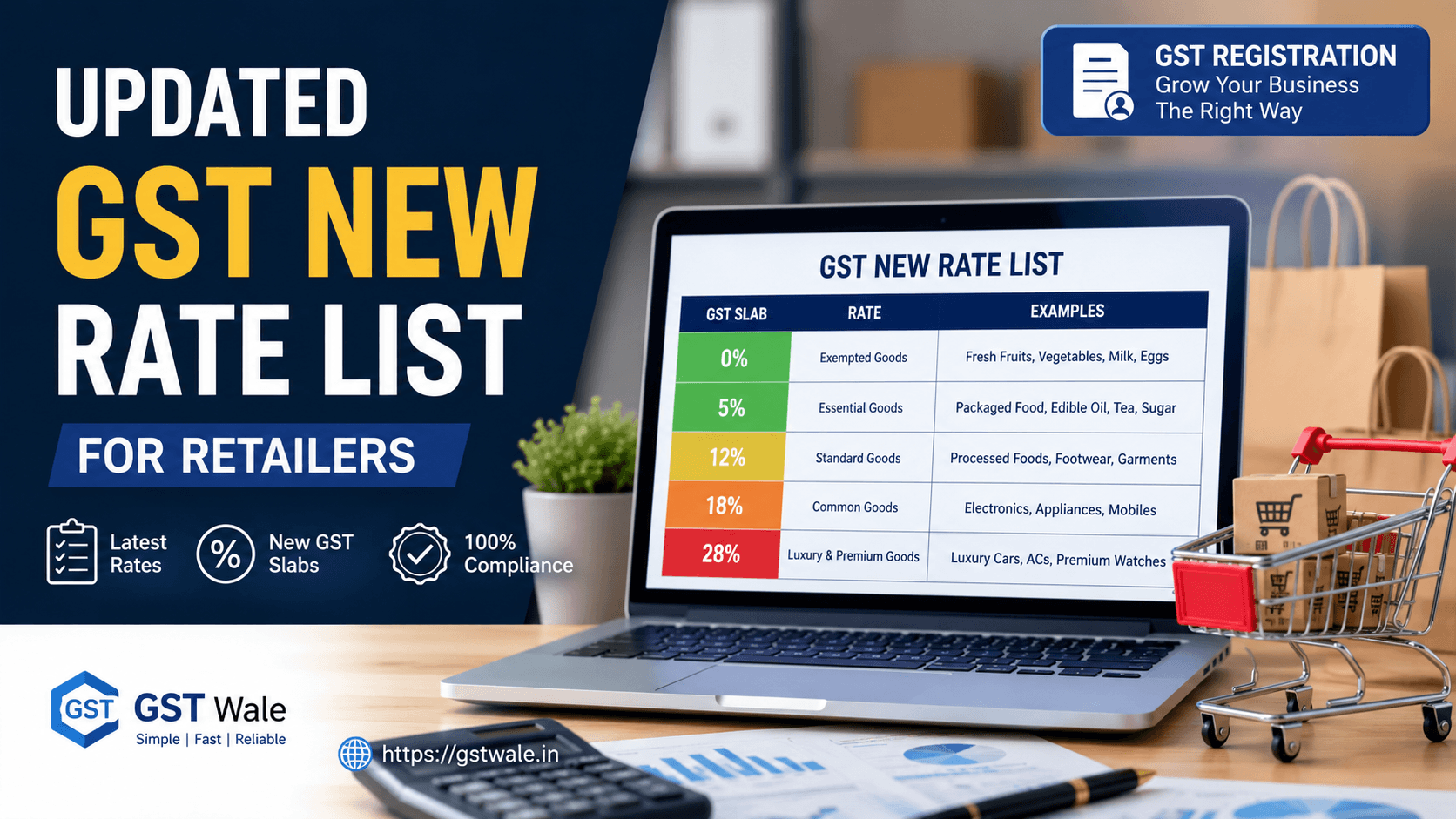
For retailers in India, keeping up with the gst new rate list is no longer optional. Even a small mistake in GST classification can affect pricing, compliance, profit margins, and customer trust. Whether you own a kirana shop, electronics store, clothing outlet, supermarket, or online retail business, understanding the latest GST structure helps you make smarter business decisions.
At GST Wale, we regularly see businesses struggling because they continue using old GST classifications or misunderstand changes in the gst new rate system. If you are starting a business or expanding operations, proper compliance becomes even more important. Businesses can simplify the process by applying for GST Registration at the right stage and ensuring tax compliance from day one.
This guide from GST Wale acts as your practical and easy-to-understand gst new rate list for retailers so you can understand tax rates without going through complex government notifications.
Understanding the GST Structure for Retailers
GST in India generally works under multiple tax slabs rather than a single fixed rate. Different products fall under different categories based on necessity, usage, and market value.
The commonly used GST slabs are:
- 0% GST
- 5% GST
- 12% GST
- 18% GST
- 28% GST
Certain products may also attract additional cess.
The government periodically reviews the gst new slab structure to maintain balance between revenue collection and affordability.
GST New Rate List for Daily Essential Goods
Daily essentials generally carry lower tax rates because they directly impact common consumers.
Daily Essentials GST Category
| Product | GST Rate |
|---|---|
| Fresh fruits and vegetables | 0% |
| Milk | 0% |
| Eggs | 0% |
| Bread | 0% |
| Rice (unbranded) | 0% |
| Wheat | 0% |
| Packaged food items | 5% |
| Edible oil | 5% |
| Sugar | 5% |
| Tea | 5% |
This part of the gst new rate list is important for grocery stores and supermarkets because errors in billing packaged and unpackaged products are common.
Example
Suppose a retailer sells loose rice and packaged branded rice:
- Loose rice may attract 0% GST
- Packaged branded rice may attract GST according to applicable regulations
Understanding such distinctions avoids unnecessary tax notices.
GST New Rate List for Clothing and Fashion Retailers
Fashion retailers frequently face confusion regarding GST applicability.
Clothing GST Rates
| Product | GST Rate |
|---|---|
| Garments under specified pricing thresholds | 5% |
| Premium garments | 12% |
| Footwear under specified value limits | 5% |
| Premium footwear | 18% |
Retailers should monitor updates because the gst new slab for apparel sometimes undergoes policy discussions and revisions.
GST New Rate List for Electronics Retailers
Electronics businesses usually fall under higher tax categories.
Electronics Tax Rate Category
| Product | GST Rate |
|---|---|
| Mobile phones | 18% |
| Refrigerators | 18% |
| Air conditioners | 28% |
| Televisions (depending on specifications) | 18–28% |
| Washing machines | 18–28% |
| Laptops | 18% |
The electronics tax rate segment in the gst new rate list matters because retailers often handle products with varying tax classifications.
Practical Example
Imagine you own an electronics showroom.
If you sell:
- Laptop worth ₹50,000
- Mobile worth ₹20,000
- Air conditioner worth ₹40,000
The GST amount differs significantly for each product because GST rates are product-based and not business-based.
This directly affects pricing strategy and customer billing.
GST New Rate List for Luxury Goods
Luxury products usually attract higher taxes because they are considered non-essential items.
Luxury Goods Tax List
| Product | GST Rate |
|---|---|
| Luxury cars | 28% + cess |
| High-end motorcycles | 28% |
| Premium watches | 28% |
| Luxury furniture | 28% |
| Certain cosmetic products | 28% |
The luxury goods tax list is especially relevant for premium retail businesses and automobile dealers.
How Retailers Can Use the GST New Rate List Effectively
Simply knowing the gst new rate list is not enough. Retailers should also apply it correctly.
Follow these practical steps:
Step 1: Review product classification regularly
GST categories can change through notifications and council recommendations.
Step 2: Update billing software
Old GST rates in billing systems create compliance risks.
Step 3: Train staff
Cashiers and accounting teams should understand basic GST rates.
Step 4: Maintain invoices properly
Proper invoices help during audits and return filing.
Step 5: Consult professionals
Many businesses lose money because of incorrect tax classifications.
Common Mistakes Retailers Make
At GST Wale, we often notice retailers making these mistakes:
- Using outdated GST rates
- Applying one tax rate to all products
- Incorrect HSN code selection
- Ignoring product reclassification
- Improper invoice generation
- Missing compliance deadlines
The latest gst new rate list should always be cross-checked before updating product pricing.
Why Understanding Current Tax Slabs Matters
The current tax slabs affect much more than taxation alone.
They influence:
- Product pricing
- Business profit margins
- Input tax credit calculations
- Customer purchase decisions
- Business competitiveness
For example, if a retailer mistakenly charges 18% instead of 12%, customers may find prices uncompetitive and move to competitors.
Understanding the gst new rate structure protects both revenue and reputation.
FAQs
What is the latest gst new rate list for retailers?
The latest gst new rate list includes tax categories ranging from 0% to 28%, depending on the product type, necessity, and classification.
Are daily essentials taxable under GST?
Many daily essentials gst items like milk, fresh vegetables, and eggs attract 0% GST, while certain packaged products may attract tax.
What is the electronics tax rate under GST?
The electronics tax rate generally falls between 18% and 28% depending on the product category.
Why do luxury products have higher GST?
Products under the luxury goods tax list attract higher rates because they are considered non-essential items and may also attract cess.
Can GST rates change in future?
Yes. The GST Council periodically reviews and updates the gst new slab and tax structure.
Understanding the gst new rate list is essential for every retailer who wants smooth business operations and proper compliance. GST regulations continue evolving, and staying informed helps avoid penalties, pricing errors, and unnecessary business risks.
At GST Wale, we help businesses stay ahead with expert GST support, registration assistance, compliance guidance, and practical solutions tailored to Indian retailers. If you want accurate GST support without confusion, connect with GST Wale today and let experts simplify your GST journey.
 Previous