


The Impact of Global Supply Chains on GST on Mobile Phones Pricing in India
The Impact of Global Supply Chains on GST on Mobile Phones Pricing in India
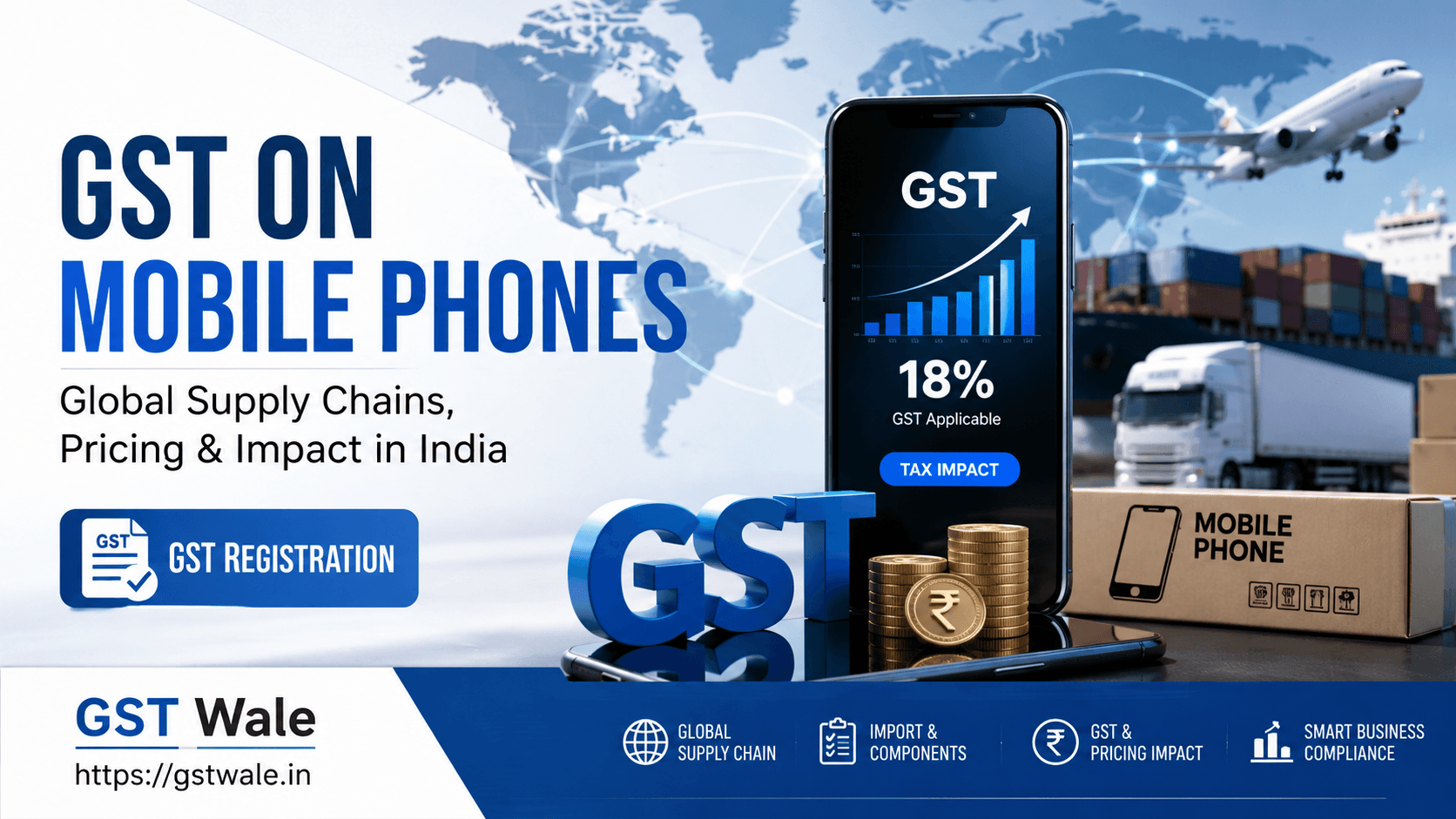
The Indian mobile phone market has witnessed remarkable growth over the last decade, driven by technological innovation, increasing smartphone adoption, and strong consumer demand. However, the price you pay for a smartphone is influenced by much more than its features or brand reputation. Global supply chain disruptions, import costs, component availability, and taxation all play a crucial role in determining the final price. One of the most significant tax components that buyers and businesses must understand is gst on mobile phones.
For manufacturers, importers, wholesalers, and retailers dealing in smartphones, proper compliance with GST Registration is essential to ensure smooth business operations and avoid unnecessary penalties. At GST Wale, we regularly help businesses understand how taxation impacts pricing and compliance in the rapidly evolving electronics sector.
Understanding GST on Mobile Phones
The gst on mobile phones is an important indirect tax applicable to the sale and purchase of smartphones and mobile devices across India. GST has simplified the earlier multiple-tax structure by replacing VAT, excise duty, and several state-level taxes with a unified taxation system.
Today, every stage of the supply chain—from importing components to manufacturing, distribution, wholesale, and retail—is affected by GST. While consumers generally focus on the final price displayed in stores, businesses need to understand how GST influences costs throughout the entire production and distribution process.
How Global Supply Chains Affect Mobile Phone Prices
Modern smartphones are manufactured using components sourced from multiple countries. A single device may contain processors from Taiwan, display panels from South Korea, memory chips from the United States, batteries from China, and assembly in India or Vietnam.
When any part of this international supply chain experiences disruption, it directly impacts manufacturing costs and ultimately influences gst on mobile phones calculations through changes in product pricing.
Chip Shortage Import Cost
One of the biggest challenges in recent years has been the global semiconductor shortage. The chip shortage import cost has significantly increased manufacturing expenses for smartphone companies.
Several factors contributed to this shortage:
- Increased global demand for electronic devices
- Limited semiconductor production capacity
- Pandemic-related factory shutdowns
- Shipping delays
- Geopolitical tensions affecting trade
As import costs rise, manufacturers adjust their pricing, leading to higher taxable values under GST. Although the GST rate may remain unchanged, consumers often notice an increase in the overall retail price because the tax is calculated on a higher product value.
The Role of Imported Components
Many smartphones assembled in India still depend heavily on imported parts. Even when local assembly takes place, manufacturers import essential electronic components.
Some commonly imported components include:
- Processors
- Display panels
- Camera modules
- Memory chips
- Sensors
- Batteries
- Charging ICs
Any increase in customs duties, freight charges, or foreign exchange fluctuations affects production costs before the gst on mobile phones is applied.
Completely Knocked Down Kits Tax
Many manufacturers import smartphones in the form of completely knocked down kits tax structures. In this model, individual parts are imported separately and assembled in India.
This approach offers several advantages:
- Encourages domestic manufacturing
- Creates employment opportunities
- Supports the Make in India initiative
- Reduces dependency on fully imported devices
However, businesses must carefully calculate applicable taxes on imported kits, customs duties, and GST to maintain accurate pricing.
Proper documentation and tax compliance become especially important when dealing with imported CKD kits.
Semi Knocked Down Components and Manufacturing
Apart from CKD imports, many manufacturers also use semi knocked down components for assembly operations.
In this model:
- Major assemblies are imported.
- Final assembly happens in India.
- Additional local components are added.
- Finished smartphones are supplied to distributors.
This hybrid manufacturing model reduces logistics costs while supporting domestic manufacturing capacity. However, businesses still need to account for GST implications throughout procurement, production, and distribution.
Growth of Localized Assembly Plants
India has emerged as a major smartphone manufacturing hub due to government incentives and expanding infrastructure. Many global brands now operate localized assembly plants across different states.
The advantages include:
- Lower manufacturing costs
- Faster production cycles
- Reduced dependence on imports
- Better inventory management
- Improved supply chain resilience
Localized production also helps manufacturers respond more quickly to market demand while maintaining competitive pricing.
Although GST remains applicable, efficient domestic manufacturing can reduce overall production costs, benefiting both businesses and consumers.
How Global Shipping Costs Influence GST on Mobile Phones
International freight costs have experienced significant fluctuations over recent years.
Higher shipping costs impact:
- Imported components
- Packaging materials
- Insurance charges
- Warehousing expenses
- Port handling charges
Since these expenses form part of the product cost, they influence the taxable value on which gst on mobile phones is calculated.
This explains why even when GST rates remain constant, smartphone prices may increase due to rising supply chain expenses.
Exchange Rate Fluctuations and Mobile Pricing
Currency exchange rates play an equally important role.
When the Indian Rupee weakens against foreign currencies:
- Imported components become more expensive.
- Manufacturing costs rise.
- Wholesale prices increase.
- Retail prices increase.
- GST is calculated on the revised transaction value.
Businesses importing smartphone components must continuously monitor exchange rate movements while planning inventory and pricing strategies.
Final Retail Pricing: More Than Just GST
Many consumers assume GST alone determines smartphone prices. In reality, final retail pricing depends on multiple factors working together.
These include:
- Import costs
- Component availability
- Manufacturing expenses
- Logistics charges
- Dealer margins
- Distribution costs
- Marketing expenses
- Currency fluctuations
- GST
Therefore, any disruption in the global supply chain can increase the overall cost of a mobile phone, even if the GST rate itself remains unchanged.
Practical Example
Suppose a smartphone manufacturer imports display panels and processors.
Initially:
- Component cost: ₹15,000
- Manufacturing and logistics: ₹5,000
- Total value before GST: ₹20,000
Due to global semiconductor shortages:
- Components increase by ₹2,000
- Freight increases by ₹1,000
Now:
- Total value before GST becomes ₹23,000
Even though gst on mobile phones remains unchanged, the GST amount increases because it is applied to the higher transaction value. This ultimately results in a higher retail price for consumers.
Tips for Businesses Selling Mobile Phones
Businesses involved in smartphone trading should adopt a proactive approach to GST compliance.
Maintain Proper Documentation
Keep accurate invoices, import records, purchase bills, and tax documents.
Monitor Supply Chain Costs
Regularly review changes in freight charges, customs duties, and supplier pricing.
Claim Eligible Input Tax Credit
Ensure all eligible Input Tax Credit claims are supported with valid documentation.
Review Pricing Frequently
Update selling prices whenever significant supply chain cost changes occur.
Stay GST Compliant
Timely GST return filing helps avoid penalties and ensures uninterrupted business operations.
Frequently Asked Questions
Is GST the only reason mobile phone prices increase?
No. While gst on mobile phones contributes to the final price, global supply chain disruptions, import costs, freight charges, and currency fluctuations also significantly impact pricing.
Does chip shortage affect GST on mobile phones?
The GST rate generally remains unchanged. However, higher chip shortage import cost increases the taxable value of smartphones, leading to a higher GST amount in absolute terms.
Why do manufacturers use completely knocked down kits?
Importing completely knocked down kits tax structures allows manufacturers to assemble phones locally, reduce logistics costs, generate employment, and support domestic manufacturing initiatives.
How do localized assembly plants help consumers?
Localized assembly plants reduce transportation costs, improve production efficiency, shorten delivery timelines, and help manufacturers offer more competitive pricing.
Why should mobile phone businesses maintain GST compliance?
Proper GST compliance ensures smooth Input Tax Credit claims, avoids legal complications, improves cash flow management, and builds credibility with suppliers and customers.
The relationship between global supply chains and gst on mobile phones is more interconnected than many people realize. While GST itself is a fixed tax framework, changes in import costs, semiconductor availability, international freight charges, exchange rates, semi knocked down components, completely knocked down kits tax, and localized assembly plants all influence the taxable value and ultimately the final retail pricing paid by consumers.
For businesses involved in manufacturing, importing, distributing, or selling mobile phones, understanding these cost drivers is essential for effective pricing, compliance, and profitability. Keeping accurate GST records and staying updated with changing tax regulations can help businesses operate more efficiently in a competitive market.
If you need expert assistance with GST compliance, registrations, return filing, or tax advisory services, GST Wale is here to help. Our experienced professionals provide practical, reliable, and timely GST solutions so your business stays compliant while focusing on growth.
 Previous