


The Economic Breakdown: Why India Shifted to the GST New Rate Framework
The Economic Breakdown: Why India Shifted to the GST New Rate Framework
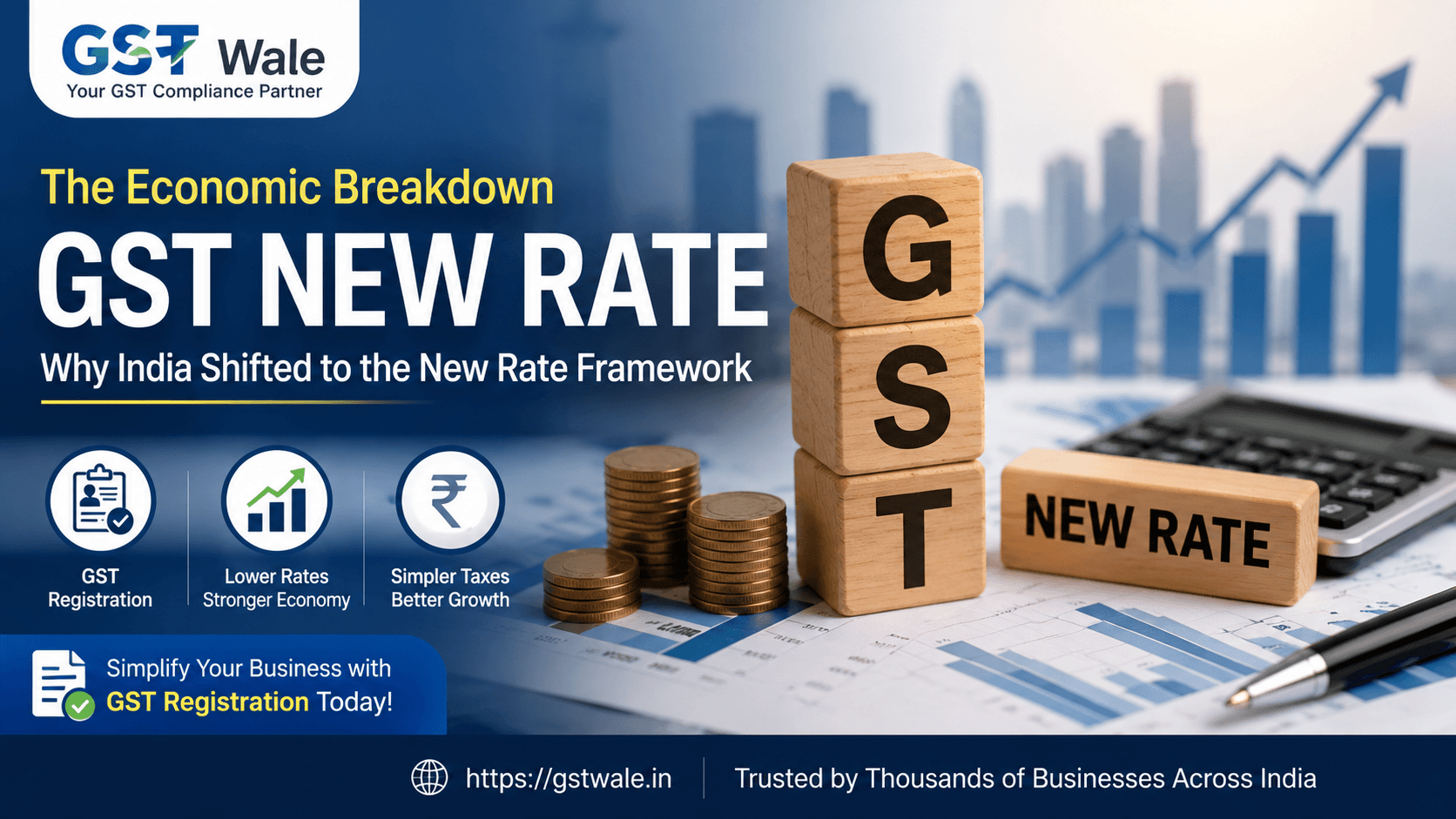
India’s taxation system has gone through one of the biggest transformations in its economic history with the implementation of the GST new rate framework. Before GST, businesses had to deal with multiple indirect taxes like VAT, service tax, excise duty, and entry tax, which often created confusion and increased compliance costs. The introduction of the gst new rate structure aimed to simplify taxation and bring transparency into the system.
At GST Wale, we often interact with startups, traders, manufacturers, and service providers who still want clarity on why the government introduced the gst new rate system and how it impacts businesses today. For new businesses planning proper tax compliance, obtaining GST Registration at the right stage is equally important to avoid penalties and operational issues later.
In this article, we will break down the economic reasons behind India’s shift to the gst new rate framework and explain how it supports long-term economic growth.
Understanding the GST New Rate Framework
The gst new rate framework refers to the revised tax slab structure introduced under the Goods and Services Tax system. Instead of having separate taxes imposed by both the central and state governments, GST created a unified tax structure.
The Main GST Slabs in India
The current gst new slab structure broadly includes:
- 0% GST
- 5% GST
- 12% GST
- 18% GST
- 28% GST
These gst rates are applied depending on the type of goods or services.
Why Different GST Rates Exist
India is a diverse economy with varying income levels and consumption patterns. A single tax rate would have created problems for essential commodities and luxury products alike. Therefore, the gst new rate list was designed carefully to:
- Keep essentials affordable
- Tax luxury goods at higher rates
- Ensure revenue generation for the government
- Support economic balance
For example:
- Milk and fresh vegetables attract 0% GST
- Daily-use items may attract 5%
- Electronics often attract 18%
- Luxury cars and tobacco products attract 28%
This structure ensures fairness in taxation.
The Economic Problems Before GST
To understand the importance of the gst new rate system, we first need to understand the issues India faced before GST was introduced.
Multiple Taxes Increased Business Burden
Earlier, businesses had to manage:
- VAT
- Service Tax
- Excise Duty
- CST
- Entry Tax
- Octroi
Each state had different rules and rates. This created compliance complications, especially for businesses operating in multiple states.
Cascading Effect of Taxes
One major problem was “tax on tax.”
For example, excise duty was charged on manufacturing, and VAT was charged on the value including excise duty. This increased the final price of goods for consumers.
The gst new rate framework eliminated this cascading effect through Input Tax Credit (ITC).
Logistics and Interstate Trade Challenges
Before GST, trucks often waited for hours at state borders due to tax checkpoints. This caused:
- Delays in delivery
- Increased fuel expenses
- Higher transportation costs
The indirect tax single structure under GST reduced these inefficiencies significantly.
Why India Shifted to the GST New Rate Framework
Creating One Nation, One Tax
The biggest objective behind the gst new rate reform was to unify India’s fragmented tax system.
The government wanted:
- Uniform taxation across states
- Better compliance
- Simplified business operations
- Improved ease of doing business
This move helped India become a more integrated national market.
Increasing Tax Transparency
Under the old system, hidden taxes increased the final cost of products. Consumers often did not know how much tax they were paying.
The gst new rate mechanism brought transparency because GST is clearly mentioned on invoices.
Expanding the Tax Base
Another major reason behind the gst new rate structure was to bring more businesses into the formal economy.
With digital invoicing and compliance tracking:
- Tax evasion reduced
- More businesses registered under GST
- Government revenue improved
This increased accountability in the economy.
Boosting Economic Growth
The government believed that streamlined gst rates would encourage:
- Manufacturing growth
- Better interstate trade
- Higher investments
- Export competitiveness
Over time, GST has played a role in improving India’s business environment globally.
Role of GST Council Decisions in Rate Reforms
The GST Council plays a central role in deciding the gst new rate list and revising tax slabs whenever needed.
What is the GST Council?
The GST Council includes:
- Union Finance Minister
- State Finance Ministers
- Government representatives
They jointly decide changes in gst rates and policy reforms.
Key GST Council Decisions Over Time
Some important gst council decisions include:
- Reduction in GST on essential goods
- Simplification of filing systems
- Rate cuts for small businesses
- Rationalization of luxury item taxation
These periodic revisions help the gst new rate system remain practical and business-friendly.
Benefits of the GST New Rate Structure
Simplified Tax Compliance
Businesses now deal with a more standardized system instead of multiple taxes.
This reduces:
- Paperwork
- Legal confusion
- Compliance costs
Better Input Tax Credit System
The ITC mechanism under the gst new rate framework allows businesses to claim credit for taxes already paid.
This prevents double taxation and improves cash flow.
Improved Business Expansion
A unified market helps businesses sell products across India without worrying about different state tax laws.
This especially benefits:
- E-commerce companies
- Logistics firms
- Manufacturers
- Service providers
Encouragement for Digital Economy
GST pushed businesses toward:
- Online invoicing
- Digital payments
- Automated accounting systems
This has strengthened India’s digital tax infrastructure.
Challenges Still Faced Under the GST New Rate System
While the gst new rate framework has brought many improvements, some challenges remain.
Frequent Rate Changes
Businesses sometimes struggle to keep up with changing gst rates and compliance updates.
Multiple Slabs Create Confusion
Although the gst new slab structure was designed for balance, multiple tax slabs can still create classification disputes.
For example:
- Is a food item classified as essential or luxury?
- Which GST rate applies to bundled products?
Such issues occasionally lead to litigation.
Compliance Burden for Small Businesses
Small businesses sometimes find monthly filings and reconciliation difficult without professional assistance.
This is why expert guidance becomes essential.
GST New Rate and the Future of India’s Economy
India continues to refine its taxation system through next-gen tax reforms. Experts believe the future may include:
- Fewer GST slabs
- More automation
- AI-driven compliance systems
- Faster refunds
- Simplified return filing
The gst new rate framework is likely to evolve further as the economy grows and digital adoption increases.
The government’s long-term vision is to create a tax environment that supports:
- Economic growth
- Ease of doing business
- Better compliance
- Increased transparency
FAQs on GST New Rate
What is the gst new rate structure in India?
The gst new rate structure includes tax slabs of 0%, 5%, 12%, 18%, and 28% depending on the type of goods and services.
Why did India introduce the gst new rate system?
India introduced the gst new rate framework to replace multiple indirect taxes with a unified taxation system and improve economic efficiency.
Who decides changes in gst rates?
The GST Council makes decisions regarding changes in gst rates and policy updates.
What are the major benefits of GST?
Some major tax reform benefits include:
- Removal of cascading taxes
- Better transparency
- Simplified compliance
- Improved interstate trade
Can GST rates change in the future?
Yes, gst council decisions may revise rates based on economic conditions and industry requirements.
The gst new rate framework was not just a tax reform—it was a major economic restructuring initiative aimed at simplifying India’s taxation system and improving business efficiency. By replacing multiple indirect taxes with an indirect tax single structure, GST has helped create greater transparency, better compliance, and smoother interstate trade.
Although some challenges still exist, the overall impact of the gst new rate system has been positive for India’s economy. With continued policy improvements and next-gen tax reforms, GST is expected to become even more streamlined in the coming years.
At GST Wale, we help businesses stay compliant with changing gst rates, registrations, return filing, and advisory support. Whether you are a startup, trader, or growing company, our experts ensure that your GST journey remains smooth, compliant, and hassle-free.
 Previous