


Mandatory Rules: Who is Legally Required to Apply for GST Registration?
Mandatory Rules: Who is Legally Required to Apply for GST Registration?
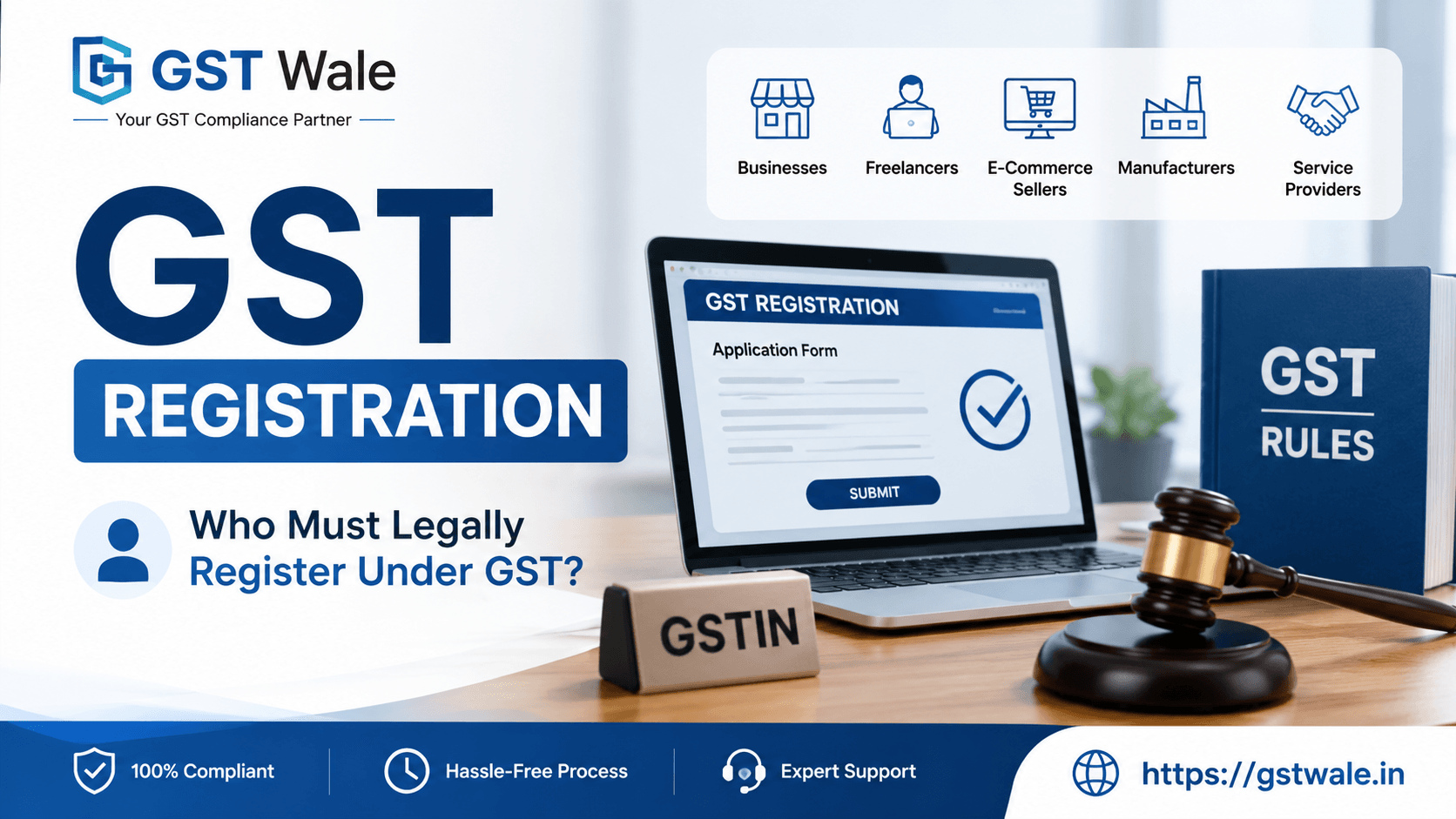
Starting a business in India comes with several legal responsibilities, and one of the most important among them is gst registration. Many business owners assume GST applies only to large companies, but that is not true. Under the Goods and Services Tax law, even small businesses, freelancers, online sellers, and service providers may need to obtain registration depending on their turnover, business type, or nature of supply.
At GST Wale, we regularly guide businesses that are confused about whether GST applies to them or not. In many cases, entrepreneurs delay compliance simply because they are unaware of the rules. If you are planning to start a business or expand operations, understanding the legal requirements for gst registration can save you from penalties and future tax issues.
If you are looking for professional assistance, our GST Registration service helps businesses complete the entire process smoothly and accurately.
What is GST Registration?
GST registration is the process through which a business gets registered under the Goods and Services Tax system and receives a unique GSTIN number from the government. This gstin number is used for tax collection, filing returns, and claiming input tax credit.
Once a business completes goods and services tax registration, it becomes legally authorized to collect GST from customers and deposit it with the government.
A valid gst registration is important for:
- Running a legally compliant business
- Issuing GST invoices
- Claiming input tax credit
- Expanding to e-commerce platforms
- Building trust with customers and vendors
Who is Legally Required to Apply for GST Registration?
Not every business must apply immediately, but certain categories fall under compulsory registration rules. Let us understand them one by one.
Businesses Crossing the Threshold Limit for GST
The most common reason for gst registration is exceeding the turnover threshold prescribed under GST law.
Current Threshold Limits
For Goods Suppliers
- ₹40 lakh annual turnover in most states
- ₹20 lakh in special category states
For Service Providers
- ₹20 lakh annual turnover in most states
- ₹10 lakh in special category states
This threshold limit for gst is calculated based on aggregate turnover across India under the same PAN.
Example
Suppose a trader in Delhi sells electronics worth ₹45 lakh annually. Since the turnover exceeds ₹40 lakh, gst registration becomes mandatory.
Similarly, if a consultant earns ₹25 lakh annually from professional services, registration is compulsory.
Interstate Supply Registration Rules
Businesses involved in interstate sales often need gst registration regardless of turnover.
What is Interstate Supply?
When goods or services are supplied from one state to another, it is called interstate supply.
For example:
- A Jaipur-based seller supplying goods to Maharashtra
- A freelancer in Noida providing services to a client in Karnataka
Under interstate supply registration provisions, many businesses are required to register even if turnover is below the normal limit.
However, some relaxations are available for service providers under specific conditions.
E-Commerce GST Rules
The rise of online selling has made e-commerce gst rules extremely important.
If you sell products or services through platforms like:
- Amazon
- Flipkart
- Meesho
- Myntra
- Swiggy
- Zomato
then gst registration may become mandatory.
Why is GST Mandatory for Online Sellers?
E-commerce operators collect TCS (Tax Collected at Source), and sellers need a GSTIN number to operate on these platforms.
Example
A small handicraft seller earning only ₹5 lakh annually through Amazon may still need gst registration due to e-commerce gst rules.
This is one of the most misunderstood areas where many small sellers unknowingly violate GST laws.
Compulsory Registration for Certain Businesses
Apart from turnover and online sales, GST law specifically lists businesses requiring compulsory registration.
Categories Covered Under Compulsory Registration
Casual Taxable Persons
Businesses operating temporarily in exhibitions, trade fairs, or seasonal events.
Non-Resident Taxable Persons
Foreign businesses supplying goods or services in India.
Input Service Distributors
Businesses distributing input tax credit among branches.
Agents Supplying on Behalf of Others
Commission agents and brokers dealing in taxable supplies.
Reverse Charge Liability Cases
Businesses required to pay tax under reverse charge mechanisms.
TDS/TCS Deductors
Entities responsible for deducting or collecting tax under GST provisions.
These categories must apply for gst registration even if turnover is very small.
GST Registration for Freelancers and Professionals
Many freelancers believe GST applies only to companies, but professionals are equally covered.
Professionals Who May Need GST Registration
- Chartered Accountants
- Digital marketers
- Content writers
- Consultants
- Architects
- Designers
- Software developers
If professional income exceeds the prescribed threshold limit for gst, registration becomes mandatory.
Practical Example
A freelance graphic designer earning ₹22 lakh annually from clients across India must obtain gst registration.
GST Registration for Startups
Startups often delay compliance during the early stage, but GST planning should begin from day one.
Why Startups Should Consider GST Registration Early
- Helps claim input tax credit
- Improves credibility with investors
- Required for B2B operations
- Necessary for online marketplace selling
- Simplifies future expansion
Even if registration is not compulsory initially, voluntary registration can offer long-term benefits.
Documents Required for GST Registration
To complete goods and services tax registration, businesses generally need:
- PAN card
- Aadhaar card
- Business registration proof
- Address proof
- Bank account details
- Passport-size photographs
- Digital signature (for companies and LLPs)
Proper documentation helps avoid delays or rejection.
Penalties for Not Taking GST Registration
Ignoring mandatory gst registration can lead to serious consequences.
Common Penalties
- 10% of tax amount due
- Minimum penalty of ₹10,000
- Interest on unpaid taxes
- Business compliance notices
- Difficulty claiming input tax credit
In cases of intentional tax evasion, penalties may become even higher.
Real-World Situation
We often see businesses receiving notices after crossing turnover limits unknowingly. By the time they approach professionals, penalties and interest have already accumulated.
This is why timely compliance matters.
Step-by-Step GST Registration Process
Here is a simple overview of how gst registration works:
Step 1: Gather Documents
Prepare PAN, Aadhaar, address proof, and bank details.
Step 2: Apply on GST Portal
Fill the online application form carefully.
Step 3: Verification Process
The department verifies submitted information.
Step 4: Receive GSTIN Number
After approval, a GSTIN number is issued.
Step 5: Start Filing Returns
Businesses must regularly file GST returns after registration.
Professional assistance can make this process much smoother and error-free.
Common Mistakes Businesses Should Avoid
Ignoring Interstate Transactions
Even a single interstate supply can trigger registration requirements.
Delaying Registration
Waiting too long after crossing turnover limits can attract penalties.
Wrong Business Classification
Incorrect category selection may create future compliance issues.
Assuming Small Businesses are Exempt
Many small online sellers still fall under compulsory registration rules.
Confusing Voluntary and Mandatory Registration
Some businesses qualify for voluntary registration while others are legally required.
FAQs on GST Registration
Is gst registration mandatory for small businesses?
Not always. It depends on annual turnover, business type, and supply nature. Some businesses qualify for exemption below the threshold limit for gst.
Can I operate without a GSTIN number?
If your business falls under compulsory registration categories, operating without a gstin number is illegal.
Is gst registration compulsory for online sellers?
Yes, in many cases e-commerce gst rules require sellers on online platforms to register under GST.
How long does gst registration take?
Usually, the process takes around 3–7 working days if documents are correct.
Can freelancers apply for gst registration?
Yes. Freelancers and professionals must register if turnover exceeds prescribed limits or if specific GST conditions apply.
Understanding the legal requirements for gst registration is essential for every business owner in India. Whether you are a trader, freelancer, startup founder, consultant, or online seller, GST compliance should never be ignored.
The rules regarding compulsory registration, interstate supply registration, e-commerce gst rules, and turnover thresholds can sometimes feel confusing. However, timely registration helps avoid penalties, improves business credibility, and ensures smooth operations.
At GST Wale, we help businesses complete gst registration quickly, accurately, and without unnecessary complications. From document preparation to final approval, our experts provide complete support tailored to your business needs.
If you are unsure whether your business requires gst registration, connect with GST Wale today and get professional guidance from experienced tax experts.
 Previous