


Master PDF Download: The Complete and Searchable GST New Rate List
Master PDF Download: The Complete and Searchable GST New Rate List
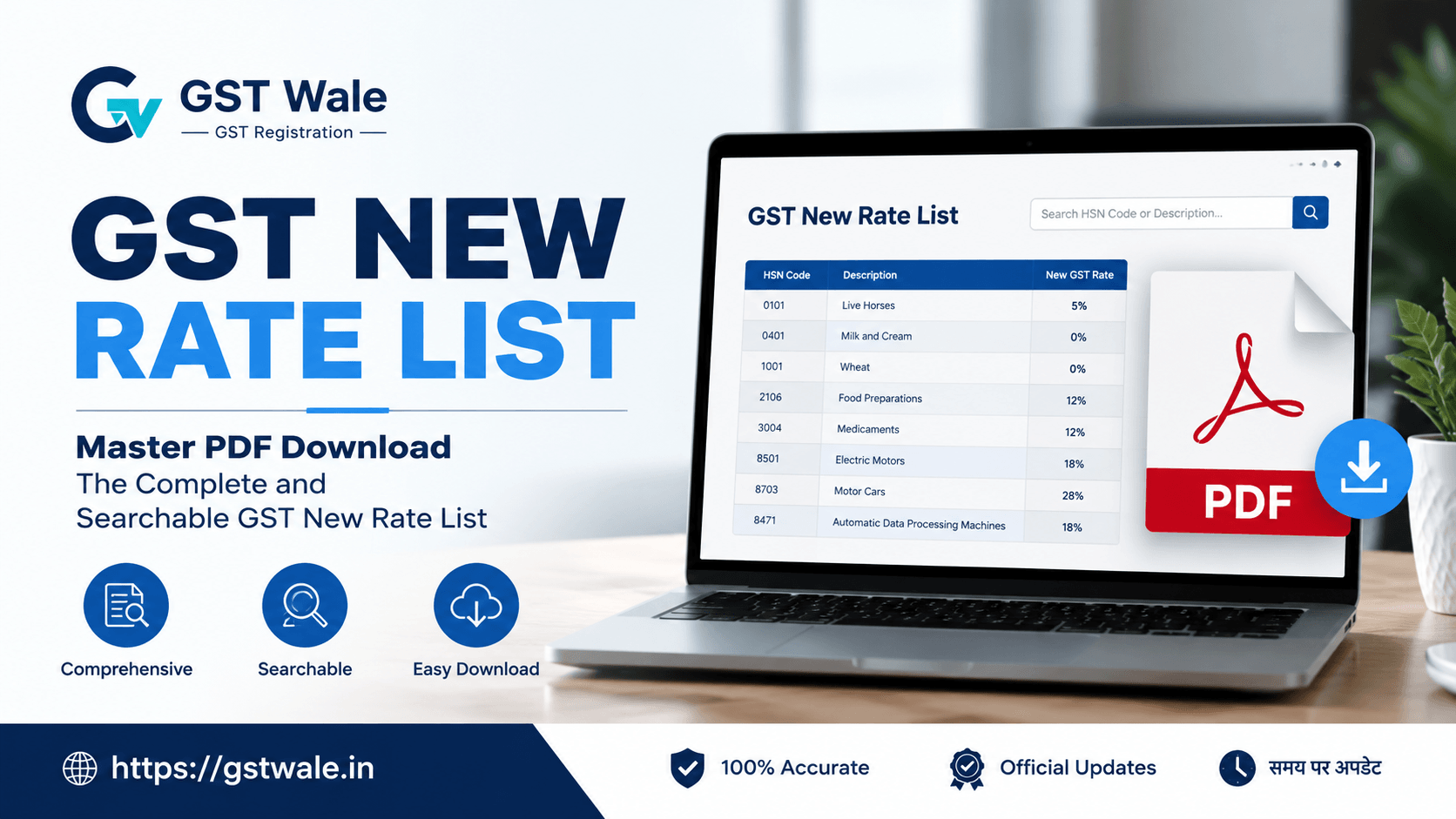
Running a business in India is a rewarding journey, but let’s be completely honest—keeping track of the constant changes in tax slabs can give even the most seasoned entrepreneurs a headache. Every time the GST Council meets, there is a buzz in the market about item X getting cheaper or service Y getting costlier. As Chartered Accountants, we see business owners losing sleep over whether they are charging the right tax amount to their customers. To make your life simpler, we at GST Wale have compiled the ultimate, searchable gst new rate list ready reckoner. Whether you are expanding your business or just starting out with your GST Registration, having a reliable and updated tax guide by your side ensures you never face penalties or compliance issues.
Understanding these structural shifts is essential because applying an incorrect tariff can lead to a demand notice from the department, along with interest and heavy penalties. Let's break down exactly how the Indian indirect tax ecosystem is organized today, how you can navigate it easily, and how our downloadable master tracker can help your daily operations.
Decoding the Indian Tax Slabs: The Ready Reckoner GST
The Indian Goods and Services Tax system does not follow a "one size fits all" approach. Instead, it categorizes thousands of items and services into specific buckets, commonly known as the gst new slab structure. These slabs are designed to keep essential goods affordable for the common man while placing a higher tax layout on luxury or demerit items.
The current system relies heavily on five primary tax brackets:
0% (Exempted): This bucket covers daily essentials, fresh agricultural produce, unbranded food grains, milk, curd, and books. The idea is to keep basic survival items completely inflation-free and untaxed.
5% (Mass Consumption): Items of common utility fall here. This includes packed food items, life-saving medicines, tea, coffee, edible oil, and footwear or apparel below a specific price threshold.
12% (Standard Rate - Lower): This slab includes items like processed food, fruit juices, dairy products like cheese and butter, mobile phones, and business-class air travel.
18% (Standard Rate - Higher): This is the most common bucket for the services sector and manufacturing goods. Capital goods, IT services, electronic items, steel, CCTV cameras, and financial services are all taxed at this standard rate.
28% (Luxury & Demerit): The highest tax bracket is reserved for luxury cars, tobacco products, aerated drinks, betting, and high-end consumer electronics like air conditioners. These items often attract an additional compensation cess.
Because changes happen frequently through official government notifications, relying on old booklets can backfire. Our curated master sheet serves as a live ready reckoner gst tool, reflecting the latest changes approved by the Council so you do not have to cross-verify multiple government websites.
How to Find Your Exact Tax Bracket Online
If you are raising an invoice today, you cannot just guess the tax percentage. You need an official mechanism to verify it. That is where classification codes come into play. For goods, we use the HSN (Harmonized System of Nomenclature) code, and for services, we use the SAC (Services Accounting Code).
Using an HSN Code Rate Finder
Every single product traded in India is tied to a specific 4, 6, or 8-digit HSN code. To find your exact tariff, you should use an online hsn code rate finder tool. Here is the step-by-step method to ensure absolute accuracy:
Identify the core material or nature of your product (e.g., "Stainless Steel Utensils").
Input the name or the initial 4 digits into a verified tariff finder tool.
Cross-reference the resulting code against the gst new rate list to see if any recent exemptions or hikes apply to that specific sub-category.
Verify if your business turnover requires you to mention a 4-digit or a 6-digit HSN code on your tax invoices.
Why Your Business Needs the Ultimate Industry Tax Chart
Manually searching for individual codes during busy billing hours is highly inefficient. That is why our team at GST Wale designed the ultimate industry tax chart. Instead of scrolling through hundreds of pages of legal notifications, this chart groups products and services by industry sectors like Textiles, Real Estate, E-commerce, Hospitality, and Manufacturing.
When you download tax list resources that are structured cleanly, your accounts team can quickly verify the gst rates for raw material procurement as well as final outward supplies. This drastically reduces invoicing errors and keeps your Input Tax Credit (ITC) ledger perfectly clean.
Master PDF Download: The Complete GST New Rate List
To make this data completely accessible, we have created a comprehensive, fully searchable document. This means you do not need an active internet connection every time you want to verify a gst new rate. You can simply open the document on your smartphone or desktop and use the "Ctrl + F" function to find your product instantly.
What is Inside This Master PDF?
Up-to-date gst rates categorized alphabetically for quick scanning.
A dedicated section highlighting the latest entries in the gst new rate list across emerging sectors.
Clear distinctions between CGST, SGST, and IGST applications for interstate and intrastate transactions.
Exemption lists to help you identify items that are completely free from tax liabilities.
Expert CA Tip: Always update your accounting software (like Tally, Zoho, or Busy) whenever a fresh gst new rate is notified. Running an outdated tax configuration in your ERP system can result in miscalculated tax collections, which will eventually fail reconciliation during your monthly GSTR-1 and GSTR-3B filings.
Frequently Asked Questions (FAQs)
How often does the government update the gst new rate list?
The GST Council meets periodically (usually every few months) to review economic conditions, industry representations, and revenue collections. Any modifications or rate rationalizations decided during these meetings are later implemented via official notifications, updating the master gst new rate list.
What happens if I accidentally charge an old gst new rate?
If you undercharge tax, you will be liable to pay the short short-fall amount out of your own pocket along with interest (usually 18% per annum) from the date the tax was due. If you overcharge, your buyer will face issues claiming the correct Input Tax Credit, and you may face penalties for incorrect invoicing.
Where can I reliably download tax list updates?
While the official CBIC portal releases regular notifications, they are often written in complex legal language. For a simplified, searchable, and business-friendly version, you can access the master trackers provided by professional advisory firms like GST Wale.
Do all businesses need to use HSN codes on invoices?
No, it depends on your annual aggregate turnover. Businesses with a turnover of up to ₹5 crores need to use 4-digit HSN codes for B2B invoices (optional for B2C). Businesses with a turnover exceeding ₹5 crores must mandatorily use 6-digit HSN codes on all tax invoices.
Stay Compliant with GST Wale
Navigating the complexities of the gst new rate list does not have to be an exhausting chore. By downloading a reliable reference chart and integrating it into your daily accounting practices, you protect your business from legal disputes, optimize your cash flows, and ensure your customers are always billed correctly.
At GST Wale, we act as your extended financial team, taking care of everything from initial registrations to monthly return filings, audits, and legal compliance. If you want to streamline your tax processes or need expert guidance on how a specific gst new slab impacts your profit margins, reach out to us today. Let us handle the complexities of compliance while you focus on scaling your business across India!
 Previous