


Is the 5% GST New Slab Really a Relief for the Common Household Budget?
Is the 5% GST New Slab Really a Relief for the Common Household Budget?
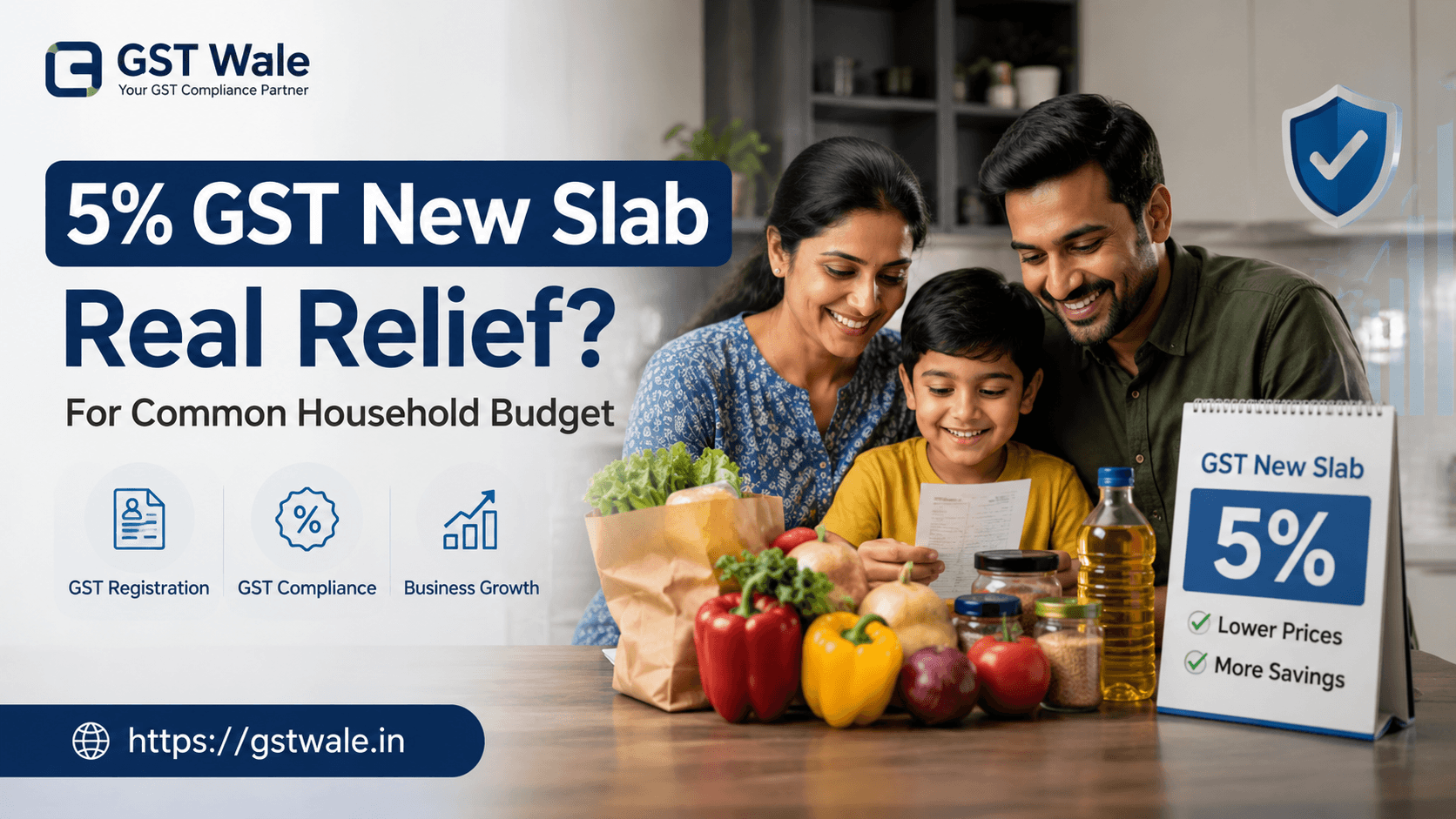
Every time the GST Council meets in India, kitchen tables across the country turn into mini-finance ministries. As a practicing Chartered Accountant, the most common question I get over a cup of chai isn't about complex corporate tax structures or input tax credit mechanisms. Instead, people ask me a much simpler, deeply personal question: "Sir, will our monthly grocery bill go up or down next month" With the recent chatter around the 5% gst new slab, everyone from homemakers to salaried professionals is trying to figure out if this shift is a genuine relief or just a clever restructuring of numbers.
At GST Wale, we believe that understanding your taxes shouldn't require a finance degree. Whether you are a consumer managing a tight monthly budget or a business owner figuring out if you need to apply for a fresh GST Registration to stay compliant, the way these rates move affects your pocket directly. Let’s break down exactly what this 5% gst new slab means for your household expenses, what is getting cheaper, and where you might need to tighten your purse strings.
Decoding the 5% GST New Slab: What Changes?
To truly understand the impact of the gst new slab, we have to look at how our indirect tax system has evolved. For years, Indian goods have been divided into distinct gst rates—primarily 0%, 5%, 12%, 18%, and 28%. The introduction of a modified or restructured 5% gst new slab is an attempt by the government to streamline tax collection while keeping essential items accessible.
However, the real magic—or mischief—lies in the shuffling of items between these percentages. When an item moves from the 12% bracket down to the 5% gst new slab, it feels like a victory. But when an item that was previously exempted (0%) gets pulled into the 5% gst new slab, it instantly pinches the common man's pocket.
The Reality of Your Monthly Kitchen Expenses
When evaluating how this changes things, we must look at the everyday zones tax dynamics. The kitchen budget is driven heavily by raw ingredients and packed items.
Packed Grocery Prices vs. Loose Commodities
Previously, loose grains, unbranded curd, and basic un-packed staples enjoyed a 0% tax rate. Over recent updates, the government shifted pre-packaged and labeled commodities into the 5% bracket. If the gst new slab expands this definition further, your packed grocery prices are bound to see a steady upward tick.
What stays relieved: Open, unbranded local vegetables, milk, and loose grains remain outside the tax net.
What costs more: Atta, pulses, paneer, and curd if they are neatly packed and labeled by your favorite supermarket brand.
Daily Toiletries GST Check
Your morning routine isn't spared either. Things like soaps, toothpastes, and hair oils traditionally sat at higher brackets like 18%. Any move to bring essential hygiene products closer to a lower gst new rate offers direct breathing room. However, the current daily toiletries gst structure still keeps most processed cosmetic items in the higher brackets, meaning your luxury shampoos and skin creams won't be dropping in price anytime soon.
Consumer Price Index Impact: The Macro View of Your Pocket
Economists love talking about the consumer price index impact (CPI) when analyzing inflation. In simple terms, CPI measures the change over time in the prices of a basket of consumer goods and services that households buy.
Expert Insight from GST Wale: If the gst new slab absorbs items that were previously untaxed, CPI goes up, which means your overall purchasing power goes down—even if luxury items like televisions or air conditioners become slightly cheaper in the 18% or 28% brackets. You don't buy a TV every month, but you do buy oil, milk, and soap every single week.
Winners and Losers: A Quick Household Comparison
To give you a clearer picture, let's look at how the gst new rate list alters the landscape for a typical middle-class Indian family.
| Product Category | Old or General Status | Under the GST New Slab / Rates | Impact on Budget |
|---|---|---|---|
| Loose Staples & Milk | 0% | Restructured 0% | Neutral |
| Pre-packed Wheat/Rice | Mostly 0% (unbranded) | 5% | Negative (Prices Rose) |
| Basic Medicines | Varied (12%) | Pushed toward lower slabs | Positive (Relief) |
| Processed Footwear (< ₹1000) | 5% | Maintained/Reviewed at 5% | Neutral |
| E-Bikes & Green Energy | High Slabs | Lowered to 5% | Positive (Long-term saving) |
Is it Really a Relief? The CA's Final Verdict
So, is the 5% gst new slab a true relief? The honest answer is: It depends on your lifestyle.
If your household relies heavily on fresh, locally sourced, unbranded items from the local kirana store, the gst new slab will not disrupt your life. You will enjoy the benefits of lowered rates on basic services and medical supplies without feeling the burn of packaged goods inflation.
However, if your lifestyle leans toward modern retail—where even your daily salt, curd, and chopped vegetables come in sealed plastic packaging with a brand logo—your monthly expense sheet will show a net increase. The small savings gathered from lowered gst rates on electronics or footwear rarely compensate for the daily, compounding increase in packed grocery prices.
Frequently Asked Questions (FAQs)
1. Does the 5% gst new slab apply to all grocery items?
No. Fresh vegetables, fruits, loose milk, and unbranded food grains are entirely exempt (0%). The 5% gst new slab primarily targets pre-packaged, pre-labeled commodities.
2. Why does the government put tax on packed curd and paneer?
The government introduced this to curb tax evasion where large brands sold premium goods under the guise of "unbranded" labels. Bringing them into a standardized gst new rate ensures a level playing field, though it raises the cost for the final consumer.
3. How can a small household minimize the impact of changing gst rates?
Focus your purchasing on loose, local produce where possible. Buying staples in bulk from local wholesalers who do not deal in heavily branded, pre-packaged items can easily shave off 5% to 12% from your monthly kitchen bills.
4. Do small businesses selling these items need to register for GST?
Only if their annual turnover crosses the threshold limits (typically ₹40 Lakhs for goods in most states, and ₹20 Lakhs for services). If you are expanding your business, it is best to check your liability early to avoid penalties.
How GST Wale Can Help You Navigate the Tax Maze
Tax laws in India change fast, and keeping up with every gst new rate list can be exhausting for business owners and individuals alike. Misinterpreting a slab can lead to wrong pricing, loss of customers, or worse—heavy compliance penalties from the tax department.
At GST Wale, we take the headache out of indirect taxes. From setting up your initial tax infrastructure to filing monthly returns flawlessly, our team of expert Chartered Accountants handles it all. Don't let changing tax slabs disrupt your peace of mind or your business budget.
 Previous