


Ambulance, Fire Trucks, and Special Vehicles: The Exempted GST for Car Categories
Ambulance, Fire Trucks, and Special Vehicles: The Exempted GST for Car Categories
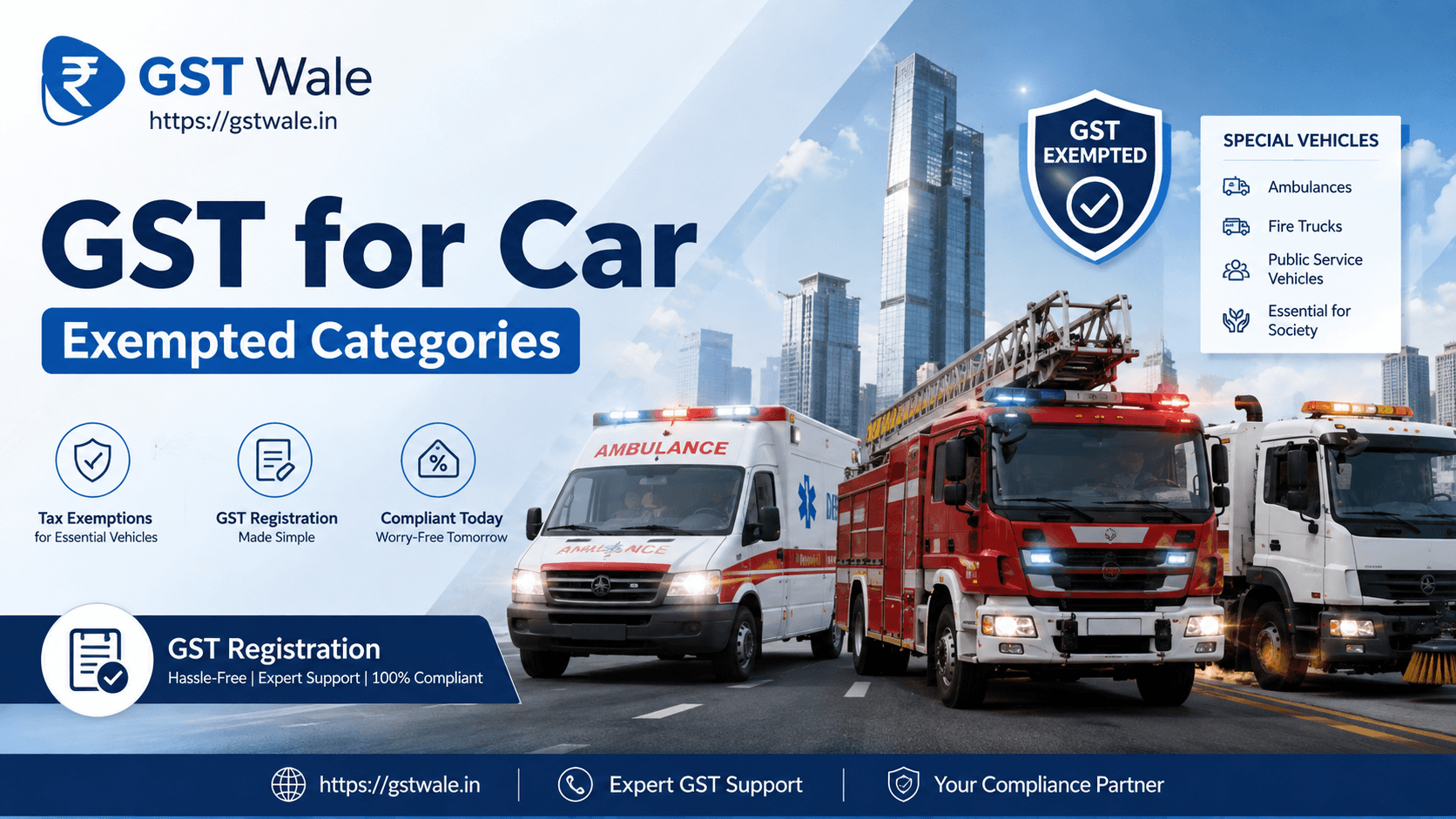
When people discuss gst for car, the conversation usually revolves around private vehicles, SUVs, or luxury cars. However, not every vehicle falls under the same GST rules. Certain vehicles that serve public welfare and emergency services receive special treatment under the GST framework. Ambulances, fire trucks, and other specialized utility vehicles are designed to protect lives rather than generate personal convenience or luxury. Understanding how GST applies to these vehicles can help government bodies, charitable organizations, hospitals, and businesses make informed purchasing decisions.
If you are planning to procure vehicles for an institution or organization, ensuring proper GST Registration is equally important to remain compliant with GST regulations and claim eligible benefits wherever applicable.
Understanding GST for Car Categories in India
The gst for car system in India classifies vehicles based on their purpose, design, engine specifications, and intended usage. While passenger vehicles generally attract higher GST rates along with compensation cess, vehicles built specifically for emergency services or public welfare often receive exemptions or concessional treatment.
The government's objective is simple—essential services should not become more expensive because of indirect taxes. Therefore, special categories of vehicles receive tax benefits to support healthcare, disaster management, and public administration.
Why Certain Vehicles Receive GST Exemptions
The primary objective behind exempting or reducing gst for car in certain categories is public interest. Emergency response vehicles are not luxury assets. Instead, they save lives, protect public property, and support essential government functions.
GST concessions encourage organizations to invest in better emergency infrastructure without significantly increasing procurement costs.
Major Reasons Behind the Exemptions
- Promotion of healthcare services
- Support for emergency rescue operations
- Encouragement of disaster preparedness
- Reduction in operational costs for public institutions
- Strengthening essential public services
GST for Car Used as Ambulances
One of the most commonly discussed exceptions under gst for car involves ambulances. Since ambulances are specially designed medical transport vehicles equipped with life-saving equipment, they are treated differently from ordinary passenger cars.
Hospitals, charitable trusts, government health departments, and authorized medical institutions often procure ambulances to deliver emergency medical care. The GST provisions applicable to ambulances are structured to ensure healthcare services remain affordable.
Features That Qualify an Ambulance
- Permanent medical equipment installation
- Emergency patient transport facility
- Medical oxygen systems
- Emergency lighting and sirens
- Dedicated patient care configuration
Simply modifying a regular passenger vehicle does not automatically qualify it for exemption. Authorities evaluate the actual design and intended use.
GST for Fire Trucks and Fire Rescue Vehicles
Another important category under gst for car relates to fire trucks and rescue vehicles. These vehicles are indispensable for disaster response and fire control.
Municipal corporations, industrial plants, airports, and government agencies depend on fire vehicles for immediate emergency action. Since these vehicles perform public safety functions, they often receive favorable GST treatment under applicable notifications.
Common Types of Fire Vehicles
- Water tender fire trucks
- Foam fire engines
- Rescue vehicles
- Emergency ladder trucks
- Industrial fire response vehicles
The applicable tax treatment depends on vehicle classification under GST and customs tariff schedules.
Special Utility Vehicles Exemption Under GST
The concept of special utility vehicles exemption extends beyond ambulances and fire engines. Several vehicles designed exclusively for specialized public functions may qualify for different GST treatment depending on their specifications and legal classification.
Examples include:
- Mobile medical clinics
- Disaster response vehicles
- Road maintenance vehicles
- Municipal sanitation vehicles
- Special engineering service vehicles
These vehicles are generally manufactured with dedicated equipment and cannot be treated as ordinary passenger vehicles.
Emergency Response Vehicle Tax Explained
The term emergency response vehicle tax broadly refers to the GST treatment applicable to vehicles used during emergencies. These include:
- Ambulances
- Fire rescue vehicles
- Disaster relief vehicles
- Civil defence vehicles
- Emergency communication vehicles
The government recognizes that these vehicles serve society rather than individual commercial interests. Accordingly, tax policies aim to reduce the financial burden on organizations responsible for emergency services.
GST for Car Purchased by Non-Profit Organizations
Many charitable institutions ask whether non profit organizations vehicle gst rules provide automatic exemptions.
The answer is no. GST exemption depends primarily on the nature and use of the vehicle rather than only the status of the purchasing organization.
For example, if a charitable hospital purchases a properly designed ambulance, the applicable GST provisions relating to ambulances may apply. However, if the same organization purchases a luxury passenger car for administrative purposes, normal GST rules generally continue to apply.
Public Transport Subsidies and GST
Although public transport subsidies operate under separate government schemes, they indirectly complement GST policies. Governments often encourage affordable public transport by providing financial assistance to transport operators while GST provisions address the taxation aspect.
Together, these measures aim to improve transportation accessibility and reduce the financial burden on public service providers.
GST Treatment for Local Governance Cars
Many readers also ask about local governance cars used by municipalities, panchayats, and government departments.
The GST applicability depends on:
- Purpose of the vehicle
- Vehicle classification
- End usage
- Applicable government notifications
- Whether the vehicle qualifies as a special-purpose vehicle
Not every government-owned vehicle automatically becomes GST exempt. The actual vehicle category remains the deciding factor.
Important Points to Remember About GST for Car Purchases
Before Buying Any Special Vehicle
- Verify the vehicle classification.
- Check applicable GST notifications.
- Confirm whether the vehicle qualifies as a special-purpose vehicle.
- Maintain complete purchase documentation.
- Consult a GST expert before claiming any exemption.
Real-Life Example
Suppose a charitable hospital purchases a fully equipped ambulance for patient transportation. Since the vehicle is specifically manufactured and certified as an ambulance, the applicable GST provisions relating to emergency medical vehicles would be considered during taxation.
On the other hand, if the hospital purchases a regular SUV for management officials, the normal gst for car provisions applicable to passenger vehicles generally apply. The intended use and vehicle design make a significant difference.
Frequently Asked Questions
Is GST the same for every car in India?
No. The applicable gst for car depends on vehicle type, engine capacity, purpose, classification, and whether compensation cess applies.
Are ambulances exempt from normal GST rates?
Ambulances receive different GST treatment because they are specially designed emergency medical vehicles. The applicable provisions depend on the relevant GST notifications and vehicle classification.
Can charities claim GST exemption on every vehicle purchase?
No. The organization's charitable status alone does not guarantee exemption. The vehicle's design, purpose, and applicable GST provisions determine eligibility.
Do fire trucks qualify for concessional GST treatment?
Fire trucks are generally treated differently from ordinary passenger vehicles because they are essential emergency service vehicles. The applicable GST treatment depends on statutory provisions and classification.
Should buyers seek professional advice before purchasing special vehicles?
Yes. Consulting GST professionals helps ensure correct tax treatment, proper documentation, and compliance with the latest GST notifications.
Understanding gst for car becomes much easier when you recognize that GST is based on the purpose and classification of the vehicle rather than simply its appearance. Ambulances, fire trucks, and other specialized utility vehicles play a critical role in public welfare, and the GST framework reflects their importance through specific tax provisions and exemptions. Before purchasing any special-purpose vehicle, always verify the applicable GST rules to avoid unnecessary tax disputes.
Need Expert GST Guidance?
Whether you need assistance with GST registration, GST compliance, input tax credit, vehicle taxation, or interpreting GST notifications, GST Wale is here to help. Our experienced professionals provide practical, reliable, and business-focused GST solutions that keep your organization compliant while helping you make informed financial decisions. Contact GST Wale today for expert support tailored to your business needs.
 Previous