


Types of Company Registration in India: Which One is Right for You?
Types of Company Registration in India: Which One is Right for You?
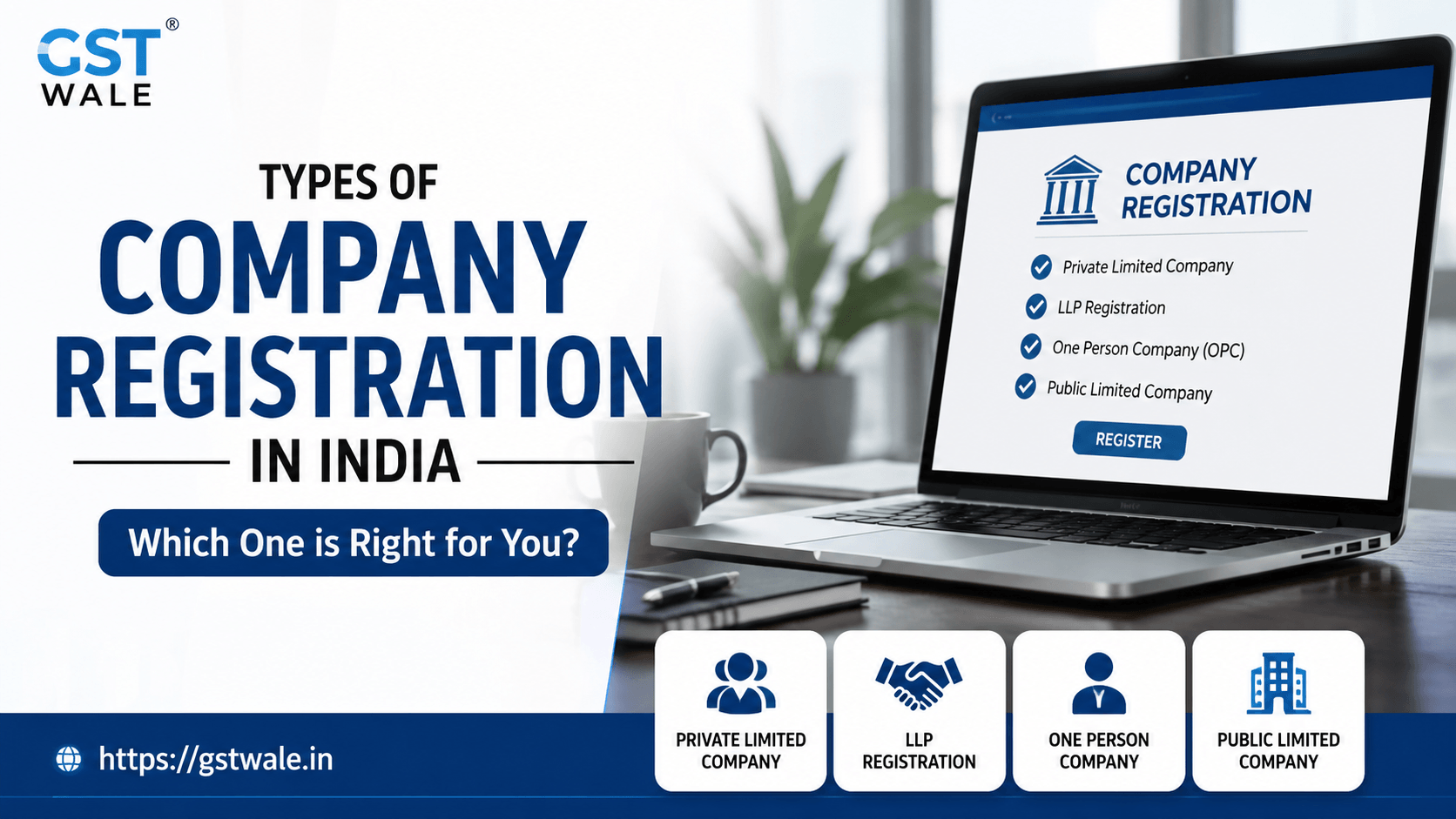
Starting a business is an exciting journey, but choosing the right business structure is one of the most important decisions you will make. The type of entity you register affects your taxation, compliance, funding opportunities, liability, and long-term growth. That’s why understanding the different options for Company Registration in India is essential before launching your business.
At GST Wale, we often meet entrepreneurs who are confused between a Private Limited Company, LLP, OPC, or Partnership Firm. Each structure has its own advantages, legal requirements, and suitability depending on your business goals. If you are planning to start a startup, consultancy, trading business, or online venture, selecting the right structure can save you time, money, and future complications.
If you are planning to begin your entrepreneurial journey, our Company Registration service can help you complete the process smoothly and legally without unnecessary delays.
In this article, we will explain the major types of companies India offers, compare them practically, and help you decide which structure is right for you.
Why Choosing the Right Business Structure Matters
Before discussing the different options for Company Registration in India, it is important to understand why business structure selection matters.
Your chosen structure impacts:
- Legal liability of owners
- Taxation and compliance
- Ability to raise investment
- Brand credibility
- Business continuity
- Government registrations and licenses
For example, a startup seeking investors usually prefers a Private Limited Company, while professionals and consultants may choose LLP registration India for flexibility and lower compliance.
Types of Company Registration in India
India offers several business registration options based on ownership, liability, and operational needs.
Private Limited Company
A Private Limited Company India is one of the most popular choices for startups and growing businesses.
Under this structure:
- The company becomes a separate legal entity
- Shareholders have limited liability
- Ownership is divided into shares
- Funding and investment become easier
Key Features
- Minimum 2 directors required
- Minimum 2 shareholders required
- Limited liability protection
- Better credibility in the market
- Suitable for startups and scalable businesses
Best For
- Tech startups
- E-commerce businesses
- Agencies and service companies
- Businesses planning external funding
Example
Suppose two friends start an app development company and plan to raise funding later. In such cases, Company Registration in India through a Private Limited structure is usually the ideal choice.
Advantages
- Easy investment opportunities
- Limited personal liability
- Better business image
- Perpetual succession
Disadvantages
- Higher compliance requirements
- Mandatory annual filings
- Statutory audit applicable
Limited Liability Partnership (LLP)
LLP registration India is another preferred option among professionals and small business owners.
An LLP combines features of a partnership and a company.
Key Features
- Separate legal identity
- Limited liability for partners
- Flexible management structure
- Lower compliance than a private company
Best For
- Consultants
- CA firms
- Law firms
- Freelancers
- Small service businesses
Example
A group of architects starting a design consultancy may prefer LLP registration India because it offers liability protection with simpler compliance.
Advantages
- Less compliance burden
- No mandatory audit below threshold
- Flexible profit-sharing
- Lower operational cost
Disadvantages
- Difficult to raise equity funding
- Limited investor preference
One Person Company (OPC)
An opc company India is suitable for solo entrepreneurs who want the benefits of a company structure without needing partners.
Key Features
- Only one shareholder required
- Limited liability protection
- Separate legal entity
- Suitable for single-owner businesses
Best For
- Freelancers
- Solo founders
- Online sellers
- Individual consultants
Example
A digital marketing freelancer earning substantial revenue may register an opc company India to improve credibility and limit personal liability.
Advantages
- Full control with single owner
- Limited liability
- Better brand image
Disadvantages
- Cannot add equity partners directly
- More compliance than proprietorship
Sole Proprietorship
A Sole Proprietorship is the simplest form of business structure India offers.
There is no separate legal identity between the owner and the business.
Key Features
- Single owner
- Minimal compliance
- Easy to start
- No separate registration under Companies Act
Best For
- Small shops
- Local traders
- Home businesses
- Small online sellers
Advantages
- Easy setup
- Lower compliance cost
- Full business control
Disadvantages
- Unlimited liability
- Difficult to raise funding
- Limited business scalability
Partnership Firm
A traditional Partnership Firm is formed when two or more persons run a business together.
Key Features
- Governed by Partnership Act
- Simple registration process
- Shared profits and responsibilities
Best For
- Family businesses
- Small trading firms
- Local partnerships
Advantages
- Easy formation
- Shared responsibilities
- Lower compliance
Disadvantages
- Unlimited liability
- Partner disputes can affect business continuity
Company Types Comparison
Choosing the right option for Company Registration in India becomes easier when you compare the structures practically.
Liability Protection
- Private Limited Company – Limited liability
- LLP – Limited liability
- OPC – Limited liability
- Proprietorship – Unlimited liability
- Partnership – Unlimited liability
Compliance Level
- Highest: Private Limited Company
- Moderate: OPC and LLP
- Lowest: Proprietorship
Funding Opportunities
- Best: Private Limited Company India
- Moderate: OPC
- Limited: LLP and Proprietorship
Suitable Business Size
- Small Businesses – Proprietorship or LLP
- Growing Startups – Private Limited
- Solo Entrepreneurs – OPC
Which Company Registration Option is Right for You?
The right structure depends on your business goals, investment plans, and operational requirements.
Choose a Private Limited Company If:
- You plan to raise funding
- You want scalability
- You need strong brand credibility
- You are building a startup
Choose LLP If:
- You want lower compliance
- You run a professional service business
- You need flexibility in management
Choose OPC If:
- You are a solo entrepreneur
- You want limited liability
- You want professional recognition
Choose Proprietorship If:
- You are testing a small business idea
- You need minimal legal formalities
At GST Wale, we always recommend evaluating future business goals before finalizing Company Registration in India.
Documents Required for Company Registration in India
Generally, the following documents are required:
For Directors or Partners
- PAN Card
- Aadhaar Card
- Passport-size photograph
- Mobile number and email ID
Address Proof
- Bank statement
- Electricity bill
- Telephone bill
Registered Office Proof
- Rent agreement
- NOC from owner
- Utility bill
Common Mistakes to Avoid During Company Registration
Many business owners make avoidable mistakes during Company Registration in India.
Choosing the Wrong Structure
Selecting a structure only based on low cost can create future compliance and taxation issues.
Ignoring Compliance Requirements
Many entrepreneurs underestimate annual filing responsibilities.
Using Incorrect Business Activities
Business activity selection should align properly with actual operations.
Delaying Trademark and GST Registration
Protecting your brand and obtaining GST registration on time is equally important.
FAQs on Company Registration in India
Which is the best company type for startups in India?
A Private Limited Company India is generally considered best for startups due to investment opportunities and scalability.
Is LLP better than Private Limited Company?
LLP registration India is better for small professional businesses seeking lower compliance, while Private Limited is better for funding and growth.
Can one person register a company in India?
Yes, an opc company India allows a single entrepreneur to register a company with limited liability.
What is the cheapest business structure in India?
A Sole Proprietorship is usually the cheapest and easiest business structure India offers.
How long does Company Registration in India take?
Typically, the process takes around 7–15 working days depending on documentation and approvals.
Choosing the right option for Company Registration in India is a critical step that directly affects your business growth, taxation, compliance, and credibility. Whether you select a Private Limited Company, LLP, OPC, or Proprietorship, the decision should align with your long-term business goals.
There is no one-size-fits-all approach. A startup looking for investors will have different requirements than a freelancer or a family business. That’s why professional guidance becomes important before making a final decision.
At GST Wale, we help entrepreneurs, startups, and business owners complete Company Registration in India quickly, accurately, and without unnecessary complications. From documentation to approvals and compliance guidance, our experts ensure a smooth registration experience so you can focus on growing your business with confidence.
 Previous