


Cost of Company Registration in India: Fees, Charges & Hidden Costs
Cost of Company Registration in India: Fees, Charges & Hidden Costs
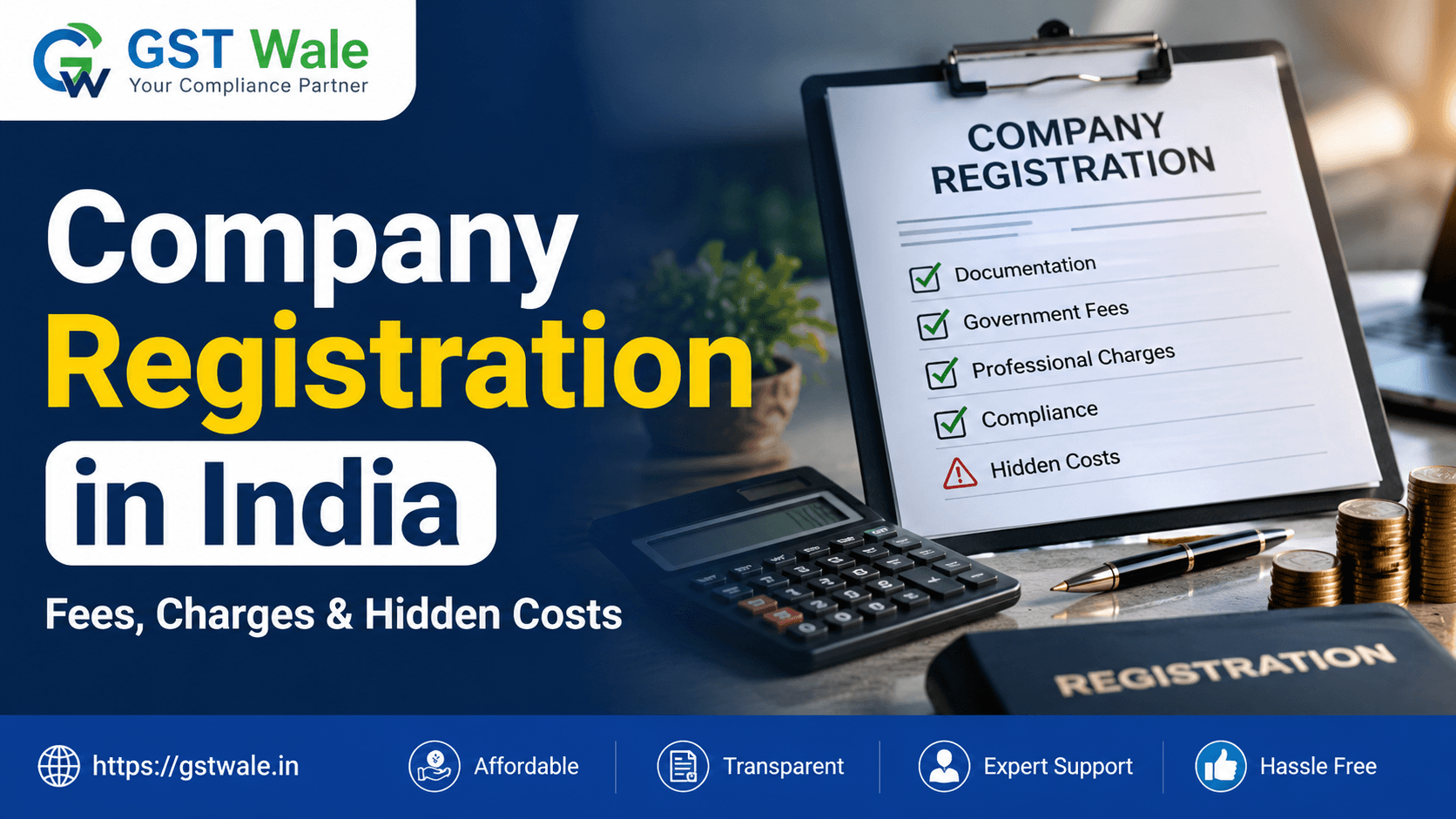
Starting a business is an exciting journey, but before launching operations, one important question comes to every entrepreneur’s mind — what is the actual cost of Company Registration in India?
Many business owners assume that incorporation only involves government filing fees. However, in reality, there are several components involved, including professional charges, DSC fees, stamp duty, compliance costs, and a few hidden expenses that most people discover later.
At GST Wale, we regularly help startups, entrepreneurs, freelancers, and growing businesses with smooth and affordable Company Registration services. One common issue we notice is that many founders underestimate the complete company registration cost India because they only focus on the advertised “starting from” prices.
In this article, we will break down every major expense involved in Company Registration in India so you can plan your startup budget properly and avoid unexpected surprises.
Why Understanding Company Registration Costs Matters
Before registering a company, it is important to understand where your money actually goes. Many online platforms advertise extremely low incorporation packages, but later add additional charges for mandatory services.
Knowing the real cost of Company Registration in India helps you:
- Plan your startup budget accurately
- Avoid hidden charges
- Compare service providers properly
- Ensure legal compliance from day one
- Prevent future penalties
Whether you are starting a Private Limited Company, LLP, OPC, or partnership, understanding the fee structure is essential.
Main Components of Company Registration in India
The total cost of Company Registration in India generally includes:
- Government filing fees
- DSC (Digital Signature Certificate)
- DIN application charges
- Professional or CA fees
- PAN & TAN processing
- Stamp duty
- Registered office documentation
- Compliance setup costs
Let us understand each cost in detail.
Government Fees for Company Registration in India
ROC Filing Fees
The Ministry of Corporate Affairs (MCA) charges government fees for incorporation filings.
These govt fees company registration charges depend mainly on:
- Authorized share capital
- Type of company
- State of registration
For example:
| Authorized Capital | Approx Govt Fees |
|---|---|
| Up to ₹1 lakh | Minimal or Nil |
| ₹1–₹10 lakh | Moderate fees |
| Above ₹10 lakh | Higher filing charges |
For most small startups, government fees remain relatively affordable.
Stamp Duty Charges
Stamp duty is one of the biggest variations in company registration cost India.
It differs from state to state because each state government has separate stamp duty rules.
For example:
- Maharashtra generally has higher stamp duty
- Delhi and Uttar Pradesh may have lower charges
- Karnataka and Telangana have different structures
Stamp duty applies mainly to:
- SPICe+ incorporation forms
- MOA (Memorandum of Association)
- AOA (Articles of Association)
This is why incorporation charges india vary significantly across locations.
DSC Charges in Company Registration
What is DSC?
A Digital Signature Certificate (DSC) is mandatory for directors during Company Registration in India.
Since all MCA filings are online, directors must digitally sign incorporation documents.
Approximate DSC Cost
Usually, DSC charges range between:
- ₹800 to ₹2,500 per director
The cost depends on:
- Validity period
- Service provider
- Token type
For a company with two directors, DSC costs can become a noticeable part of startup cost india.
DIN Charges for Directors
Director Identification Number (DIN)
DIN is required for every proposed director.
The good news is that DIN allotment is generally included in the SPICe+ incorporation form for new companies.
However, if additional DIN applications are required later, extra charges may apply.
Professional Fees for Company Registration in India
CA/CS/Legal Consultant Charges
Professional fees form a major portion of Company Registration in India.
While government fees may be limited, expert assistance ensures:
- Correct documentation
- Name approval success
- Legal compliance
- Faster incorporation
- Avoidance of rejection
Professional charges usually range between:
- ₹3,000 to ₹25,000+
The difference depends on:
- Experience of the consultant
- Complexity of the business
- Additional services included
- City/location
At GST Wale, we always advise entrepreneurs not to choose service providers only based on the lowest price. Cheap incorporation services often skip crucial compliance guidance.
PAN and TAN Processing Costs
Every company requires:
- PAN (Permanent Account Number)
- TAN (Tax Deduction Account Number)
These are generally processed along with incorporation.
Although MCA integrates these services, some consultants separately charge handling fees.
Always ask whether PAN & TAN are included in the package.
Registered Office Costs
Office Address Requirement
For Company Registration in India, every business needs a registered office address.
If you already own an office or operate from home, this cost may be negligible.
However, additional costs may arise for:
- Rent agreements
- Utility bills
- NOC documentation
- Virtual office services
Virtual Office Expenses
Many startups use virtual offices in metro cities.
Approximate cost:
- ₹5,000 to ₹25,000 annually
This is an often-overlooked hidden incorporation expense.
Hidden Costs in Company Registration in India
Many founders only consider incorporation fees and forget ongoing compliance expenses.
Here are some hidden costs you should know.
Post-Incorporation Compliance Costs
Mandatory Compliance Expenses
After Company Registration in India, companies must comply with several legal requirements.
These include:
- Auditor appointment
- Accounting maintenance
- GST registration
- Annual ROC filing
- Income tax return filing
- Board meeting documentation
Ignoring these obligations can lead to heavy penalties.
GST Registration Charges
If your turnover exceeds the threshold or your business falls under mandatory GST categories, GST registration becomes essential.
While government GST registration is free, professional assistance may involve fees.
Accounting & Bookkeeping
Most startups underestimate bookkeeping expenses.
Monthly accounting charges may range between:
- ₹1,000 to ₹15,000+
depending on transaction volume.
Typical Cost Breakdown for Pvt Ltd Company Fees India
Here is a rough estimate for a Private Limited Company.
| Expense Type | Approximate Cost |
|---|---|
| Government Fees | ₹1,000 – ₹7,000 |
| DSC | ₹1,500 – ₹5,000 |
| Professional Fees | ₹3,000 – ₹20,000 |
| Stamp Duty | ₹1,000 – ₹15,000 |
| PAN/TAN | Usually Included |
| Compliance Setup | ₹2,000 – ₹10,000 |
Total estimated pvt ltd company fees india:
₹7,000 to ₹50,000+
The final cost depends on your business structure and requirements.
Factors Affecting Company Registration Cost India
Several factors impact the total Company Registration in India expense.
Type of Entity
Different structures have different charges:
- Private Limited Company
- LLP
- OPC
- Partnership
- Section 8 Company
State of Registration
Stamp duty varies across states.
Authorized Capital
Higher capital means higher govt fees company registration.
Number of Directors
More directors mean additional DSC and documentation costs.
Professional Expertise
Experienced consultants may charge more but often save businesses from future legal problems.
How to Reduce Company Registration Costs Legally
Here are some practical suggestions from GST Wale.
Choose the Right Business Structure
Do not blindly register a Private Limited Company if an LLP suits your business better.
Avoid Unnecessary Authorized Capital
Keep initial capital realistic to reduce filing fees.
Compare Packages Carefully
Always check whether the following are included:
- DSC
- PAN/TAN
- GST registration
- Compliance support
- ROC filing guidance
Work With Experienced Professionals
Incorrect filings may lead to resubmissions and penalties.
Paying slightly higher professional fees initially often saves significant future costs.
FAQs on Company Registration in India
What is the minimum cost of Company Registration in India?
For a basic Private Limited Company, the cost may start from around ₹7,000 to ₹10,000, depending on state and professional fees.
Are government fees the same in every state?
No. Stamp duty differs across states, which affects incorporation charges india.
Is GST registration included in company incorporation?
Not always. Some consultants include it, while others charge separately.
Can I register a company without professional help?
Technically yes, but mistakes in documentation can delay approvals and create compliance issues later.
Which is cheaper: LLP or Private Limited Company?
Generally, LLP registration and compliance costs are lower compared to a Private Limited Company.
Understanding the complete cost of Company Registration in India is extremely important before starting your business journey. Many entrepreneurs focus only on basic incorporation fees and later face unexpected expenses related to compliance, stamp duty, accounting, and legal formalities.
A properly planned incorporation process helps businesses avoid penalties, save money, and start operations smoothly. Instead of choosing the cheapest option available online, focus on transparency, professional guidance, and long-term compliance support.
At GST Wale, we help startups and business owners with affordable, transparent, and hassle-free Company Registration in India services. From documentation to compliance support, our experts ensure your business starts on the right legal foundation.
If you are planning to register your company, connect with GST Wale today and get expert assistance tailored to your business needs.
 Previous