


How to Pay Interest Under Section 50 When Filing GST R 3b
How to Pay Interest Under Section 50 When Filing GST R 3b
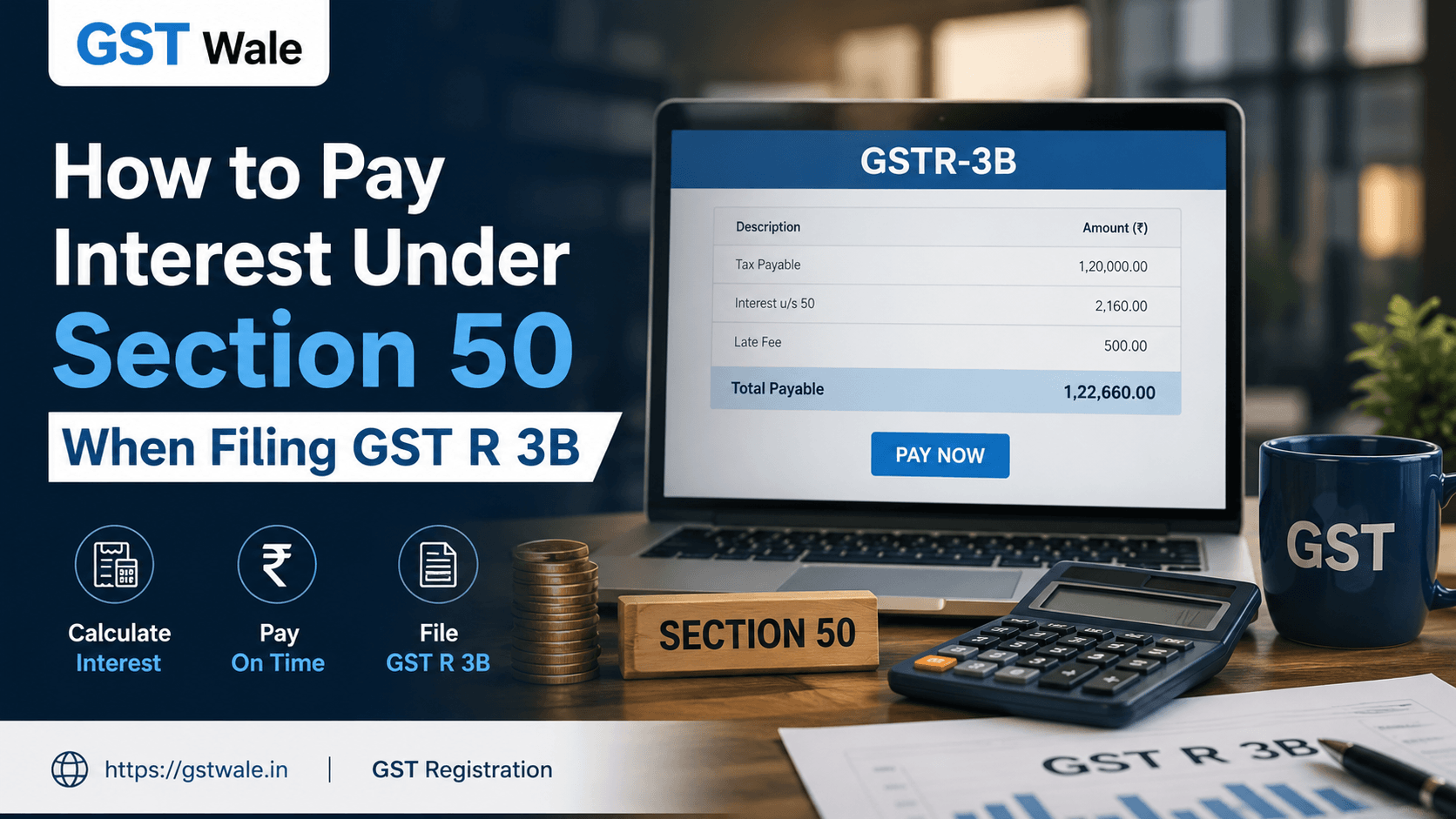
Filing gst r 3b on time is one of the most important responsibilities for every GST-registered business in India. However, due to cash flow issues, accounting mistakes, or missed deadlines, many taxpayers end up filing gst r 3b after the due date. In such cases, interest under Section 50 of the CGST Act becomes applicable.
If you are a new taxpayer or planning to complete your GST Registration, understanding how interest is calculated and paid can save you from unnecessary notices and additional costs in the future.
At GST Wale, we often receive questions from business owners about interest calculation, payment methods, and common filing mistakes. This guide explains everything in simple language so that you can confidently pay interest while filing gst r 3b and remain fully compliant with GST regulations.
Understanding Section 50 of the GST Act
Section 50 of the CGST Act deals with the payment of interest when GST liability is not discharged within the prescribed time. Whenever the tax payable in gst r 3b is deposited after the due date, interest becomes applicable.
The purpose of this provision is to compensate the Government for delayed payment of taxes rather than punish taxpayers. Therefore, paying the correct interest while filing gst r 3b helps avoid future disputes and notices.
The applicable interest rate gst for delayed payment is generally 18% per annum. However, in certain situations involving wrongful input tax credit, the rate may increase as prescribed under GST law.
When Does Interest Apply in gst r 3b?
Interest under Section 50 generally applies in the following situations:
- Late filing of gst r 3b with tax liability.
- Tax paid after the prescribed due date.
- Short payment of GST.
- Incorrect calculation of tax liability.
- Excess utilisation of Input Tax Credit in specified cases.
If your return is delayed but there is no tax payable because of sufficient Input Tax Credit or zero liability, your liability may be limited to the applicable late fee instead of interest, depending upon the nature of the return.
Gross vs Net Tax Interest in gst r 3b
One of the most discussed topics among taxpayers is gross vs net tax interest.
Interest on Gross Tax Liability
Earlier, there was confusion regarding whether interest should be calculated on the total GST liability before adjusting Input Tax Credit.
This resulted in higher interest demands for many businesses.
Interest on Net Tax Liability
The Government later clarified that in most cases, interest under Section 50 is payable only on the portion of tax paid through the electronic cash ledger, provided the return is filed after the due date and Input Tax Credit is available.
Understanding gross vs net tax interest is important because it directly affects the amount payable while filing gst r 3b.
How to Calculate Interest Under Section 50
The interest calculation is straightforward.
Formula
Interest = Outstanding Tax × Interest Rate × Number of Delay Days ÷ 365
For example:
Suppose your GST liability payable through cash is ₹1,00,000.
Interest Rate = 18%
Delay = 20 days
Interest = ₹1,00,000 × 18% × 20 ÷ 365
Interest payable = approximately ₹986
This interest should be paid before or while filing gst r 3b.
Step-by-Step Process to Pay Interest While Filing gst r 3b
Follow these simple steps:
Step 1: Log in to GST Portal
Visit the GST portal using your credentials.
Step 2: Select the Relevant Return
Choose the applicable tax period and open gst r 3b.
Step 3: Calculate Tax Liability
Verify outward supplies, Input Tax Credit, and tax payable.
Step 4: Calculate Interest
Calculate interest based on delayed payment using the applicable interest rate gst.
Step 5: Create Challan
If additional payment is required, generate a challan through the GST portal.
Step 6: Make Payment
Deposit the amount through:
- Internet Banking
- NEFT/RTGS
- Debit Card
- Credit Card
- Over-the-counter payment (where permitted)
Step 7: Offset Liability
Use the deposited amount to pay tax and applicable interest.
Step 8: File gst r 3b
Submit the return using DSC or EVC after confirming all details.
Role of Electronic Credit Ledger Utility
Many taxpayers believe that Input Tax Credit can always be used to pay interest. This is incorrect.
The electronic credit ledger utility can only be used for payment of eligible GST tax liability. Interest, late fee, and penalties must generally be paid through the electronic cash ledger.
Therefore, before filing gst r 3b, ensure that sufficient balance is available in your cash ledger to discharge the interest liability.
Understanding the electronic credit ledger utility helps taxpayers avoid payment failures and return filing errors.
Delayed Return Penalty vs Interest
Many people confuse interest with late fees.
The delayed return penalty and interest are two separate charges.
Interest
Interest applies when tax is paid after the due date.
Late Fee
The delayed return penalty in the form of late fees is charged for filing gst r 3b after the due date, irrespective of tax payment, subject to applicable provisions and notifications.
Both charges may become applicable simultaneously if you delay filing your return and also delay payment of tax.
Are Compounding Interest Rules Applicable?
Many taxpayers ask about compounding interest rules under GST.
The answer is simple.
GST interest under Section 50 is calculated as simple interest and not on a compound basis. Therefore, compounding interest rules do not apply while calculating delayed payment interest under normal GST provisions.
This makes the calculation much easier and transparent for taxpayers.
Common Mistakes While Paying Interest
Businesses often make these mistakes:
- Ignoring interest while filing gst r 3b
- Using incorrect interest calculation
- Assuming Input Tax Credit can pay interest
- Forgetting to calculate delay days accurately
- Confusing late fees with interest
- Not reconciling books before filing
- Filing returns without checking outstanding liability
Avoiding these mistakes reduces future notices from the GST department.
Practical Example
Imagine a wholesaler in Delhi who has GST payable through cash of ₹2,50,000.
Due to temporary cash flow issues, the business files gst r 3b 15 days after the due date.
The taxpayer calculates interest using the prescribed interest rate gst, deposits the amount through the cash ledger, offsets the liability, and files the return successfully.
Since the taxpayer paid the correct interest voluntarily, there is no future dispute regarding delayed tax payment.
This simple approach helps businesses remain compliant without unnecessary litigation.
Best Practices for Timely gst r 3b Filing
To minimise interest liability:
- File returns before the due date.
- Maintain proper bookkeeping.
- Reconcile GSTR-1 and gst r 3b regularly.
- Keep sufficient balance in the cash ledger.
- Verify Input Tax Credit every month.
- Calculate interest immediately after identifying any delay.
- Review liabilities before filing.
These habits significantly reduce compliance risks.
Frequently Asked Questions
Does interest apply if gst r 3b is filed late but no tax is payable?
Generally, interest applies only when there is delayed payment of tax. However, applicable late fees may still be payable for delayed filing.
Can I use Input Tax Credit to pay interest?
No. Interest is generally paid through the electronic cash ledger. The electronic credit ledger utility cannot normally be used for payment of interest.
What is the interest rate under Section 50?
The standard interest rate gst for delayed payment of tax is generally 18% per annum, subject to applicable provisions.
Is interest automatically calculated in gst r 3b?
The GST portal provides certain calculations, but taxpayers should independently verify the interest amount before filing to avoid short payment.
Does simple or compound interest apply?
Section 50 follows simple interest principles. The usual compounding interest rules are not applicable for normal delayed GST payments.
Timely filing of gst r 3b is one of the easiest ways to avoid unnecessary interest and compliance issues. Whenever there is a delay in tax payment, calculating interest correctly under Section 50 and paying it through the prescribed process ensures smooth GST compliance. Understanding concepts such as gross vs net tax interest, the applicable interest rate gst, the electronic credit ledger utility, the difference between interest and delayed return penalty, and why compounding interest rules do not apply will help businesses make informed decisions.
At GST Wale, we assist businesses of every size with GST compliance, return filing, registrations, notices, reconciliations, and tax advisory. If you want accurate guidance for gst r 3b filing or any other GST-related requirement, connect with GST Wale today and let our experienced professionals help you stay compliant with confidence.
 Previous