


Private Limited Company Registration in India: Full Guide for Startups
Private Limited Company Registration in India: Full Guide for Startups
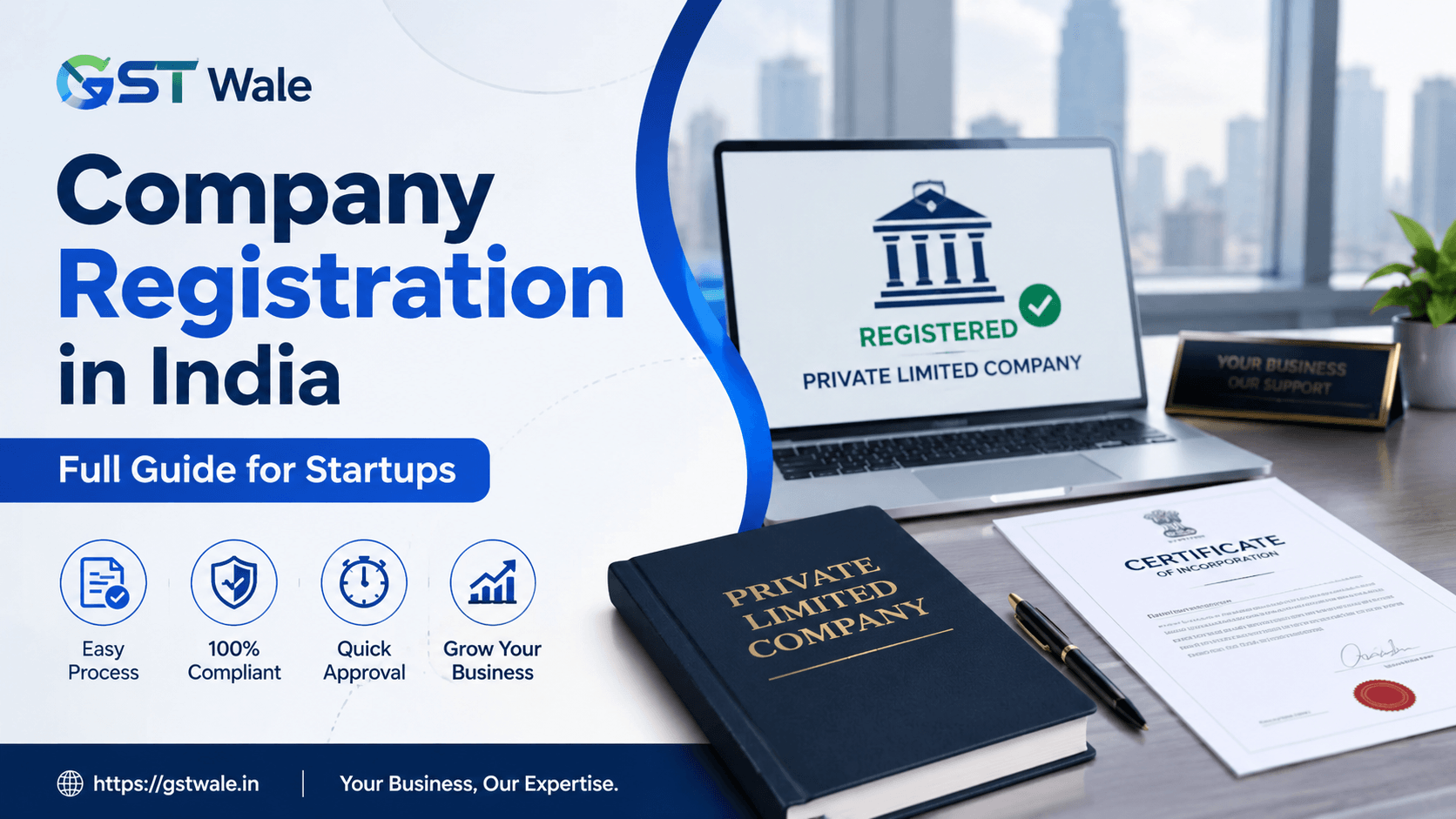
Starting a business is an exciting journey, but choosing the right legal structure is equally important for long-term success. For most startups and growing businesses, a Private Limited Company is considered one of the safest and most professional business structures in India. Whether you are launching a tech startup, consultancy firm, e-commerce business, or manufacturing unit, understanding the process of Company Registration in India can save you from future legal and financial complications.
At GST Wale, we regularly help entrepreneurs who are confused about legal formalities, documentation, and MCA compliance. The good news is that the process of registering a private limited company has become much smoother with online incorporation systems introduced by the Ministry of Corporate Affairs (MCA).
If you are planning to begin your entrepreneurial journey, our expert team can assist you with Company Registration and complete compliance support without unnecessary delays.
Why Choose a Private Limited Company?
When discussing Company Registration in India, a Private Limited Company remains the preferred option for startups because of its credibility, scalability, and legal protection.
Here are some major benefits:
Limited Liability Protection
The liability of shareholders is limited to their shareholding. Personal assets remain protected even if the company faces losses or debts.
Better Funding Opportunities
Investors and venture capital firms generally prefer investing in registered private limited companies rather than proprietorships or partnerships.
Separate Legal Identity
A private limited company is treated as a separate legal entity from its owners. This means the company can own property, open bank accounts, and enter contracts independently.
Easy Ownership Transfer
Shares can be transferred easily, making ownership transition smoother.
Improved Business Credibility
Clients, vendors, and financial institutions trust registered companies more than unregistered businesses.
Because of these advantages, startup registration India trends show a significant rise in private limited company incorporation over the last few years.
Eligibility for Private Limited Company Registration India
Before beginning the process of Company Registration in India, you should know the minimum eligibility requirements.
Basic Requirements
- Minimum 2 Directors
- Minimum 2 Shareholders
- One Director must be an Indian resident
- Registered office address in India
- Unique company name approved by MCA
Interestingly, directors and shareholders can be the same individuals in most cases.
Documents Required for Company Registration in India
Documentation plays a critical role in smooth company incorporation pvt ltd approval.
Documents for Directors and Shareholders
- PAN Card
- Aadhaar Card
- Passport-sized photograph
- Mobile number and email ID
- Bank statement or utility bill as address proof
Registered Office Documents
- Electricity bill or utility bill
- Rent agreement (if rented)
- No Objection Certificate (NOC) from owner
One practical tip from our experience at GST Wale: ensure all documents are clear, updated, and exactly match your PAN details to avoid MCA rejection.
Step-by-Step Pvt Ltd Company Process
Many entrepreneurs believe that Company Registration in India is lengthy and complicated. In reality, the process has become relatively simple when handled professionally.
Step 1: Obtain DSC (Digital Signature Certificate)
Since company incorporation is completely online, directors need DSC to sign forms electronically.
Step 2: Apply for DIN
DIN (Director Identification Number) is mandatory for every director.
Step 3: Name Approval Through MCA
Selecting the right business name is extremely important.
The company name should:
- Be unique
- Not resemble existing companies
- Avoid trademark conflicts
- Reflect business activities professionally
For example, if you are starting a digital marketing business, names like “ABC Digital Solutions Private Limited” are more likely to get approval than generic names.
Step 4: Filing SPICe+ Form
The SPICe+ form is the integrated incorporation form introduced by MCA for startup registration India procedures.
This form covers:
- Company incorporation
- PAN application
- TAN application
- GST registration (optional)
- EPFO registration
- ESIC registration
Step 5: Certificate of Incorporation
Once documents are verified successfully, MCA issues the Certificate of Incorporation (COI).
This certificate officially confirms your Company Registration in India.
Step 6: Open Current Bank Account
After incorporation, the company should open a current bank account for business transactions.
Time Required for Company Incorporation Pvt Ltd
Normally, private limited company registration India takes around 7 to 15 working days, depending on:
- Document accuracy
- Name approval
- MCA processing speed
Delays usually happen because of incorrect documentation or trademark conflicts in company names.
Cost of Company Registration in India
The cost depends on:
- Number of directors
- Authorized capital
- Professional fees
- State-wise stamp duty
For most startups, the approximate cost ranges between ₹6,000 to ₹15,000.
However, choosing low-cost services without proper compliance guidance can create future problems. We often see businesses facing penalties because they ignored post-incorporation compliance requirements.
Post-Registration Compliance Requirements
Registering a company is only the beginning. After Company Registration in India, businesses must follow certain compliance rules.
Mandatory Compliance Includes
- Annual ROC filing
- Income tax return filing
- Maintaining accounting records
- GST filing (if applicable)
- Board meetings and resolutions
Failure to comply may result in penalties and director disqualification.
At GST Wale, we always advise startups to maintain compliance from day one rather than correcting issues later.
Common Mistakes Startups Should Avoid
During the pvt ltd company process, startups often make avoidable mistakes.
Choosing the Wrong Business Structure
Some businesses start as proprietorships to save costs but later struggle with funding and credibility.
Using Incorrect Documents
Minor mismatches in spelling or address details can delay incorporation.
Ignoring Trademark Search
A rejected company name can waste valuable time.
Delaying Compliance
Many founders focus only on sales and ignore ROC filings until notices arrive.
Professional guidance during business registration India can help avoid these costly mistakes.
Why Startups Prefer Company Registration in India
The Indian startup ecosystem is growing rapidly. Government initiatives like Startup India, easier funding access, and digital compliance systems have encouraged entrepreneurs to register businesses formally.
A private limited company structure is especially useful for:
- Tech startups
- E-commerce businesses
- Agencies
- SaaS companies
- Manufacturing units
- Consulting firms
It also improves your chances of:
- Raising investments
- Winning corporate contracts
- Getting business loans
- Building brand trust
FAQs on Company Registration in India
Can one person start a private limited company?
No. A minimum of two directors/shareholders is required for a private limited company. However, One Person Company (OPC) is available for solo founders.
Is physical presence required for registration?
No. The complete Company Registration in India process can be completed online.
Can NRIs register a private limited company in India?
Yes. NRIs and foreign nationals can become shareholders or directors subject to FEMA guidelines.
Is GST registration compulsory after incorporation?
GST registration is mandatory only if turnover crosses the prescribed threshold or if the business falls under compulsory registration categories.
What is the minimum capital requirement?
Currently, there is no minimum capital requirement for private limited company registration India.
Choosing the right legal structure is one of the most important decisions for any entrepreneur. A properly registered private limited company offers credibility, legal protection, better funding opportunities, and long-term business growth advantages.
If you are planning Company Registration in India, it is always better to consult professionals who understand legal procedures, MCA compliance, taxation, and startup requirements thoroughly.
At GST Wale, we simplify the entire process for startups and business owners by offering expert guidance, transparent pricing, and end-to-end incorporation support. From documentation to compliance management, our team ensures your business starts on the right legal foundation.
Ready to launch your startup confidently? Connect with GST Wale today and complete your private limited company registration smoothly and professionally.
 Previous