


Online Company Registration in India: Easy Steps to Get Started
Online Company Registration in India: Easy Steps to Get Started
Starting a business in today’s digital world has become much easier than it was a few years ago. Thanks to digital registration India initiatives and simplified compliance systems, entrepreneurs can now complete most formalities from the comfort of their homes. Whether you are launching a startup, opening a private limited company, or expanding an existing business structure, understanding the process of Company Registration in India is extremely important.
At GST Wale, we regularly guide startups, freelancers, and business owners through the legal registration process. Many entrepreneurs assume registration is complicated, expensive, or time-consuming. In reality, with proper planning and expert assistance, the process can be smooth and hassle-free. If you are planning to begin your entrepreneurial journey, our expert Company Registration services can help you complete the process quickly and correctly.
Why Company Registration in India is Important
Registering a company is not just a legal formality. It gives your business a proper identity and builds trust among customers, investors, and financial institutions.
Here are some major benefits of Company Registration in India:
- Creates a separate legal identity
- Enhances business credibility
- Makes it easier to raise funding
- Helps in opening current bank accounts
- Offers limited liability protection
- Improves chances of winning government tenders
- Supports Startup India recognition benefits
For example, many startups struggle to secure investor funding because they operate as unregistered businesses. Investors generally prefer legally registered companies due to better transparency and compliance.
Types of Business Structures Available in India
Before beginning the online company registration India process, it is important to choose the right business structure.
Private Limited Company
This is one of the most preferred structures for startups and growing businesses.
Best suited for:
- Tech startups
- E-commerce businesses
- Agencies
- Fundraising-oriented companies
Benefits:
- Limited liability
- Better investor confidence
- Separate legal identity
Limited Liability Partnership (LLP)
An LLP combines the flexibility of a partnership with limited liability protection.
Suitable for:
- Professionals
- Consultants
- Small service businesses
One Person Company (OPC)
Ideal for solo entrepreneurs who want the benefits of a corporate structure without multiple shareholders.
Partnership Firm
This is suitable for small traditional businesses with minimal compliance requirements.
Sole Proprietorship
Easy to start and operate but does not provide separate legal identity protection.
Choosing the correct structure is a crucial step in Company Registration in India, as it impacts taxation, compliance, and future expansion.
Documents Required for Company Registration in India
One of the most common reasons for delay in registration is incomplete documentation. Preparing documents in advance can speed up the process significantly.
Documents Required for Directors
- PAN Card
- Aadhaar Card
- Passport-size photograph
- Mobile number and email ID
- Bank statement or utility bill for address proof
Registered Office Documents
- Electricity bill or utility bill
- Rent agreement (if rented property)
- NOC from property owner
For foreign nationals, additional notarized and apostilled documents may be required.
Step-by-Step Process of Online Company Registration India
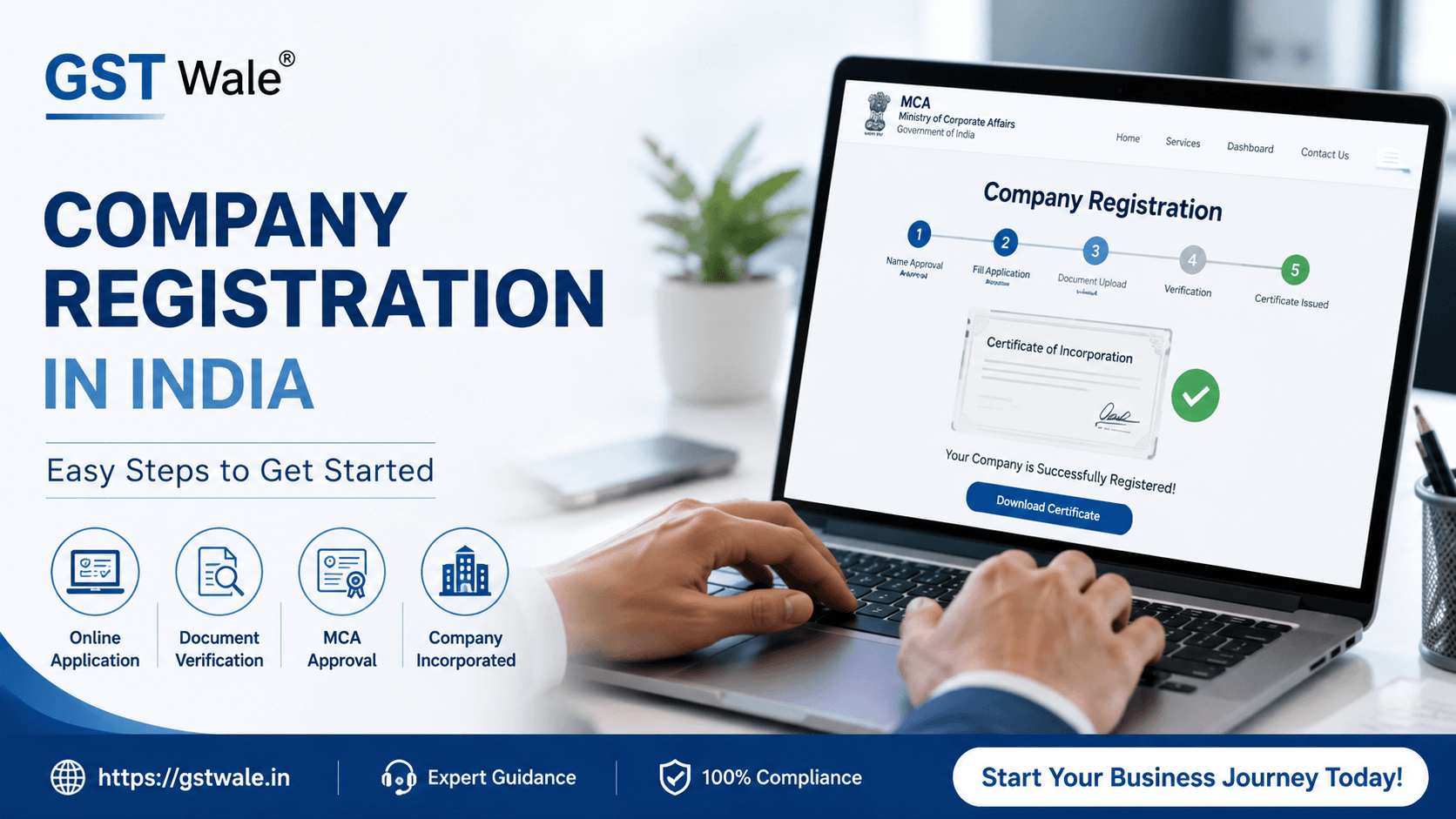
The government has simplified the company registration online process through the MCA portal registration system. Most procedures are now digital.
Step 1: Obtain Digital Signature Certificate (DSC)
A Digital Signature Certificate is mandatory for filing online forms.
Since all documents are submitted electronically, DSC acts as a secure digital authentication tool.
Step 2: Apply for Director Identification Number (DIN)
DIN is required for every director involved in the company.
This number is generated during the registration filing process.
Step 3: Name Approval Through MCA Portal Registration
Selecting the right company name is very important.
The name should:
- Be unique
- Not match existing trademarks
- Follow MCA naming guidelines
For example, if someone tries to register “Infosys Technologies Private Limited,” the application will likely be rejected due to similarity with an existing brand.
Step 4: Filing SPICe+ Form
The SPICe+ form is an integrated registration form introduced by the Ministry of Corporate Affairs.
This form includes:
- Company incorporation
- PAN application
- TAN application
- GST registration
- EPFO registration
- ESIC registration
This integrated startup india online process has significantly reduced paperwork.
Step 5: Certificate of Incorporation
Once documents are verified and approved, MCA issues the Certificate of Incorporation.
This certificate officially confirms successful Company Registration in India.
How Long Does Company Registration Take?
The timeline generally depends on:
- Accuracy of documents
- Name approval status
- Government processing time
Typically:
- DSC issuance: 1–2 days
- Name approval: 2–3 days
- Incorporation approval: 3–5 days
In many cases, complete Company Registration in India can be completed within 7–10 working days.
Common Mistakes to Avoid During Company Registration
Many entrepreneurs unknowingly make errors that delay approvals.
Choosing Incorrect Business Structure
Selecting the wrong structure can create future tax and compliance issues.
Using Similar Company Names
MCA often rejects names that resemble existing companies or trademarks.
Incorrect Documentation
Mismatch in signatures, addresses, or PAN details can delay approvals.
Ignoring Compliance Requirements
Registration is only the beginning. Annual filings and compliance are equally important.
At GST Wale, we always advise clients to plan compliance from day one instead of treating it as an afterthought.
Government Initiatives Supporting Startups
The Indian government has introduced several reforms to encourage entrepreneurship.
Startup India Scheme
The startup india online process offers:
- Tax exemptions
- Easier compliance
- Intellectual property support
- Faster patent approvals
Digital India Initiative
Digital systems have simplified:
- MCA portal registration
- GST registration
- PAN and TAN applications
These reforms have made Company Registration in India more accessible for entrepreneurs across cities and smaller towns.
Cost of Company Registration in India
The registration cost depends on:
- Business structure
- Authorized capital
- Professional fees
- State-wise stamp duty
Generally, private limited company registration costs are higher than LLP or proprietorship registrations because of additional compliance requirements.
However, investing in proper registration at the beginning can prevent legal and tax complications later.
Why Professional Guidance Matters
Although the process is online, legal documentation and compliance require careful handling.
Professional support helps in:
- Selecting the right structure
- Avoiding rejection of applications
- Proper drafting of MOA and AOA
- Ensuring compliance accuracy
- Faster approvals
At GST Wale, we have helped numerous startups and business owners complete Company Registration in India without unnecessary delays.
FAQs on Company Registration in India
Can I complete Company Registration in India completely online?
Yes, most of the process is fully digital through the MCA portal registration system.
Is GST registration mandatory after company incorporation?
GST registration depends on turnover limits and business nature. However, many companies apply simultaneously during incorporation.
How many directors are required for a private limited company?
A minimum of two directors are required.
Can a salaried person register a company?
Yes, salaried individuals can legally complete Company Registration in India unless restricted by their employment contract.
What is the minimum capital requirement for company registration?
Currently, there is no mandatory minimum paid-up capital requirement for private limited companies.
The process of Company Registration in India has become faster, simpler, and more entrepreneur-friendly due to digital systems and government reforms. Whether you are a startup founder, freelancer, consultant, or growing business owner, registering your company is an important step toward long-term growth and credibility.
From choosing the right business structure to completing documentation and compliance, every step matters. A professionally managed registration process can save time, reduce errors, and help your business start on the right legal foundation.
At GST Wale, we specialize in helping entrepreneurs complete hassle-free Company Registration in India with expert guidance, quick processing, and end-to-end support. If you are planning to launch your business, our team is ready to help you get started smoothly and confidently.
 Previous