


Common Mistakes to Avoid During Company Registration in India
Common Mistakes to Avoid During Company Registration in India
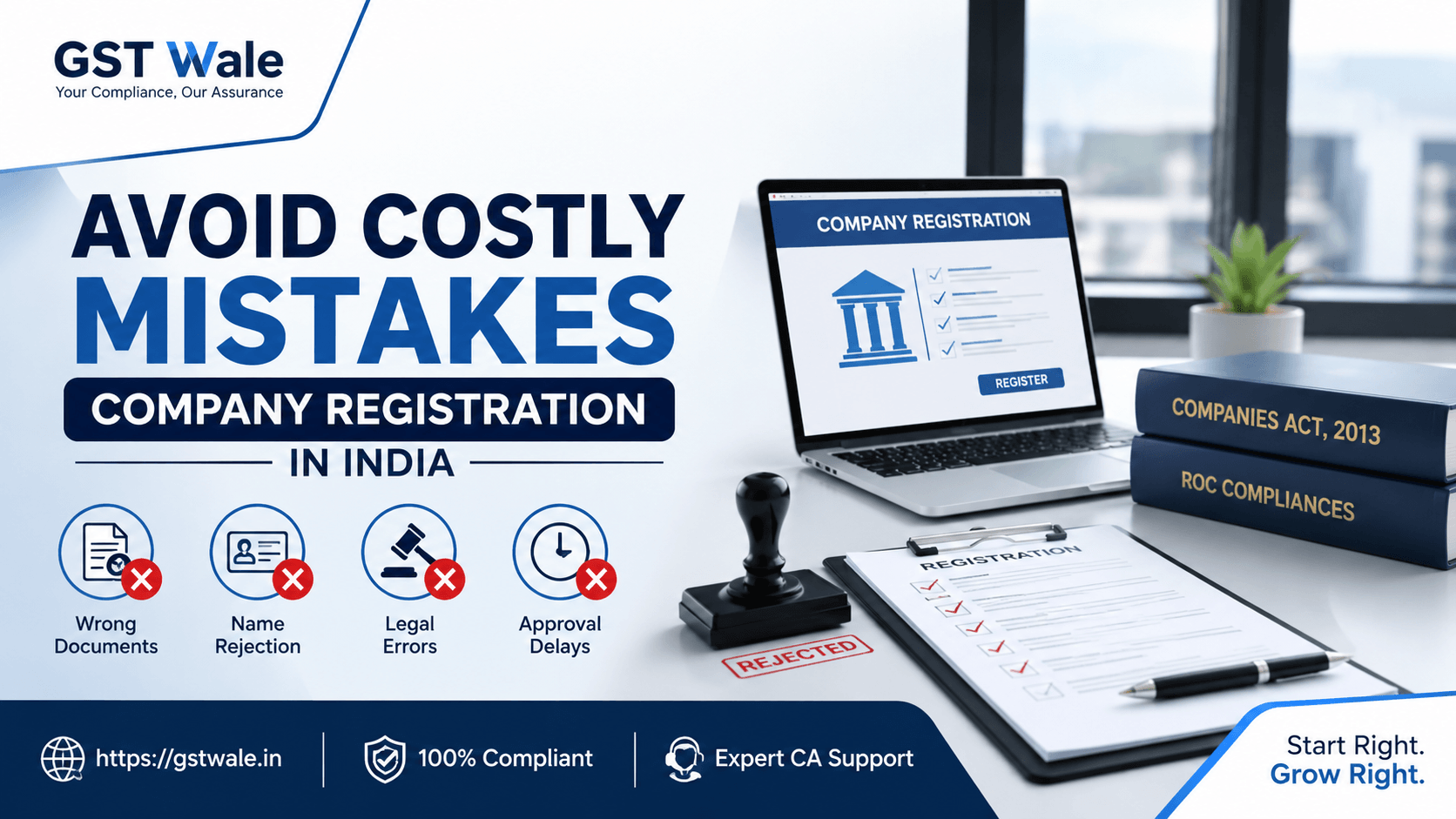
Starting a business is an exciting journey, but many entrepreneurs make avoidable mistakes during Company Registration in India that later create legal, financial, and operational problems. As Chartered Accountants working closely with startups and MSMEs, we at GST Wale have seen how small oversights during registration can delay approvals, increase compliance costs, or even lead to penalties.
Whether you are launching a tech startup, trading business, consultancy firm, or manufacturing company, proper planning during Company Registration in India is crucial. Many founders focus only on getting the incorporation certificate quickly and ignore important legal and compliance aspects.
If you are planning your Company Registration, understanding these common mistakes can save you significant time, money, and stress in the future.
In this article, we will discuss the most common company registration mistakes India-based businesses make and how you can avoid them professionally.
Choosing the Wrong Business Structure During Company Registration in India
One of the biggest startup errors India entrepreneurs make is selecting an unsuitable business structure without understanding long-term implications.
Common Structures Available
- Private Limited Company
- LLP (Limited Liability Partnership)
- OPC (One Person Company)
- Partnership Firm
- Sole Proprietorship
Why This Matters
Every structure has different:
- Compliance requirements
- Taxation rules
- Funding opportunities
- Liability protection
- Annual filing obligations
For example, many startups choose LLPs because of lower compliance costs but later face challenges while raising investment from venture capital firms that prefer Private Limited Companies.
Expert Advice from GST Wale
Before proceeding with Company Registration in India, always evaluate:
- Nature of business
- Number of founders
- Future funding plans
- Tax implications
- Compliance budget
Selecting the right structure from the beginning prevents major incorporation issues India-based startups commonly face later.
Using an Incorrect or Unavailable Company Name
Choosing a company name may look simple, but MCA rejection due to naming issues is extremely common.
Common Naming Mistakes
- Selecting a name already registered
- Using prohibited words
- Trademark conflicts
- Names not matching business activity
- Improper suffix usage
Real-World Example
A startup applied with a name similar to an existing trademarked company. Even after receiving temporary approval, they later received legal objections and had to completely rebrand their business.
How to Avoid This
Before filing for Company Registration in India:
- Conduct MCA name availability checks
- Search trademark databases
- Keep 2–3 alternative names ready
- Ensure the name reflects business activities clearly
This helps avoid unnecessary registration pitfalls India entrepreneurs frequently encounter.
Incorrect Documentation and Data Entry Errors
Documentation mistakes are one of the most overlooked legal mistakes business India startups make.
Common Documentation Errors
- Spelling mismatches in PAN and Aadhaar
- Wrong address proof
- Expired utility bills
- Improper notarization
- Incorrect DIN or DSC details
Even minor inconsistencies can result in:
- MCA resubmission notices
- Delayed approvals
- Application rejection
Important Tip
Always double-check:
- Director details
- Shareholding pattern
- Registered office address
- Email IDs and mobile numbers
At GST Wale, we recommend reviewing all documents at least twice before submission during Company Registration in India.
Ignoring Capital Structure Planning
Many business owners randomly decide authorized capital without understanding future implications.
Why It Matters
Your capital structure affects:
- ROC fees
- Ownership percentage
- Investor onboarding
- Compliance costs
Some founders keep extremely low capital initially and later face additional procedures while increasing authorized share capital.
Practical Suggestion
Plan your:
- Initial investment requirement
- Future funding goals
- Shareholding distribution
Proper planning during Company Registration in India helps avoid unnecessary restructuring later.
Not Drafting Proper MOA and AOA
The Memorandum of Association (MOA) and Articles of Association (AOA) define your company’s objectives and internal rules.
Common Mistakes
- Copy-pasting generic objects
- Missing future business activities
- Poorly drafted operational clauses
Consequences
Improper drafting may:
- Restrict future expansion
- Create investor concerns
- Require future amendments
For example, if your company later wants to add new services not covered under the MOA, additional legal procedures become necessary.
This is one of the most ignored incorporation issues India startups face during scaling.
Choosing Directors Without Proper Due Diligence
Many startups appoint directors casually without understanding legal responsibilities.
Risks Involved
Directors are legally responsible for:
- Compliance filings
- Tax obligations
- Financial disclosures
- Corporate governance
Common Problems
- Directors with disqualification history
- Non-cooperative co-founders
- Lack of clarity in ownership roles
Expert Advice
Before Company Registration in India:
- Verify director eligibility
- Clearly define responsibilities
- Draft founder agreements
- Maintain transparency among promoters
This reduces future disputes and protects business stability.
Ignoring Post-Registration Compliance Requirements
Many entrepreneurs think the work ends after incorporation. In reality, incorporation is just the beginning.
Common Compliance Requirements
- GST registration
- PAN and TAN activation
- Bank account opening
- Annual ROC filings
- Accounting maintenance
- Income tax compliance
Ignoring these obligations can result in:
- Heavy penalties
- Director disqualification
- Compliance notices
Real-World Insight
We often see startups successfully complete Company Registration in India but later face penalties because they failed to file annual returns despite having no business transactions.
Delaying GST Registration
Not every business needs immediate GST registration, but delaying it unnecessarily can hurt operations.
Situations Requiring GST Registration
- Interstate sales
- E-commerce selling
- Turnover threshold crossing
- Input tax credit benefits
Common Startup Errors India Businesses Make
- Starting invoices without GST
- Using personal GST numbers
- Ignoring compliance timelines
Proper tax planning should always go hand-in-hand with Company Registration in India.
Using Residential Address Without Permission
Many startups use home addresses as registered offices without proper authorization.
Common Issues
- No NOC from owner
- Incorrect utility bills
- Rental agreement mismatch
This often results in MCA objections during verification.
Best Practice
Ensure:
- Valid address proof
- Owner NOC
- Updated utility bill
- Proper rental agreement
These small details help avoid unnecessary registration pitfalls India businesses commonly experience.
Failing to Understand Shareholding and Equity Distribution
Co-founders often divide ownership emotionally instead of strategically.
Common Mistakes
- Equal ownership without role clarity
- No vesting agreements
- Ignoring future investor dilution
- Verbal agreements only
Why This Is Dangerous
Poor equity planning creates:
- Founder disputes
- Investor hesitation
- Business instability
Before Company Registration in India, founders should always formalize:
- Equity percentage
- Decision-making rights
- Exit clauses
- Investment responsibilities
Overlooking Professional Guidance
One major reason for company registration mistakes India entrepreneurs face is relying entirely on online DIY platforms without expert consultation.
Risks of DIY Registration
- Incorrect filing
- Missed compliance
- Tax inefficiencies
- Legal exposure
Why Professional Support Matters
A professional CA or consultant helps:
- Select the right structure
- Ensure compliance accuracy
- Reduce legal risks
- Plan taxes effectively
At GST Wale, we guide businesses not just with registration but also with long-term compliance and growth planning.
FAQs on Company Registration in India
What is the biggest mistake during Company Registration in India?
Choosing the wrong business structure is one of the most common and costly mistakes.
How long does Company Registration in India take?
Generally, it takes around 7–15 working days depending on document accuracy and MCA approvals.
Is GST mandatory immediately after company incorporation?
Not always. GST applicability depends on turnover, business type, and interstate transactions.
Can I change my company structure later?
Yes, but restructuring involves additional legal procedures, approvals, and costs.
Why should I hire professionals for company registration?
Professional guidance helps avoid legal mistakes business India startups commonly make and ensures smooth compliance management.
Completing Company Registration in India is a critical step that lays the foundation for your business success. While the process has become more streamlined through digital filings, mistakes during registration can still create major complications later.
From choosing the wrong structure to ignoring compliance responsibilities, these errors can impact funding, taxation, operations, and legal stability. That is why careful planning and professional guidance are essential from day one.
At GST Wale, we help entrepreneurs avoid costly startup errors India businesses frequently face. Our experienced professionals ensure smooth documentation, proper compliance, strategic structuring, and end-to-end support for hassle-free Company Registration in India.
If you are planning to start your business, connect with GST Wale today and build your company on a legally strong and professionally managed foundation.
 Previous