


The Impact of Union Budget 2026 on Your Monthly Take-Home Pay
The Impact of Union Budget 2026 on Your Monthly Take-Home Pay
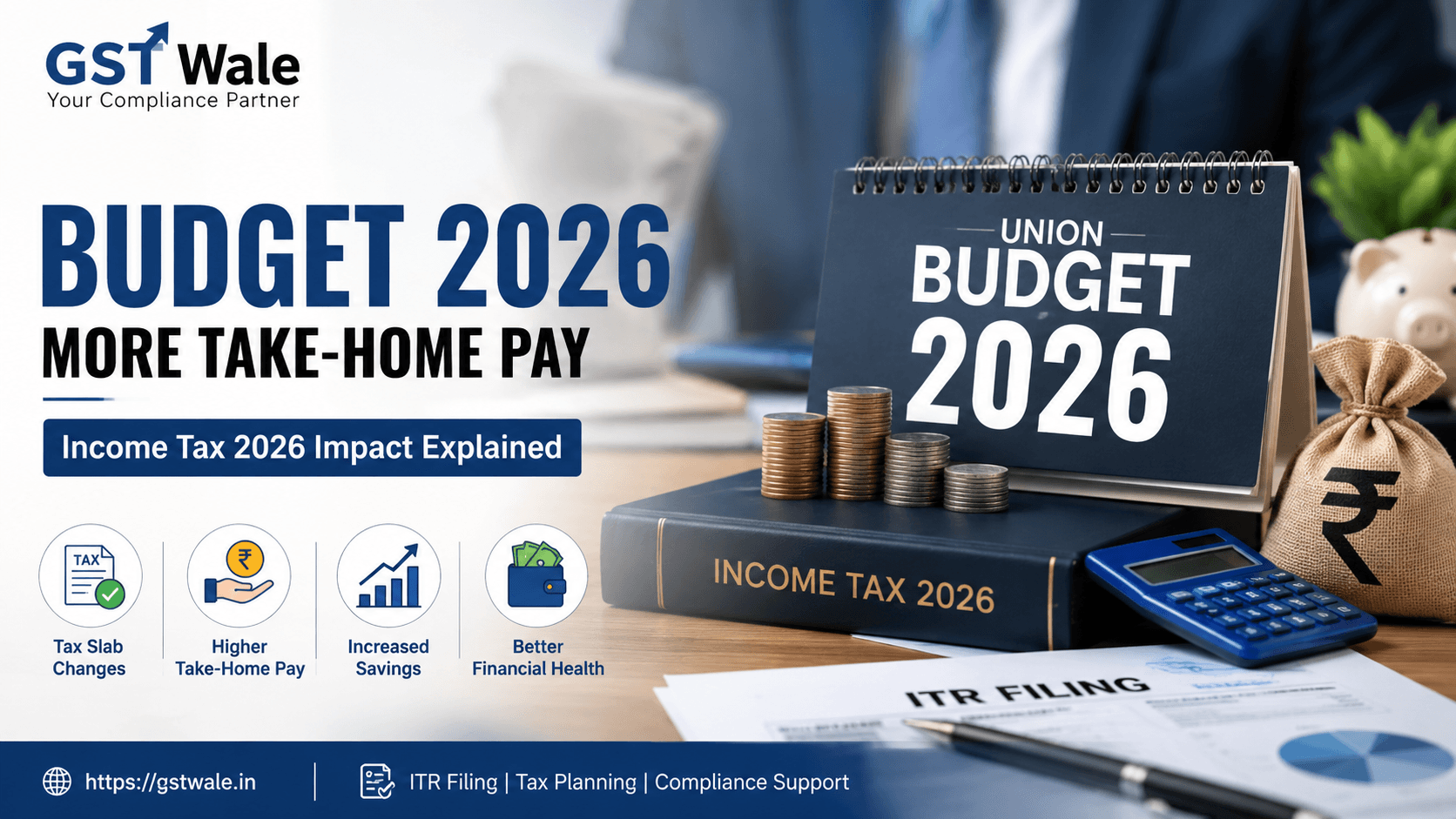
Understanding the Impact of Income Tax 2026 on Your Monthly Salary
The Union Budget always creates excitement among salaried employees, freelancers, and business owners across India. Every year, people eagerly wait to know whether their taxes will reduce, their savings will increase, or the cost of living will become easier to manage. This year, the discussion around Income Tax 2026 has become even more important because of rising inflation, changing spending habits, and evolving fiscal policy decisions by the government.
At GST Wale, we regularly interact with taxpayers who want to understand one simple thing — “How much salary will actually come into my bank account after the Budget changes?” If you are also wondering how the latest Budget highlights affect your monthly take-home pay, this guide will help you understand everything in simple language.
Many taxpayers are also reviewing their annual tax planning and ITR Filing strategies to maximize savings under the updated provisions of Income Tax 2026.
Why Income Tax 2026 Matters for Salaried Individuals
For most salaried employees, even a small change in taxation directly impacts monthly cash flow. The government’s decisions regarding tax slab changes, deductions, rebates, and exemptions can significantly alter your disposable income.
Under Income Tax 2026, the focus has been on:
- Increasing taxpayer relief
- Encouraging spending and investment
- Simplifying taxation
- Supporting middle-class households
- Managing inflation and economic growth
The result is that many taxpayers may notice changes in their monthly salary credits depending on their income bracket.
Major Budget Highlights Affecting Your Take-Home Pay
The latest Budget highlights include several proposals that directly influence salaried individuals and professionals.
Revised Tax Slab Changes
One of the biggest discussions around Income Tax 2026 is the revised tax slab structure. The government has attempted to provide relief to middle-income taxpayers by adjusting slab rates and increasing rebate benefits.
Here’s how tax slab changes can impact you:
- Lower tax liability for certain income groups
- Better monthly in-hand salary
- Reduced TDS deductions by employers
- Higher annual savings potential
For example, if an employee earning ₹12 lakh annually saves even ₹3,000 to ₹5,000 extra every month due to reduced taxes, that amount can be used for investments, EMIs, or household expenses.
Standard Deduction Benefits
Another positive development under Income Tax 2026 is the enhancement of standard deduction benefits for salaried employees.
This directly reduces taxable income without requiring additional documentation or investments. For employees who prefer simple tax planning, this is a major advantage.
Focus on Disposable Income
The government’s fiscal policy appears focused on increasing disposable income in the hands of taxpayers. When individuals have more money available every month, consumer spending increases, which supports economic growth.
Higher disposable income helps families manage:
- School fees
- Home loan EMIs
- Medical expenses
- Fuel and transportation costs
- Grocery inflation
This becomes especially important when the cost of living continues to rise in urban cities.
How Income Tax 2026 Affects Different Salary Groups
Not every taxpayer experiences the same benefit. The impact of Income Tax 2026 depends on your annual income and the tax regime you choose.
Employees Earning Up to ₹7 Lakh
Taxpayers in this category may continue to enjoy rebate benefits under the new regime. This means little to no tax liability in many cases.
Impact on take-home pay:
- Lower TDS deductions
- Improved monthly cash flow
- Easier savings management
Middle-Class Salaried Employees
This group is expected to benefit the most from Income Tax 2026.
If your salary falls between ₹10 lakh and ₹20 lakh annually, revised tax slab changes and deductions can increase your in-hand salary noticeably.
For example:
- Monthly tax deduction may reduce
- Annual savings may improve
- Investment capacity can increase
High-Income Professionals
Professionals and senior executives may not see major tax cuts, but strategic tax planning can still reduce overall liability.
GST Wale generally advises high-income taxpayers to:
- Review salary structure
- Optimize deductions
- Plan investments early
- Choose the correct tax regime
New vs Old Tax Regime Under Income Tax 2026
One of the most confusing aspects for taxpayers is selecting between the old and new tax regimes.
When the New Regime Works Better
The new regime under Income Tax 2026 may suit individuals who:
- Do not claim many deductions
- Prefer simpler compliance
- Have limited tax-saving investments
- Want higher monthly take-home pay
When the Old Regime Makes Sense
The old regime may still benefit taxpayers who actively invest in:
- PPF
- ELSS
- Life insurance
- Home loan interest
- NPS contributions
The correct choice depends entirely on your financial profile.
Rising Cost of Living and Tax Relief
One important factor connected with Income Tax 2026 is inflation. Even if salaries increase, rising expenses often reduce actual savings.
Today, the cost of living has increased across several categories:
- Rent
- Electricity bills
- Fuel prices
- Healthcare
- Education
- Food expenses
Because of this, taxpayers expect Budget relief every year to maintain financial stability.
The government’s fiscal policy attempts to balance economic growth while ensuring sufficient tax collections. However, taxpayers must also plan smartly to manage inflation effectively.
Practical Example: Monthly Salary Impact
Let’s understand the effect of Income Tax 2026 with a simple example.
Example Scenario
Suppose Rahul earns ₹15 lakh annually.
Earlier:
- Monthly TDS deduction: ₹18,000
After revised tax slab changes:
- Monthly TDS deduction: ₹14,500
Difference:
- Extra monthly savings: ₹3,500
- Annual increase in disposable income: ₹42,000
This additional amount can help Rahul:
- Build emergency savings
- Pay off debt faster
- Increase SIP investments
- Manage household expenses comfortably
This is why understanding Budget highlights is extremely important for salaried taxpayers.
Smart Tax Planning Tips for 2026
Simply relying on Budget announcements is not enough. Smart financial planning can help you maximize the benefits of Income Tax 2026.
Review Your Salary Structure
Speak with your employer about:
- HRA benefits
- Special allowances
- Tax-efficient reimbursements
Choose the Correct Tax Regime
Compare both tax regimes carefully before making a decision.
Start Investments Early
Early tax planning avoids last-minute mistakes and improves financial discipline.
Maintain Proper Documentation
Keep records of:
- Investment proofs
- Rent receipts
- Medical insurance
- Home loan statements
Consult Tax Experts
Professional guidance helps avoid unnecessary taxes and compliance errors.
At GST Wale, we help individuals and businesses create practical tax-saving strategies that align with the latest regulations.
FAQs on Income Tax 2026
Will Income Tax 2026 increase my monthly salary?
Yes, many salaried individuals may see higher take-home pay due to revised tax slab changes and lower TDS deductions.
Which tax regime is better under Income Tax 2026?
It depends on your investments and deductions. Taxpayers with fewer deductions may prefer the new regime, while others may benefit from the old regime.
How does fiscal policy affect taxpayers?
Fiscal policy influences taxation, government spending, inflation control, and disposable income levels across the economy.
Can middle-class taxpayers benefit from Income Tax 2026?
Yes, middle-income earners are expected to gain significantly through revised tax slabs and rebate structures.
Does Income Tax 2026 help reduce the cost of living?
While taxation relief cannot fully control inflation, increased disposable income can help families manage rising expenses better.
The overall impact of Income Tax 2026 appears positive for salaried employees, professionals, and middle-class families. With revised tax slab changes, improved deductions, and a focus on increasing disposable income, many taxpayers may experience better monthly cash flow.
However, simply waiting for Budget relief is not enough. Smart planning, correct regime selection, and timely compliance are equally important for maximizing savings.
At GST Wale, we help taxpayers understand complex tax laws in a simple and practical way. Whether you are a salaried employee, freelancer, or business owner, our experts can guide you with personalized tax planning, return filing, and compliance support to help you make the most of Income Tax 2026.
 Previous