



Taxation of Rental Income: How to Save More on House Property
Taxation of Rental Income: How to Save More on House Property
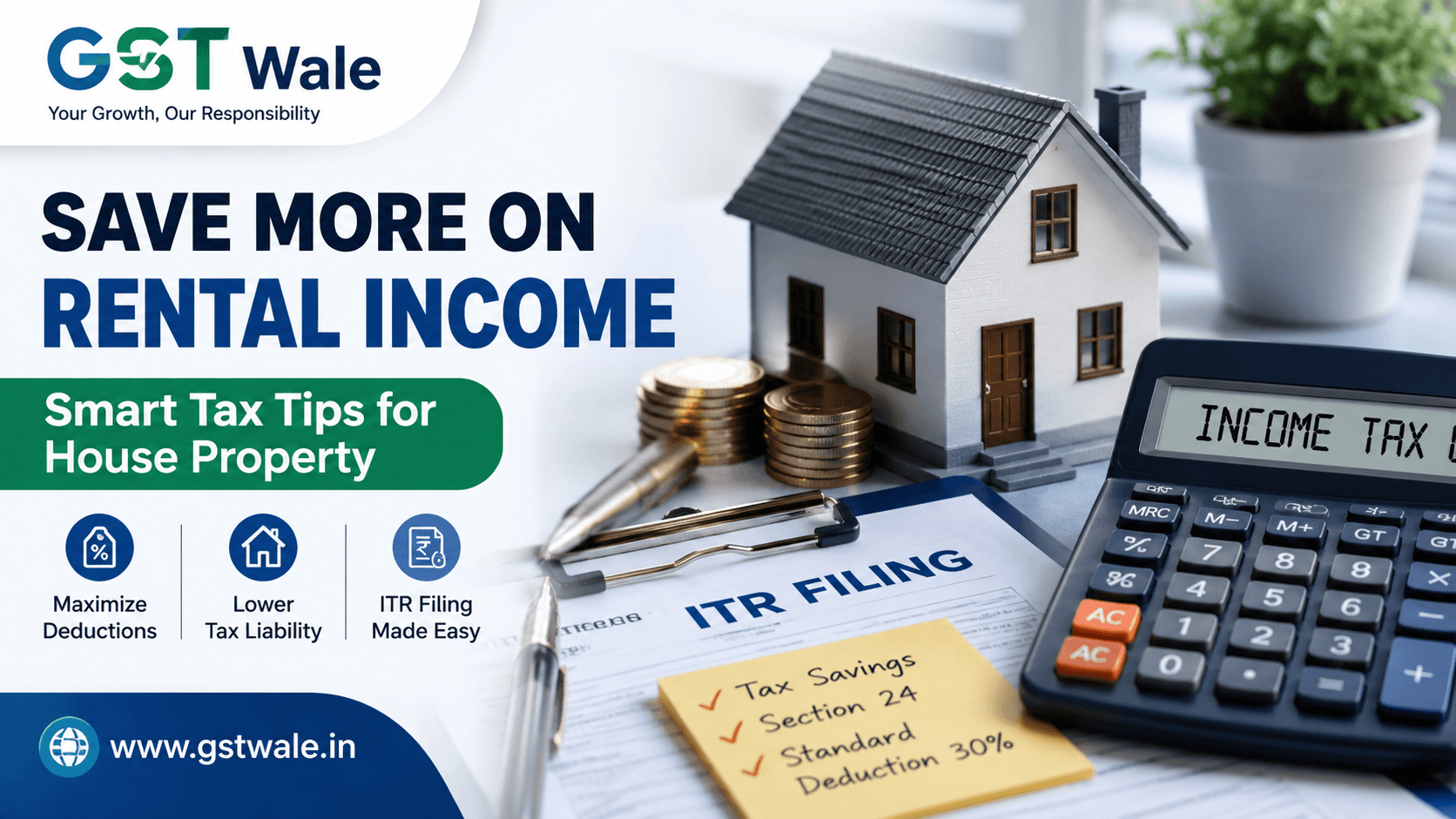
Rental income from house property is one of the most common sources of earnings for individuals in India. Whether you own a single residential flat or multiple commercial properties, understanding how Income Tax applies to rental income can help you reduce your tax burden legally and efficiently.
At GST Wale, we often see taxpayers paying more tax simply because they are unaware of the deductions and exemptions available under the Income Tax Act. Proper tax planning for rental income is not just about compliance—it is also about maximizing savings.
If you are filing returns for rental income, proper documentation and timely ITR Filing can make the entire process smooth and hassle-free. In this guide, we will explain how taxation of rental income works and the best ways to save more on house property income under Income Tax rules.
Understanding Income Tax on Rental Income
Under the Income Tax Act, rental income earned from a property is taxed under the head “Income from House Property.” This applies to:
- Residential properties
- Commercial buildings
- Shops and office spaces
- Let-out houses or flats
Even if the property is owned jointly or inherited, the rental income remains taxable as per the applicable Income Tax provisions.
The taxable amount is not simply the rent you receive. The law allows several deductions that can significantly reduce your taxable income.
How Rental Income is Calculated Under Income Tax
To understand taxation properly, you must know how taxable rental income is calculated.
Step-by-Step Calculation
Step 1: Calculate Gross Annual Value (GAV)
This is the total rent received or receivable from the property during the financial year.
Example:
If you receive ₹30,000 monthly rent, your annual rent becomes ₹3,60,000.
Step 2: Deduct Municipal Taxes
Any municipal taxes paid to the local authority during the year can be deducted.
These include:
- Property tax
- Municipal corporation tax
- Local body taxes
Example:
Annual rent = ₹3,60,000
Municipal taxes paid = ₹20,000
Net Annual Value = ₹3,40,000
Step 3: Claim Standard Deduction 30%
Under Section 24, taxpayers get a flat Standard deduction 30% on the Net Annual Value.
This deduction is allowed regardless of actual expenses incurred on:
- Repairs
- Maintenance
- Painting
- Renovation
Example:
30% of ₹3,40,000 = ₹1,02,000 deduction
Step 4: Deduct Home Loan Interest
Under Section 24, interest paid on a home loan for the rented property can also be claimed.
Suppose:
- Home loan interest = ₹1,50,000
Then taxable income becomes:
₹3,40,000
(-) ₹1,02,000
(-) ₹1,50,000
= ₹88,000 taxable rental income
This is how proper planning under Income Tax helps reduce liability significantly.
Important Deductions Available Under Income Tax
Section 24 Deduction
One of the biggest tax-saving benefits for landlords comes under Section 24.
You can claim:
- Standard deduction 30%
- Interest on borrowed capital
For let-out property, there is no upper limit on interest deduction in certain cases, although loss set-off rules may apply.
Municipal Taxes Deduction
Only taxes actually paid during the financial year are allowed as deductions.
Keep:
- Tax receipts
- Online payment proofs
- Municipal challans
These documents become important during scrutiny or verification under Income Tax proceedings.
Unrealized Rent Relief
Sometimes tenants vacate properties without paying rent. Such pending rent is known as unrealized rent.
Under certain conditions, unrealized rent can be excluded while calculating taxable rental income.
Conditions generally include:
- Genuine tenancy agreement
- Reasonable efforts made for recovery
- Tenant has vacated the property
This provision prevents taxpayers from paying Income Tax on rent they never received.
Income Tax Treatment for Co-Owned Property
Many families purchase property jointly with spouses, parents, or siblings. In such cases, taxation depends on ownership share.
How Co-Owned Property is Taxed
For a co-owned property:
- Rental income is divided according to ownership percentage
- Each co-owner reports their share separately in their return
- Each owner can claim deductions independently
Example:
Two brothers own a property equally and earn ₹6 lakh annual rent.
Each will show:
- ₹3 lakh rental income
- Separate Section 24 benefits
- Separate Income Tax calculation
This structure often helps families reduce overall tax liability.
Self-Occupied vs Let-Out Property
Self-Occupied Property
If you live in your own property:
- Annual value is considered NIL
- No rental income is taxable
- Home loan interest deduction may still apply
Let-Out Property
If the property is rented:
- Actual rent received becomes taxable
- Deductions under Section 24 apply
- Municipal taxes can be claimed
Understanding this distinction is essential for proper Income Tax planning.
Smart Ways to Save More Income Tax on Rental Income
Choose Joint Ownership Carefully
Buying property jointly with family members can:
- Split rental income
- Reduce tax slabs
- Increase overall deductions
This is particularly useful when one owner falls in a lower tax bracket.
Maintain Proper Rental Agreement
A clear rent agreement helps:
- Prove rental income
- Claim unrealized rent
- Avoid disputes during Income Tax assessment
Pay Municipal Taxes on Time
Delayed payment may result in:
- Loss of deduction
- Additional penalties
Always preserve payment receipts.
Claim Full Home Loan Interest
Many taxpayers miss interest deductions because:
- Interest certificates are not collected
- Loan purpose is not documented properly
Always obtain annual interest certificates from banks or NBFCs.
Report Rental Income Correctly
Mismatch between:
- Form 26AS
- AIS
- Bank transactions
- Rental disclosures
can trigger notices from the Income Tax Department.
Accurate reporting is critical.
Common Mistakes Taxpayers Should Avoid
Ignoring Rental Income
Some taxpayers assume small rental income is exempt. However, all rental income must generally be disclosed under Income Tax rules.
Claiming Ineligible Expenses
Only deductions specifically allowed under the law can be claimed.
Personal expenses like:
- Furniture purchase
- Brokerage
- Society sinking fund
may not always qualify directly.
Not Declaring Co-Ownership Properly
Improper ownership documentation may lead to:
- Tax disputes
- Denial of deductions
- Double taxation issues
Forgetting Unrealized Rent Conditions
You cannot simply deduct unpaid rent without satisfying legal conditions.
Documentation is essential.
FAQs on Income Tax for Rental Income
Is rental income fully taxable under Income Tax?
No. Several deductions such as Standard deduction 30%, municipal taxes, and Section 24 interest benefits are available.
Can I claim home loan interest on rented property?
Yes. Under Section 24, interest on borrowed capital for a let-out property can be claimed subject to applicable rules.
What happens in case of co-owned property?
Each co-owner pays Income Tax only on their share of rental income based on ownership ratio.
Is unrealized rent taxable?
If conditions prescribed under the Income Tax Act are fulfilled, unrealized rent may be excluded from taxable income.
Are municipal taxes deductible?
Yes. Municipal taxes actually paid during the financial year are allowed as deductions.
Understanding the taxation of rental income is extremely important for every property owner. With proper planning under Income Tax provisions, you can legally reduce your tax liability and improve your overall returns from house property.
Benefits like:
- Standard deduction 30%
- Section 24 interest deduction
- Municipal taxes deduction
- Relief for unrealized rent
- Tax planning through co-owned property
can make a substantial difference in your final tax outgo.
At GST Wale, we help individuals, landlords, and business owners manage their Income Tax compliance efficiently while maximizing eligible deductions. Whether you own one property or multiple rental assets, expert guidance can help you stay compliant and save more tax every year.
Connect with GST Wale today for professional assistance with Income Tax planning, rental income taxation, and return filing support.
 Previous