


Maximizing Your Refund: Smart Tips for Your Next Income Tax Return Submission
Maximizing Your Refund: Smart Tips for Your Next Income Tax Return Submission
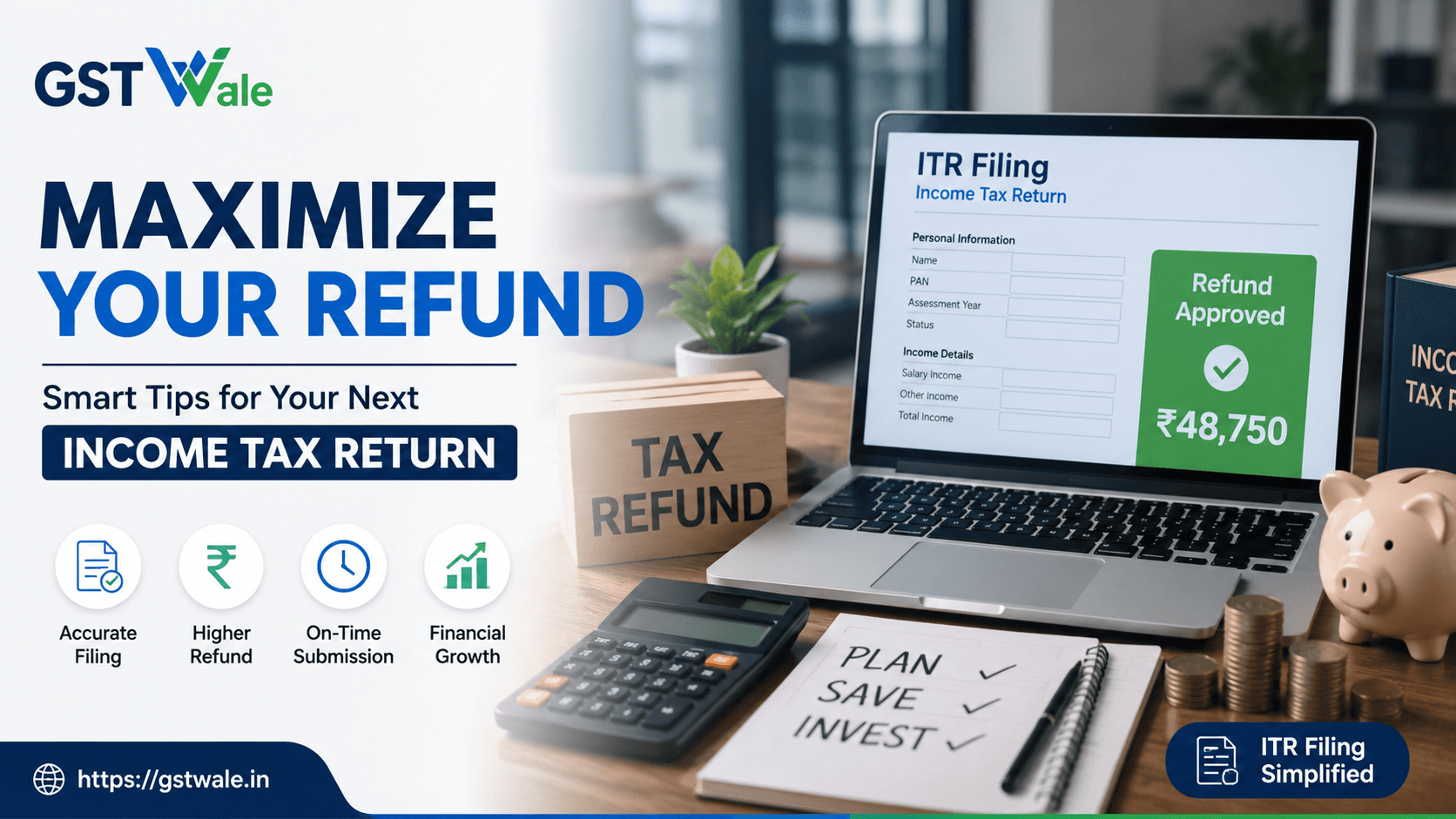
When it comes to filing an income tax return, most taxpayers focus only on meeting the deadline. However, a well-prepared income tax return can do much more than ensure compliance—it can also help you maximize your tax refund and avoid unnecessary delays.
At GST Wale, we have seen many individuals and business owners lose out on legitimate refunds simply because of small mistakes or missed opportunities. Whether you are a salaried employee, freelancer, business owner, or professional, careful planning before submitting your income tax return can make a significant difference. If you need expert assistance with ITR Filing , our experienced team is here to make the process smooth, accurate, and stress-free.
Why Your Income Tax Return Matters
An income tax return is more than just a legal requirement. It is a financial document that reflects your income, taxes paid, deductions claimed, and refund eligibility.
A properly filed income tax return helps you:
- Claim every eligible tax refund
- Avoid notices from the Income Tax Department
- Build financial credibility for loans and visas
- Maintain a clean tax compliance record
- Receive refunds faster without unnecessary follow-ups
Many taxpayers unknowingly pay more tax than required throughout the financial year. Filing an accurate income tax return ensures that any excess tax paid is refunded promptly.
Common Reasons Why Taxpayers Receive a Refund
A tax refund generally arises when the tax already paid exceeds your actual tax liability.
Some common reasons include:
- Higher TDS deducted by employers or clients
- Advance tax paid in excess
- Self-assessment tax paid unnecessarily
- Eligible deductions not considered while deducting TDS
- Changes in taxable income during the financial year
For example, suppose a salaried employee invested in ELSS and paid health insurance premiums after the employer had already calculated TDS. If these deductions were not considered earlier, filing the income tax return correctly can help recover the extra tax deducted.
Smart Tips to Maximize Your Income Tax Return Refund
Claim Every Eligible Deduction
One of the biggest reasons taxpayers miss refunds is failing to claim all eligible deductions.
Check whether you have claimed benefits under:
- Section 80C investments
- Section 80D health insurance
- Home loan interest
- Education loan interest
- National Pension System (NPS)
- Donations eligible under Section 80G
Even small missed deductions can significantly reduce your refund amount.
Verify Form 26AS and AIS
Before filing your income tax return, carefully compare your records with:
- Form 26AS
- Annual Information Statement (AIS)
- Taxpayer Information Summary (TIS)
These documents help identify:
- TDS deducted
- Advance tax payments
- Interest income
- Dividend income
- High-value transactions
If any mismatch exists, resolve it before filing. This reduces the chances of receiving notices or delays in processing.
Report All Sources of Income
Many taxpayers mistakenly report only salary income.
Your income tax return should include:
- Salary
- Business or professional income
- Interest from savings and fixed deposits
- Rental income
- Capital gains
- Freelance income
- Dividend income
- Other taxable receipts
Incomplete reporting can lead to penalties and delayed refunds.
Choose the Correct Tax Regime
The old and new tax regimes offer different benefits.
The old regime may be more beneficial if you claim multiple deductions and exemptions.
The new regime may work better if you have limited investments and fewer deductions.
Before filing your income tax return, compare both options carefully instead of choosing one by default.
Ensure Your Bank Mandate Is Updated
Your refund can only be credited if your bank mandate is correctly updated and validated on the Income Tax e-filing portal.
Before submitting your income tax return, verify:
- Bank account number
- IFSC code
- Account holder name
- Pre-validation status
A small error can delay your refund for weeks.
Avoid Errors That Delay Tax Refunds
Even genuine refund claims can be delayed because of avoidable mistakes.
Some common errors include:
- Incorrect PAN details
- Wrong bank account information
- Mismatch in TDS figures
- Incorrect income reporting
- Failure to e-verify the return
- Selecting the wrong ITR form
Review your income tax return thoroughly before submission.
Keep Supporting Documents Ready
Although most documents are not uploaded while filing, you should maintain proper records.
Keep copies of:
- Form 16
- Form 16A
- Investment proofs
- Health insurance receipts
- Home loan certificates
- Donation receipts
- Capital gain statements
- Bank statements
These documents may be required if the department seeks clarification later.
Don't Ignore High-Value Transactions
The Income Tax Department receives information about several financial transactions.
Examples include:
- Large cash deposits
- Property purchases
- High-value credit card spending
- Mutual fund investments
- Share trading
- Foreign travel expenses
Always ensure these high-value transactions are properly explained through your income tax return whenever applicable.
Understand Interest on Refund
Many taxpayers are unaware that the Income Tax Department may pay interest on refund in eligible cases.
If your refund is delayed beyond the prescribed period under applicable tax provisions, you may receive interest along with the refund amount, subject to the provisions of the Income-tax Act.
However, avoid relying on interest. Filing an accurate income tax return early remains the best way to receive your refund quickly.
File Your Income Tax Return Early
Waiting until the last date often leads to:
- Missing documents
- Calculation mistakes
- Portal congestion
- Last-minute stress
Early filing provides several advantages:
- Faster refund processing
- More time to correct mistakes
- Better financial planning
- Reduced risk of penalties
The earlier your income tax return is processed, the sooner your refund reaches your bank account.
How Refund Tracking Helps You Stay Updated
Once your income tax return has been processed, you can monitor your refund status through the Income Tax Department's portal.
Effective refund tracking helps you:
- Check processing status
- Know whether refund has been issued
- Identify pending actions
- Resolve delays promptly
Regular monitoring ensures you remain informed throughout the refund process.
Practical Example
Consider Rajesh, a small business owner from Pune.
During the financial year, he paid advance tax based on estimated profits. However, his actual profits were lower because of unexpected business expenses.
While preparing his income tax return, he correctly reported his actual income, claimed eligible deductions, and reconciled all tax payments using Form 26AS. As a result, he recovered the excess tax paid through a timely tax refund.
This simple example highlights how accurate reporting can directly improve your financial outcome.
Frequently Asked Questions
1. How can I increase my income tax return refund legally?
You can maximize your refund by claiming all eligible deductions, reporting accurate income, reconciling tax credits, and filing your return correctly.
2. What happens if my bank mandate is incorrect?
An invalid bank mandate may delay your refund. Always ensure your bank account is pre-validated before submitting your income tax return.
3. Can I receive interest on my tax refund?
Yes. Eligible taxpayers may receive interest on refund if the refund is delayed beyond the applicable period under tax laws.
4. Why is refund tracking important?
Refund tracking helps you monitor the status of your refund, identify delays, and take corrective action if required.
5. What documents should I keep after filing my income tax return?
Maintain copies of Form 16, Form 26AS, AIS, investment proofs, loan certificates, bank statements, and acknowledgement receipts for future reference.
Filing an income tax return is not merely about meeting a compliance requirement—it is an opportunity to recover excess taxes, improve financial planning, and maintain a strong tax record. By claiming eligible deductions, reporting income accurately, validating your bank mandate, reviewing high-value transactions, and filing on time, you can maximize your tax refund while avoiding unnecessary complications.
At GST Wale, we help individuals, professionals, and businesses file their income tax return accurately and confidently. Our experienced tax professionals ensure every eligible benefit is claimed while maintaining full compliance with tax laws. Get in touch with GST Wale today and let us help you file your income tax return efficiently, maximize your refund, and enjoy complete peace of mind.
 Previous