


How to Handle an Income Tax Notice: A Comprehensive Guide
How to Handle an Income Tax Notice: A Comprehensive Guide
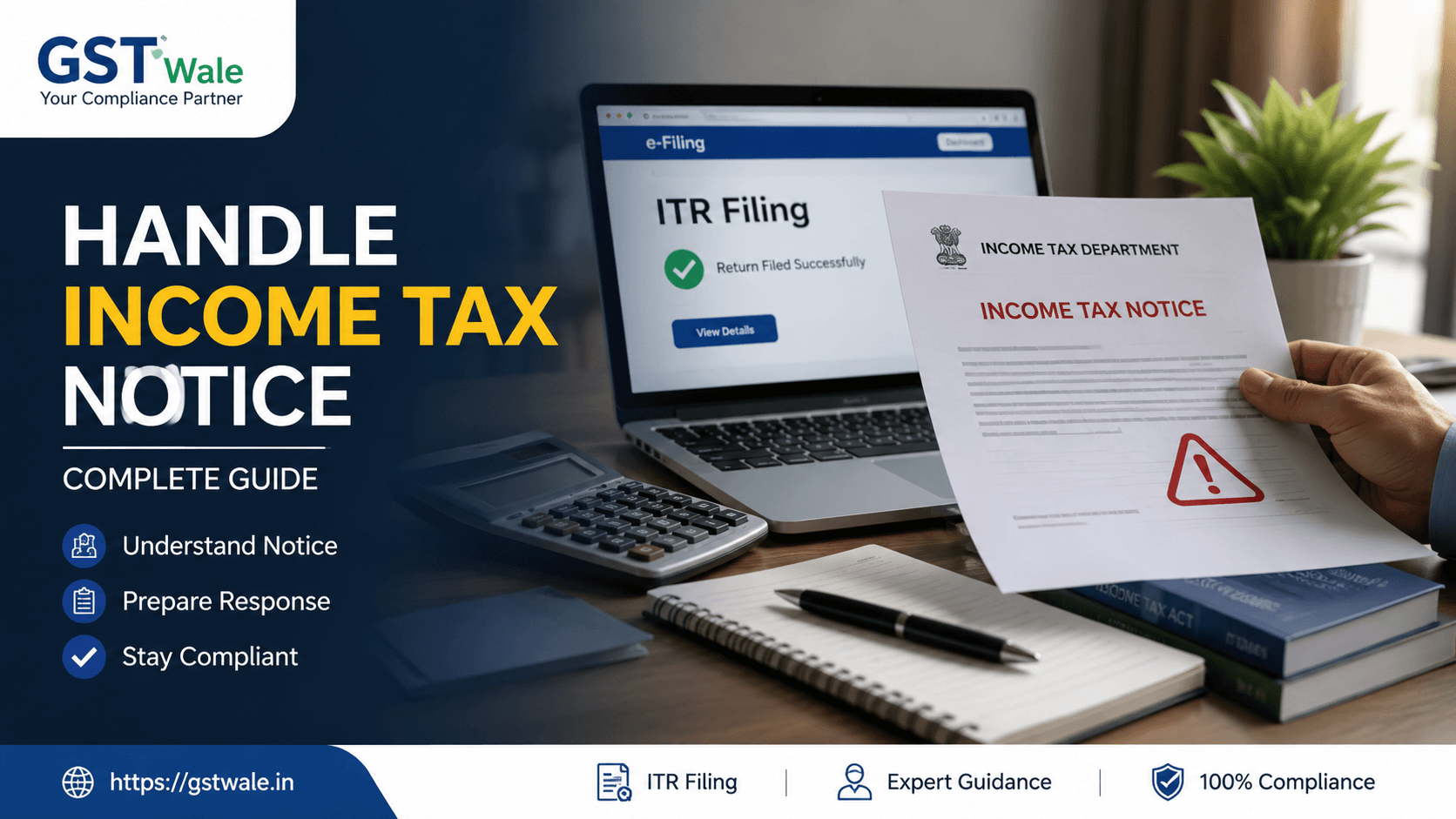
Receiving an Income Tax notice can feel intimidating, especially if you’re unsure why it arrived or what to do next. As experienced professionals at GST Wale, we often see taxpayers panic unnecessarily. The truth is, most Income Tax notices are routine and can be handled smoothly with the right approach.
If you’ve filed your return through professional support like ITR Filing, responding becomes even easier because your documentation is already in order. In this guide, we’ll walk you through everything you need to know—from understanding the notice to submitting a proper tax response.
Understanding an Income Tax Notice
An Income Tax notice is a formal communication sent by the Income Tax Department to seek clarification, request additional information, or notify discrepancies in your return.
Common Reasons for Receiving an Income Tax Notice
You may receive a notice due to:
- Mismatch between reported income and Form 26AS/AIS
- Errors in return leading to a defective return
- High-value transactions not properly disclosed
- Random selection for scrutiny assessment
- Non-filing or late filing of returns
It’s important to remember that receiving an Income Tax notice does not automatically mean you have done something wrong.
Types of Income Tax Notices You Should Know
Understanding the type of Income Tax notice is the first step toward resolving it correctly.
1. Notice under Section 143(1)
This is the most common Income Tax notice. It is an intimation after processing your return.
It may indicate:
- No discrepancies (all good)
- Minor tax adjustments
- Additional tax payable or refund
2. Notice for Scrutiny Assessment (Section 143(2))
This Income Tax notice is issued when your return is selected for detailed verification.
You may be asked to provide:
- Income proofs
- Investment details
- Expense justifications
3. Notice for Defective Return (Section 139(9))
If your return has errors or missing information, you will receive this Income Tax notice.
Common reasons include:
- Missing financial statements
- Incorrect tax calculations
- Incomplete data submission
4. Notice for Income Escaping Assessment (Section 148)
This is a serious Income Tax notice issued when the department believes income has not been reported.
Step-by-Step Guide to Handling an Income Tax Notice
Handling an Income Tax notice is all about staying calm and taking systematic action.
Step 1: Carefully Read the Notice
Start by understanding:
- The section under which it is issued
- The reason for the notice
- The deadline for response
Never ignore an Income Tax notice, even if it seems minor.
Step 2: Verify the Details
Check whether:
- Your PAN and assessment year are correct
- The notice is genuinely from the Income Tax Department
You can verify it through the official Income Tax portal.
Step 3: Gather Required Documents
Depending on the Income Tax notice, collect:
- Bank statements
- Salary slips or invoices
- Investment proofs
- Previous returns
Having proper documentation ensures smooth legal compliance.
Step 4: Prepare a Proper Tax Response
Your tax response should be:
- Clear and factual
- Supported by documents
- Submitted within the deadline
Avoid emotional or vague replies. Stick to facts.
Step 5: Submit Response Online
Most Income Tax notices can be responded to online via the Income Tax portal.
Follow these steps:
- Log in to your account
- Go to “e-Proceedings”
- Upload required documents
- Submit your response
Step 6: Seek Professional Help
If the Income Tax notice involves complex issues like scrutiny assessment or large discrepancies, consult experts like GST Wale.
Practical Example: Real-Life Scenario
Let’s say a freelancer receives an Income Tax notice under Section 143(1) due to mismatch in income.
What went wrong?
The freelancer reported ₹8 lakh income, but AIS showed ₹10 lakh.
Solution:
- Recheck bank entries
- Identify missing invoices
- Submit corrected details with explanation
In most cases, such Income Tax notices are resolved without penalties if addressed promptly.
Common Mistakes to Avoid
When dealing with an Income Tax notice, avoid these errors:
- Ignoring the notice
- Missing deadlines
- Submitting incomplete information
- Providing incorrect data
- Handling complex notices without expert help
These mistakes can escalate a simple Income Tax issue into a serious legal problem.
How to Prevent Future Income Tax Notices
Prevention is always better than cure. Here’s how you can reduce the chances of receiving an Income Tax notice:
- File accurate and complete returns
- Reconcile income with AIS and Form 26AS
- Maintain proper records
- Report all sources of income
- Ensure timely compliance
Regular monitoring and proper documentation go a long way in avoiding Income Tax complications.
FAQs on Income Tax Notices
1. Is it mandatory to respond to every Income Tax notice?
Yes, every Income Tax notice must be responded to within the specified time, even if it is just for confirmation.
2. What happens if I ignore an Income Tax notice?
Ignoring an Income Tax notice can lead to penalties, prosecution, or reassessment of your income.
3. Can I handle an Income Tax notice myself?
Simple notices like Section 143(1) can be handled independently. However, for scrutiny assessment or complex cases, professional help is advisable.
4. How much time do I get to respond?
The response time varies depending on the type of Income Tax notice, usually ranging from 7 to 30 days.
5. What is a defective return notice?
A defective return notice is issued when your filed return has missing or incorrect information that needs correction.
Handle Your Income Tax Notice with Confidence
An Income Tax notice is not something to fear—it’s simply a communication that requires your attention. With the right understanding, timely action, and proper documentation, you can handle any Income Tax issue efficiently.
At GST Wale, we believe in simplifying compliance for individuals and businesses. Whether it’s responding to a notice, correcting a defective return, or managing a scrutiny assessment, our experts ensure complete legal compliance without stress.
If you’ve received an Income Tax notice and are unsure what to do next, don’t take chances. Let GST Wale guide you with expert precision and practical solutions.
 Previous