


How to Check Your Income Tax Liability Before March 31st
How to Check Your Income Tax Liability Before March 31st
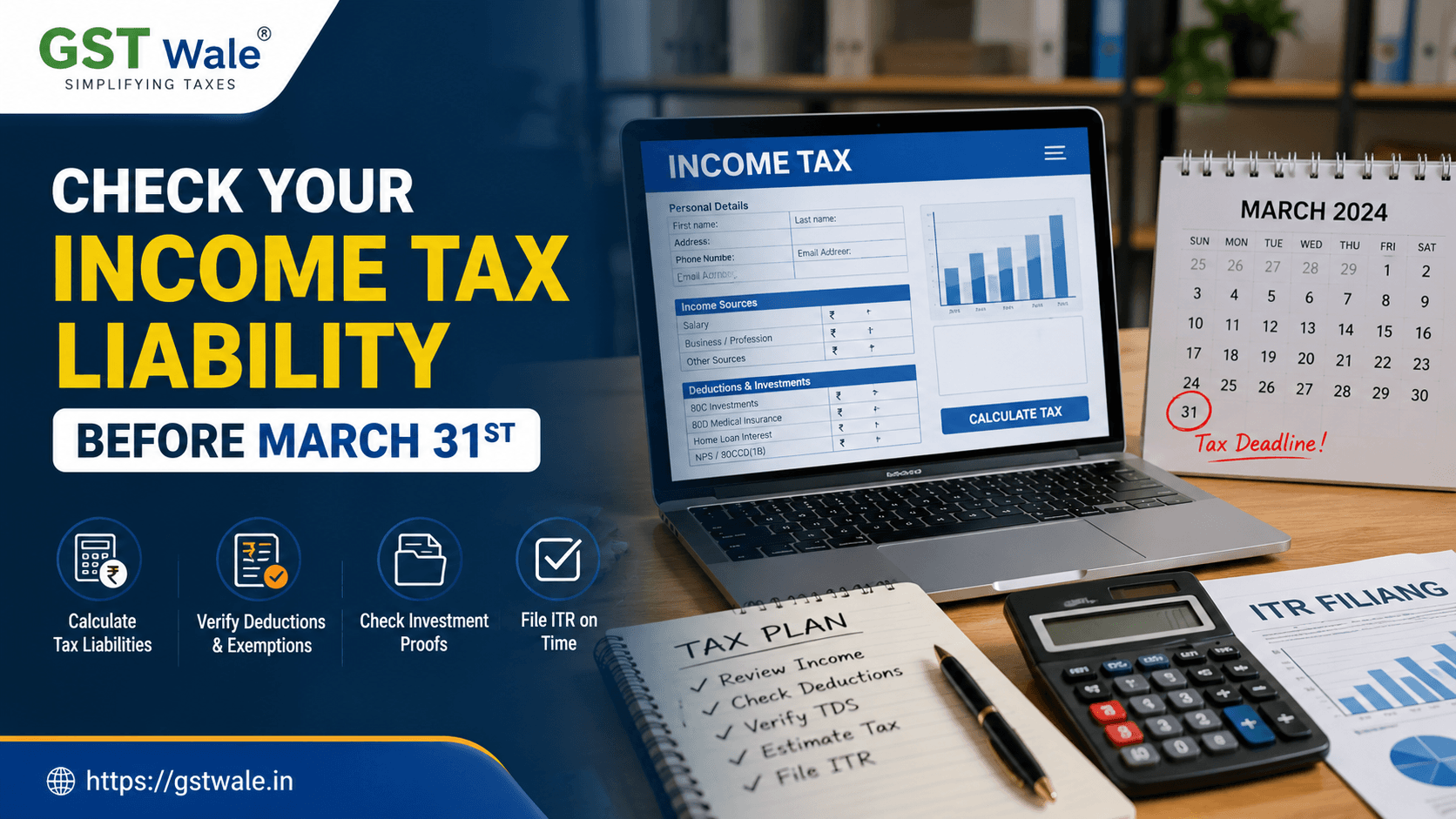
How to Check Your Income Tax Liability Before March 31st
As the financial year end approaches, many taxpayers suddenly realise they have not properly reviewed their Income Tax liability. Whether you are a salaried employee, freelancer, business owner, or professional, checking your taxes before March 31st is extremely important. A timely review helps you avoid unnecessary tax payments, interest, penalties, and last-minute panic.
At GST Wale, we regularly guide clients who wait until the final week of March and then struggle to arrange documents, investments, or tax-saving proofs. A little planning can save both money and stress. If you are also preparing your documents for ITR Filing, this is the right time to estimate your overall tax position.
In this article, we will explain how to calculate your Income Tax liability step-by-step and what actions you should take before the tax saving deadline.
Why You Should Check Your Income Tax Before March 31st
Many taxpayers assume their employer or accountant has already managed everything. However, relying completely on others can sometimes lead to missed deductions or incorrect tax calculations.
Reviewing your Income Tax before March 31st helps you:
- Identify additional tax payable
- Utilise pending deductions
- Submit pending investment proof
- Avoid interest under Sections 234B and 234C
- Plan advance tax properly
- Reduce chances of notices from the Income Tax Department
The last few weeks of the financial year are crucial for tax planning. Once March 31st passes, most tax-saving opportunities for that year are gone.
Step-by-Step Process to Check Your Income Tax Liability
Step 1: Calculate Your Total Income
The first step is to calculate your total taxable income from all sources.
Include income from:
- Salary
- Business or profession
- Freelancing
- Rental income
- Interest from bank accounts and FDs
- Capital gains
- Other miscellaneous income
Many salaried individuals only consider salary and forget bank interest or side income. Even small omissions can create mismatches later.
If you are salaried, your salary slips and Form 16 will help you estimate annual income accurately.
Step 2: Choose the Correct Tax Regime
Currently, taxpayers can choose between:
Old Tax Regime
Allows deductions and exemptions such as:
- Section 80C investments
- HRA exemption
- Home loan benefits
- Medical insurance deductions
New Tax Regime
Offers lower tax rates but limited deductions.
Before finalising your Income Tax calculation, compare both regimes carefully. In many cases, taxpayers selecting the wrong regime end up paying extra tax unnecessarily.
For example:
- A salaried employee with high PF, LIC, and home loan deductions may benefit from the old regime.
- Someone with fewer deductions may save more under the new regime.
Step 3: Check Your Tax Deductions
This is where proper tax planning becomes important.
Common Deductions Under Section 80C
You can claim up to ₹1.5 lakh for:
- PPF
- ELSS mutual funds
- LIC premium
- Tax-saving FDs
- EPF contribution
- Tuition fees
- Principal repayment of home loan
Other Important Deductions
Section 80D
Medical insurance premium
Section 80CCD(1B)
Additional NPS deduction up to ₹50,000
Section 24(b)
Home loan interest deduction
Section 80G
Donations to eligible institutions
Many people invest in March only to save Income Tax. While last-minute investments are common, it is always better to plan gradually throughout the year.
Step 4: Verify TDS and Advance Tax
Now check how much tax has already been paid through:
- TDS deducted by employer
- TDS on bank interest
- Advance tax payments
- Self-assessment tax
You can verify this using:
- Form 26AS
- AIS (Annual Information Statement)
- Salary slips
- Form 16
Sometimes employers deduct less tax because employees fail to submit investment proof on time. This creates additional liability at year-end.
Step 5: Estimate Final Tax Payable
After calculating income and deductions, estimate the final Income Tax payable.
Basic Formula
- Total Income
- Less: Deductions
- Equals: Taxable Income
- Calculate tax as per slab rates
- Less: TDS and advance tax already paid
- Balance = Additional tax payable/refund
This final tax estimate gives clarity about your financial position before the year closes.
Common Mistakes Taxpayers Make Before March 31st
Ignoring Small Income Sources
Interest income from savings accounts, FDs, or freelance work is often missed.
Investing Without Understanding
People sometimes purchase random policies or investments only to save Income Tax. Poor financial products can affect long-term wealth creation.
Delaying Investment Proof Submission
Employers may deduct higher TDS if investment proof is not submitted before the deadline.
Assuming TDS Means No Further Tax
TDS does not always cover total liability, especially for freelancers, consultants, and people with multiple income sources.
Important Documents You Should Keep Ready
Before calculating your Income Tax, collect these documents:
- PAN card
- Aadhaar card
- Form 16
- Salary slips
- Bank statements
- Home loan certificate
- Investment proof
- Insurance premium receipts
- Capital gains statements
- Rent receipts
Keeping documents organised helps in faster tax calculation and smoother return filing.
Tax Planning Tips Before the Financial Year End
Review Your Investments Early
Do not wait until the last week of March.
Use Remaining Deduction Limits
If your Section 80C limit is not fully utilised, you may still invest before the tax saving deadline.
Check Capital Gains Carefully
If you sold shares, property, or mutual funds, review the tax implications immediately.
Freelancers Should Estimate Advance Tax
Self-employed professionals often face interest penalties because they underestimate taxes.
Match Your AIS and Form 26AS
Any mismatch can create notices later from the Income Tax Department.
Real-Life Example
Suppose Rahul, a salaried employee in Noida, earns ₹12 lakh annually.
He initially thought his employer had deducted sufficient Income Tax. However, after reviewing his records in March, he realised:
- FD interest of ₹45,000 was not considered
- He had not submitted LIC premium receipts
- NPS deduction was still available
After proper planning, Rahul reduced his final tax liability significantly and avoided additional interest charges.
This is a common situation we see at GST Wale every year.
FAQs on Income Tax Liability Before March 31st
Can I save Income Tax after March 31st?
No. Most deductions and investments for a financial year must be completed before March 31st.
Is Form 16 enough to calculate Income Tax?
Not always. Form 16 mainly includes salary details. Other income sources must also be added separately.
What happens if I do not check my tax liability before March end?
You may end up paying extra tax, interest, or missing important deductions.
Should freelancers pay advance tax?
Yes. Freelancers and professionals must estimate Income Tax and pay advance tax if applicable.
What is the benefit of preparing a tax estimate early?
A proper tax estimate helps avoid surprises and gives enough time for tax planning.
Checking your Income Tax liability before March 31st is not just about compliance — it is about smart financial planning. A timely review helps you maximise deductions, avoid penalties, and stay financially prepared before the financial year end.
Whether you are salaried, self-employed, or running a business, proactive tax planning always works in your favour. Instead of rushing during the final days, review your income, deductions, investment proof, and tax estimate in advance.
At GST Wale, our experts help individuals and businesses manage Income Tax planning, return filing, and compliance smoothly. If you want professional guidance for accurate tax calculation and hassle-free filing, connect with GST Wale today and stay stress-free this tax season.
 Previous