


How to Apply for a Lower or Nil TDS Deduction Certificate Before E Filing of Income Tax
How to Apply for a Lower or Nil TDS Deduction Certificate Before E Filing of Income Tax
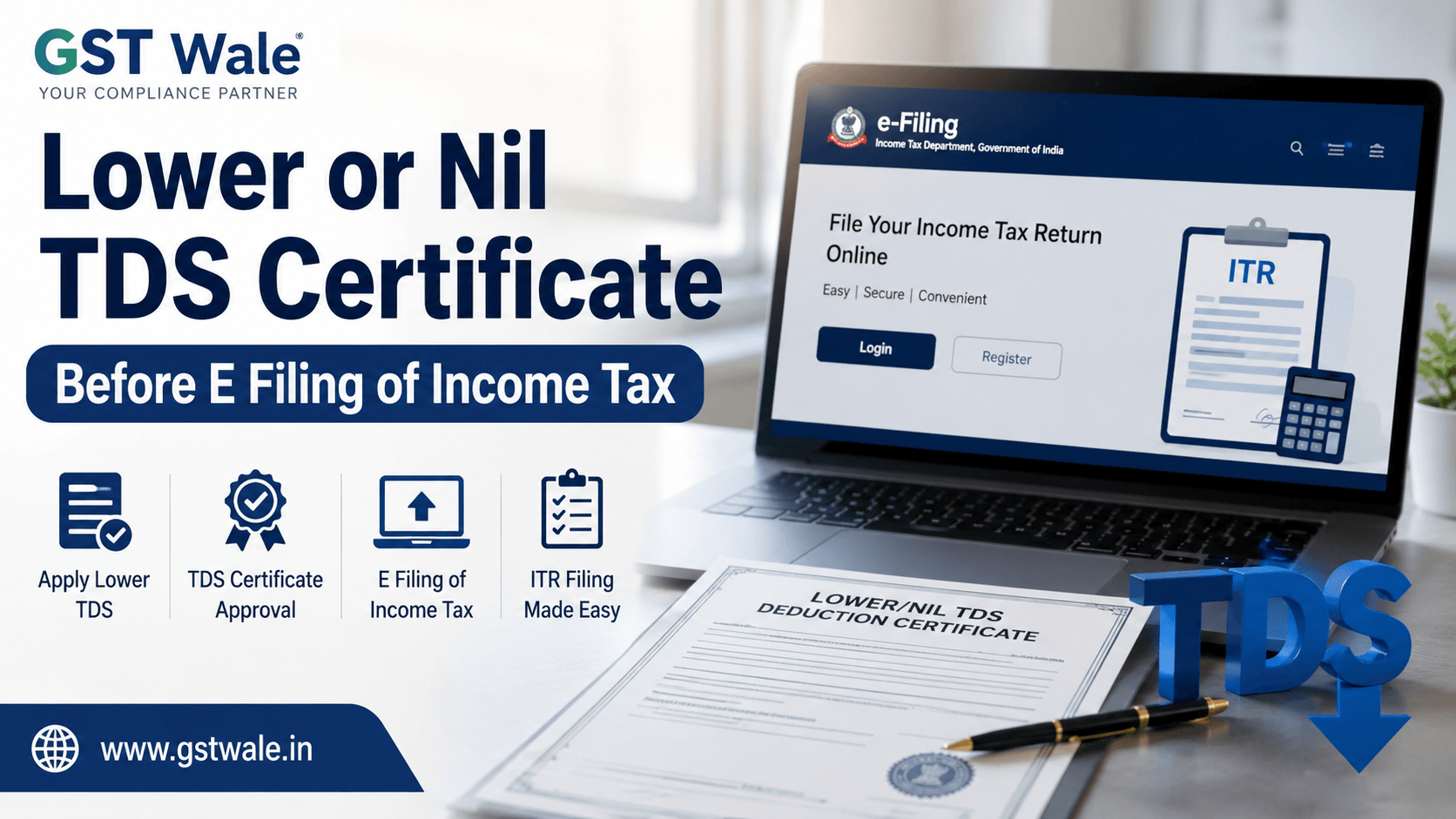
When a large amount of TDS is deducted from your income even though your actual tax liability is much lower, it can create an unnecessary cash-flow problem. This is particularly common for professionals, businesses, contractors, investors and taxpayers receiving substantial payments during the year. Before completing your e filing of income tax, it is worth checking whether you qualify for a lower or nil TDS certificate. If you are also preparing your ITR Filing, advance planning can help you avoid excessive tax deduction and manage your funds more efficiently.
A lower deduction certificate allows the payer to deduct TDS at a lower rate, or in eligible cases at nil rate, instead of deducting tax at the normal prescribed rate. Under the Income Tax Act, 1961, this facility was governed by Section 197 and the application was commonly made through Form 13. For Tax Year 2026-27, the Income Tax Department has introduced corresponding provisions under the Income Tax Act, 2025, with the application prescribed in Form 128. Existing Section 197 certificates can continue to have validity in specified circumstances.
What Is a Lower or Nil TDS Certificate?
TDS is generally deducted by the person making a payment to you. Depending on the nature of income, the applicable section and payment conditions, the payer may deduct tax before making the payment.
But what if your total tax liability for the year is expected to be significantly lower than the TDS being deducted?
This is where a lower withholding tax certificate can help.
The certificate is issued when the tax authorities are satisfied that your estimated income and expected tax liability justify deduction at a lower rate or no deduction. The application is examined by the assessing officer, who determines the appropriate rate and period of validity.
For example, suppose a consultant expects professional receipts of ₹20 lakh during the year, but after considering business expenses, eligible deductions and other income, the actual taxable income is expected to be substantially lower. If clients deduct TDS at the normal rate on every payment, a large amount may remain blocked until the taxpayer claims a refund.
Applying for lower TDS in advance may improve cash flow.
How Does Form 13 Work?
Under the Income Tax Act, 1961, taxpayers seeking a lower or nil deduction certificate generally used Form 13 under Section 197.
The basic idea is simple: the taxpayer provides details of income, expenses, tax already paid, TDS already deducted and expected receipts. The assessing officer reviews the information and determines whether a lower rate or nil deduction is justified.
For Tax Year 2026-27, taxpayers should note an important legislative change. The Income Tax Department states that the corresponding provision is now Section 395(1) of the Income Tax Act, 2025, and the prescribed application is Form 128. The underlying mechanism remains broadly similar.
Therefore, do not blindly download an old Form 13 for a current-year application. Always verify the applicable form and procedure for the relevant tax year before starting your e filing of income tax.
Who Can Apply for Lower TDS?
A taxpayer may consider applying when the normal TDS deduction is expected to be higher than the actual tax payable.
Common situations include:
- Professionals receiving large fees from clients.
- Contractors receiving substantial payments.
- Businesses with significant expenses against their receipts.
- Taxpayers expecting losses or lower taxable income.
- Investors receiving income where TDS may exceed the eventual liability.
- Persons receiving substantial contractual or professional payments during the year.
The certificate is not an automatic entitlement. The assessing officer considers the taxpayer's overall financial position and estimated tax liability before deciding the appropriate rate.
This is why accurate estimated income is extremely important.
Step-by-Step Process for Applying
Step 1: Calculate Your Estimated Income
Start by preparing a realistic estimate of your income for the entire tax year.
Include:
- Salary or professional income, where applicable.
- Business income.
- Interest and investment income.
- Rental income.
- Capital gains or other taxable receipts.
- Expected TDS.
- Eligible deductions and applicable tax benefits.
Do not simply use last year's figures. Your application should reflect the current year's expected financial position.
Step 2: Calculate Expected Tax Liability
Once estimated income is prepared, calculate the expected tax liability under the applicable provisions.
Then compare the expected tax with the TDS that would normally be deducted by your clients, customers, banks or other payers.
If there is a significant difference, a lower deduction application may be worth considering.
Step 3: Keep Supporting Documents Ready
Depending on your circumstances, supporting documents may include:
- PAN details.
- Previous income-tax return details.
- Financial statements or computation of income.
- Details of income and expected receipts.
- Existing TDS details.
- Advance tax or self-assessment tax details.
- Details of expenses and deductions.
- Details of existing lower deduction certificates, if applicable.
The exact information required can vary according to the taxpayer and nature of income.
Step 4: Submit the Application
For applications under the earlier Section 197 framework, Form 13 was submitted with relevant financial information for consideration by the tax authorities.
For Tax Year 2026-27, the Income Tax Department specifies Form 128 under the new law. The application process is being made available through the income-tax e-filing system/related tax portals.
This is an important point for taxpayers preparing their e filing of income tax: the form applicable to your case depends on the relevant tax year and legal framework.
Step 5: Respond to Queries From the Assessing Officer
The assessing officer may review the application and supporting information. If clarification or additional documents are required, respond promptly.
A practical approach is to keep your financial working papers ready rather than preparing explanations only after receiving a query.
Step 6: Share the Certificate With the Deductor
If the application is approved, the certificate specifies the lower or nil rate and its period of validity.
The relevant payer should then apply the rate mentioned in the certificate while making eligible payments. For current-year compliance, the certificate number and applicable rate may need to be reported in TDS-related statements.
Why Advance Planning Matters Before E Filing of Income Tax
Many taxpayers think about TDS only when they start preparing their return. That can be too late.
Suppose your client deducts ₹3 lakh as TDS throughout the year, but your final tax liability is only ₹1.25 lakh. You may eventually receive the excess amount as a refund, but the additional ₹1.75 lakh could remain unavailable for your business or personal needs until the refund process is completed.
This is why advance planning is important.
A lower TDS certificate can potentially improve working capital, especially for businesses and professionals who receive regular high-value payments.
However, do not apply simply to reduce TDS. The objective should be to align TDS with your genuine expected tax liability.
Lower TDS and Credit Matching During ITR Filing
Lower deduction does not mean that the income itself becomes tax-free.
You still have to report the relevant income correctly in your return. During e filing of income tax, reconcile your TDS with Form 26AS, AIS, certificates received from deductors and your books or financial records.
This is where credit matching becomes important.
For example, if your books show ₹2 lakh of TDS but the tax portal reflects only ₹1.60 lakh, investigate the difference before filing your return. The Income Tax Department provides access to TDS information through Form 26AS and AIS on the e-filing portal.
Proper reconciliation reduces the risk of claiming an incorrect TDS credit or receiving an avoidable tax notice.
Form 13 vs Form 15G and Form 15H
It is important not to confuse these provisions.
Form 13 was used under the earlier Section 197 framework for seeking a lower or nil deduction certificate based on the taxpayer's estimated tax position.
Forms 15G and 15H are different declarations used by eligible taxpayers for specified income where the tax on estimated total income is nil. Form 15H is specifically associated with eligible senior citizens.
Therefore, choosing the correct form depends on the type of income, taxpayer status and applicable legal provision.
Common Mistakes to Avoid
Waiting Until the Last Moment
If substantial TDS is expected, start the process early. Advance planning gives you more time to prepare accurate figures and respond to queries.
Providing Unrealistic Estimated Income
Do not deliberately reduce estimated income just to obtain a lower rate. Your calculation should be commercially reasonable and supported by records.
Ignoring Previous TDS
Your application should consider TDS already deducted and taxes already paid. Missing these details can distort the calculation.
Forgetting the Certificate's Validity
A certificate is valid only for the period and payments specified in it. Do not assume that an old certificate automatically applies to every future payment.
Ignoring TDS Reconciliation
Even after obtaining lower TDS, reconcile the actual deductions with your tax records before e filing of income tax.
FAQs
Can I apply for a nil TDS certificate?
Yes, where your estimated tax liability and circumstances justify nil deduction. Approval is subject to examination by the tax authorities; it is not automatic.
Is Form 13 still applicable?
Form 13 was the application associated with Section 197 under the Income Tax Act, 1961. For Tax Year 2026-27, the Income Tax Department specifies Form 128 under Section 395(1) of the Income Tax Act, 2025.
Does lower TDS reduce my actual income-tax liability?
No. A lower deduction certificate only changes the amount of tax deducted at source. Your final tax liability is determined when your total income and applicable taxes are calculated.
Can I claim TDS credit while filing my return?
Yes, eligible TDS can generally be claimed as credit subject to the applicable rules and records reflected in the tax system. Always perform proper credit matching before filing.
When should I apply?
Ideally, apply before substantial payments are made or credited and before excessive TDS accumulates. Early action allows better cash-flow planning and reduces the possibility of waiting for a refund later.
Plan Your TDS Before E Filing of Income Tax
A lower or nil TDS certificate can be a useful tax-planning tool when your expected tax liability is lower than the TDS that would otherwise be deducted. Whether you are using the earlier Form 13 framework or the current Form 128 process for Tax Year 2026-27, the key is to prepare accurate estimated income, maintain proper documentation and plan well in advance.
Before e filing of income tax, do not look at TDS as just a number appearing in Form 26AS or AIS. Review whether the deduction correctly reflects your expected tax position, perform proper credit matching and keep your financial records organised.
At GST Wale, we believe good tax compliance starts before the return is filed. If you need professional assistance with TDS planning, tax calculations or e filing of income tax, our team can help you approach the process accurately and with greater confidence.
 Previous