


Decoding the AIS and TIS: The Future of Transparent ITR Filing
Decoding the AIS and TIS: The Future of Transparent ITR Filing
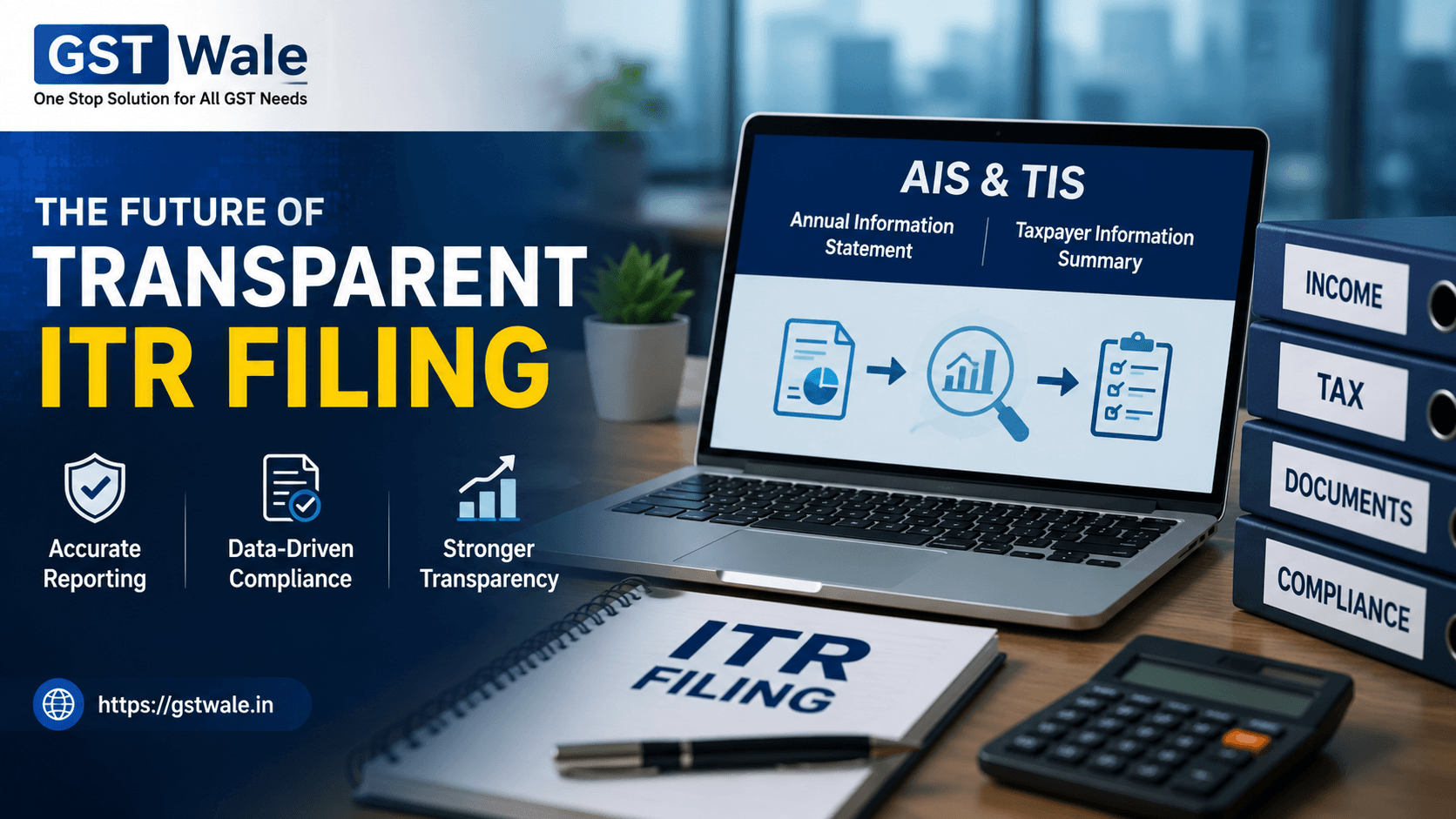
Over the last few years, the Income Tax Department has significantly upgraded the way taxpayers in India report their income and transactions. One of the biggest changes affecting taxpayers today is the introduction of the Annual Information Statement (AIS) and Taxpayer Information Summary (TIS). These tools are transforming the entire process of ITR Filing by making tax reporting more transparent, data-driven, and accurate.
At GST Wale, we regularly meet taxpayers who are confused about notices related to mismatched income, unreported transactions, or incorrect tax disclosures. In many cases, the issue arises because taxpayers are still unaware of how AIS and TIS work. If you are planning your ITR Filing this year, understanding these statements is no longer optional — it is essential.
In this article, we will decode AIS and TIS in simple language and explain how they are shaping the future of transparent tax compliance in India.
What is AIS in Income Tax?
The Annual Information Statement is a comprehensive financial statement introduced by the Income Tax Department. It contains details of almost every major financial transaction linked to your PAN.
Unlike the older Form 26AS, AIS provides much deeper insights into your financial activities.
Information Covered in AIS
The Annual Information Statement may include:
- Salary income
- Interest from savings accounts and FDs
- Dividend income
- Mutual fund transactions
- Share trading details
- Property purchases and sales
- Credit card payments
- Foreign remittances
- GST turnover data
- TDS and TCS details
- SFT-reported transactions
This means the department already has access to a large amount of your financial data before you begin your ITR Filing process.
What is TIS?
The Taxpayer Information Summary is a simplified version of AIS. While AIS contains detailed transaction-level information, TIS provides a summarized category-wise view of your financial data.
TIS is designed to help taxpayers easily understand the information that will likely be considered during ITR Filing.
Difference Between AIS and TIS
Here is a simple comparison:
| AIS | TIS |
|---|---|
| Detailed transaction data | Summarized information |
| Shows source-wise entries | Shows category-wise totals |
| Allows taxpayer feedback | Reflects processed values |
| More comprehensive | Easier to understand |
Both documents work together to improve transparency and accuracy during ITR Filing.
Why AIS and TIS Matter for ITR Filing
Earlier, many taxpayers filed returns based only on Form 16 or basic bank statements. Today, the Income Tax Department cross-verifies your return with AIS and TIS data.
If your reported income does not match the information available in these statements, you may receive notices or scrutiny queries.
Key Benefits of AIS and TIS
Better Transparency
The government now has visibility into high-value transactions and financial activities. This reduces the scope of underreporting income.
Fewer Errors in ITR Filing
AIS helps taxpayers identify missing income entries before filing returns.
Improved Tax Compliance
Taxpayers become more cautious and accurate while reporting income.
Easier Verification
Professionals and taxpayers can quickly reconcile income data with department records.
Understanding SFT and High-Value Transactions
One important term frequently appearing in AIS is SFT.
What is SFT?
SFT stands for Statement of Financial Transactions. Certain institutions like banks, mutual fund houses, registrars, and companies are required to report specified high-value transactions to the Income Tax Department.
Examples of High-Value Transactions Reported Under SFT
Some commonly reported high-value transactions include:
- Cash deposits above prescribed limits
- Large fixed deposits
- Credit card bill payments
- Purchase of property
- Mutual fund investments
- Share transactions
- Foreign currency purchases
These transactions automatically appear in your Annual Information Statement.
For example, if a person deposits ₹15 lakh in cash into a savings account, the bank may report it under SFT. During ITR Filing, if the taxpayer reports very low income without explaining the source of funds, it could trigger scrutiny.
How AIS Impacts Salaried Employees
Many salaried employees believe Form 16 is enough for tax filing. However, AIS may contain additional income that is often ignored.
Commonly Missed Income Items
- Savings account interest
- FD interest
- Dividend income
- Freelancing receipts
- Stock market gains
Suppose a salaried employee earned ₹18,000 as FD interest but forgot to include it while filing returns. Since the bank already reports this information, the mismatch may later result in a tax notice.
This is why reviewing AIS before ITR Filing has become extremely important.
How Business Owners and Professionals Should Use AIS
Business owners, freelancers, consultants, and professionals should be even more careful.
The department now cross-checks:
- GST turnover
- Bank deposits
- TDS credits
- Professional receipts
- Foreign remittances
For example, if a consultant declares ₹12 lakh turnover in income tax returns but GST records show ₹18 lakh turnover, the mismatch can attract departmental attention.
At GST Wale, we always recommend reconciling books of accounts with AIS and TIS before finalizing ITR Filing.
How to Check AIS and TIS Online
You can access AIS and TIS directly through the income tax portal.
Steps to Download AIS
Step 1: Login to Income Tax Portal
Visit the official income tax portal and log in using your PAN credentials.
Step 2: Navigate to AIS
Go to:
- Services
- Annual Information Statement (AIS)
Step 3: View or Download Statements
You can:
- View AIS online
- Download PDF or JSON format
- Check TIS summary
What to Do If AIS Shows Incorrect Information
Sometimes AIS may contain incorrect or duplicate entries.
For example:
- Duplicate FD interest
- Wrong share transaction values
- Incorrect property transaction details
The good news is that taxpayers can submit feedback directly through the AIS portal.
Types of Feedback You Can Submit
- Information is incorrect
- Information relates to another person
- Information is duplicated
- Information is denied
This feedback mechanism helps improve transparency and reduces unnecessary disputes during ITR Filing.
Common Mistakes Taxpayers Should Avoid
Ignoring AIS Before Filing Returns
This is one of the biggest mistakes taxpayers make today.
Reporting Lower Income Than AIS
Mismatch between reported income and AIS data can trigger notices.
Not Reconciling TDS Entries
Incorrect TDS claims may delay refunds.
Forgetting High-Value Transactions
Property deals, stock sales, and mutual fund redemptions should always be properly disclosed.
Future of Transparent ITR Filing in India
India’s tax system is moving toward complete digital integration. AIS and TIS are just the beginning.
In the coming years, we can expect:
- Pre-filled income tax returns
- Automated verification
- Faster refunds
- Reduced tax evasion
- AI-based compliance monitoring
- Greater scrutiny of high-value transactions
For honest taxpayers, this is actually a positive development. Accurate reporting reduces litigation and creates a smoother ITR Filing experience.
FAQs on AIS and TIS
Is AIS mandatory for ITR Filing?
AIS itself is not mandatory, but reviewing it before filing returns is highly recommended to avoid mismatches.
Can AIS contain incorrect information?
Yes, sometimes errors or duplicate entries may appear. Taxpayers can submit feedback online.
What happens if my ITR does not match AIS?
The Income Tax Department may issue notices or seek clarification regarding mismatches.
Is TIS different from Form 26AS?
Yes. TIS is a summarized statement, while Form 26AS mainly contains TDS and tax payment details.
Are small transactions also reflected in AIS?
Generally, AIS focuses more on reportable and high-value transactions, though many smaller financial details may also appear.
The introduction of the Annual Information Statement and Taxpayer Information Summary has completely changed the landscape of ITR Filing in India. These tools are improving transparency, reducing tax evasion, and encouraging accurate financial reporting.
For taxpayers, the message is clear — tax filing can no longer be done casually or based only on Form 16. Every income source, SFT entry, and high-value transaction must be carefully reviewed and properly disclosed.
At GST Wale, we help individuals, salaried employees, freelancers, and businesses handle accurate and hassle-free ITR Filing with expert guidance and complete compliance support. Whether you need help understanding AIS discrepancies or filing your returns correctly, our team is here to simplify the entire process for you.
 Previous