



Why is the Highest GST New Slab Set at 40% for Luxury and Sin Goods?
Why is the Highest GST New Slab Set at 40% for Luxury and Sin Goods?
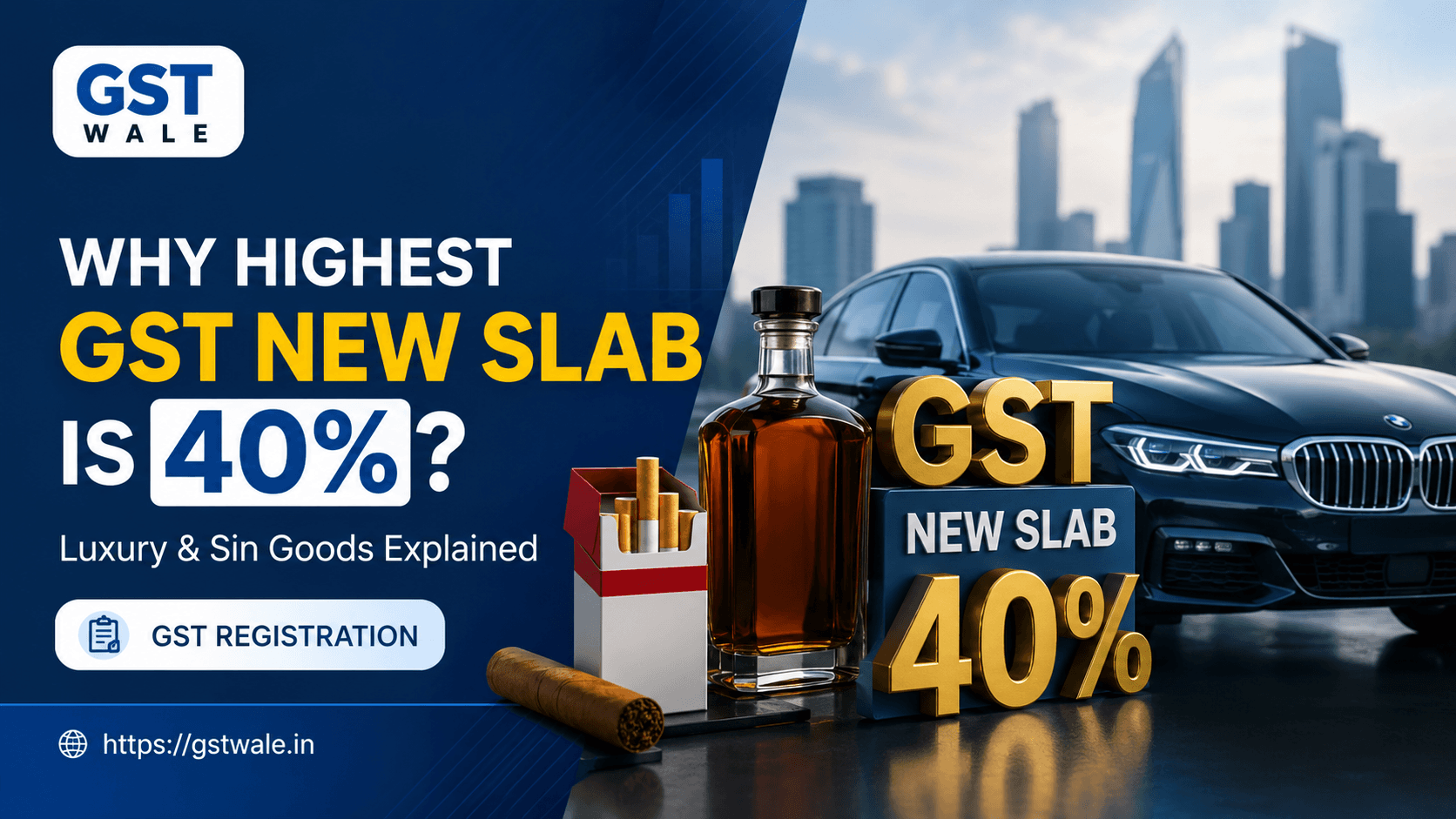
India’s GST system has transformed indirect taxation by creating a unified tax structure across the country. Recently, discussions around the gst new slab structure have gained attention, especially regarding the proposal to impose the highest tax rate of 40% on luxury and sin goods. Many business owners and consumers are now asking why such a high tax bracket is necessary and how it affects industries and pricing.
At GST Wale, we often guide businesses through compliance, taxation planning, and GST Registration so they can understand changing tax policies without confusion. The proposed gst new slab is not just about increasing taxes—it is also about balancing economic growth, public welfare, and revenue generation.
Let us understand the logic behind this taxation system in a practical and simplified manner.
What Is the GST New Slab?
The gst new slab refers to the proposed restructuring of GST rates where luxury products and harmful goods may attract taxation up to 40%. Currently, India broadly follows GST rates of 5%, 12%, 18%, and 28%, with additional cess on certain products.
The government is considering changes in the gst new rate structure to improve revenue collection while keeping essential goods affordable.
Categories Likely to Fall Under the Highest GST New Slab
Products generally considered under the highest slab include:
- Luxury cars
- Tobacco products
- Aerated beverages
- Premium consumer goods
- Casino and betting-related services
- Certain imported luxury items
These items are often categorized as either luxury consumption or socially harmful products.
Why Has the Government Proposed a 40% GST New Slab?
The idea behind the highest gst new slab is based on economic and social objectives. Let us break this down.
1. To Discourage Harmful Consumption
One major reason is to reduce the use of harmful products through taxation. This concept is commonly known as sin tax india.
Products such as cigarettes, chewing tobacco, and sugary drinks are linked to health issues. A higher tobacco tax rate or increased tax on sugary beverages helps discourage excessive consumption.
For example:
- Cigarettes already attract GST plus compensation cess.
- Aerated drinks may see increased taxation under the revised gst new rate list.
This approach is similar to global taxation practices where governments impose higher taxes on unhealthy products.
2. To Increase Government Revenue
Luxury and sin goods are usually purchased by consumers with higher spending capacity. Therefore, the government sees them as suitable categories for additional taxation.
The revenue collected from the gst new slab can support:
- Healthcare programs
- Infrastructure development
- Welfare schemes
- Rural development initiatives
Higher tax collection also helps reduce fiscal pressure on essential goods.
3. To Keep Essential Goods Affordable
The GST framework follows the principle that basic necessities should remain affordable.
If the government increases taxes equally across all products, middle-class and lower-income households would suffer the most. Instead, the burden is shifted toward non-essential and luxury purchases through a higher high tax bracket.
This creates a balanced taxation model.
How Luxury Goods Are Taxed Under the GST New Slab
Luxury items are generally products that are not considered necessities.
Luxury Car GST
The luxury car gst structure is one of the most discussed areas under GST reforms.
Currently, luxury cars attract:
- 28% GST
- Additional compensation cess up to 22%
This effectively takes taxation close to 50% in some cases.
Under the proposed gst new slab, luxury automobiles may continue facing heavy taxation because:
- They are high-value discretionary purchases.
- They contribute significantly to tax revenue.
- Higher taxes help offset environmental concerns.
For instance, premium SUVs and imported vehicles already carry substantial tax burdens compared to regular passenger cars.
Taxation on Imported Luxury Products
Imported luxury watches, designer goods, and premium electronics may also remain under a higher gst rates category to:
- Encourage domestic manufacturing
- Control excessive imports
- Protect local industries
Why Sin Goods Face Higher GST Rates
The government treats sin goods differently due to their social and health impact.
Tobacco Tax Rate and Public Health
India imposes one of the highest tobacco tax rate structures among developing countries.
Higher taxes on tobacco products aim to:
- Reduce smoking habits
- Lower healthcare costs
- Create awareness about health risks
Studies globally show that increasing cigarette prices reduces consumption, especially among young users.
Aerated Beverages GST
The taxation on sugary drinks under aerated beverages gst has also been debated.
These products are often associated with:
- Obesity
- Diabetes
- Lifestyle diseases
Therefore, they may continue attracting a higher gst new slab to discourage overconsumption.
Impact of the GST New Slab on Businesses
Businesses dealing in luxury or sin goods need to prepare carefully for possible tax changes.
Pricing Challenges
Higher GST directly affects product pricing.
For example:
- Luxury vehicle prices may increase.
- Premium product demand may slow down.
- Tobacco and beverage companies may face reduced sales volumes.
Companies may need to revise pricing strategies and profit margins.
Compliance Requirements
Businesses operating under the highest gst new slab must ensure:
- Accurate invoicing
- Proper GST return filing
- Correct HSN classification
- Timely tax payments
Non-compliance can result in heavy penalties.
Working Capital Pressure
Higher tax liabilities may increase working capital requirements, especially for manufacturers and distributors.
Businesses should maintain proper financial planning to avoid cash flow issues.
Will the GST New Slab Affect Common Consumers?
In most cases, the average consumer will not be heavily impacted.
The government’s strategy is to keep essential products taxed at lower gst rates while imposing higher taxes mainly on discretionary spending.
Goods Likely to Remain Affordable
Products expected to remain under lower slabs include:
- Food essentials
- Medicines
- Educational services
- Basic household products
So, the proposed gst new slab mainly targets premium consumption rather than daily necessities.
GST New Rate List: Possible Future Structure
Although no final implementation has been officially confirmed, discussions around the future gst new rate list indicate a simplified structure.
Possible framework:
| GST Category | Products |
|---|---|
| 5% | Essential goods |
| 12% | Household necessities |
| 18% | Standard goods and services |
| 28% | Premium products |
| 40% | Luxury and sin goods |
This structure aims to make taxation more practical and revenue-efficient.
Benefits of the Highest GST New Slab
The proposed gst new slab offers several policy advantages.
Better Revenue Generation
Higher taxation on premium products increases government income without burdening essential consumption.
Improved Public Health
Higher taxes on tobacco and sugary drinks may reduce harmful habits.
Economic Balance
Luxury consumption contributes more toward national development while basic goods remain affordable.
Reduced Inequality
The taxation model ensures higher earners contribute more indirectly through luxury spending.
Challenges Associated With the GST New Slab
Despite the advantages, some concerns remain.
Risk of Tax Evasion
Very high taxes can sometimes encourage:
- Illegal trade
- Smuggling
- Fake invoicing
This is especially common in tobacco-related industries.
Reduced Consumer Demand
A higher high tax bracket may slow demand in luxury sectors, impacting sales and employment.
Industry Pushback
Manufacturers often argue that excessive taxation affects competitiveness and growth.
Therefore, policymakers must maintain a balanced approach.
FAQs on GST New Slab
What is the highest GST new slab proposed in India?
The proposed highest gst new slab is 40%, mainly for luxury and sin goods.
Which products may attract the 40% GST rate?
Luxury cars, tobacco products, aerated beverages, and certain premium goods may fall under this category.
Why are tobacco products taxed heavily?
A higher tobacco tax rate helps discourage harmful consumption and supports public health initiatives.
Will essential goods become expensive due to the gst new slab?
No, essential goods are expected to remain under lower GST rates.
How does luxury car GST impact buyers?
The luxury car gst increases the overall cost of premium vehicles due to higher GST and cess charges.
The proposed gst new slab at 40% reflects the government’s broader strategy of taxing luxury and harmful products more heavily while protecting essential consumption. Whether it is sin tax india, aerated beverages gst, or luxury car gst, the objective remains the same—generate revenue responsibly while promoting healthier and balanced economic behavior.
For businesses, adapting to changing gst rates and understanding the updated gst new rate list is crucial for smooth operations and compliance.
At GST Wale, we help businesses stay updated with GST changes, registrations, return filing, and tax compliance support. If you want expert guidance on GST matters, our team is always ready to assist you with practical and reliable solutions.
 Previous