



The Hidden Math: How to Calculate GST for Gold Jewellery Purchase with Making Charges
The Hidden Math: How to Calculate GST for Gold Jewellery Purchase with Making Charges
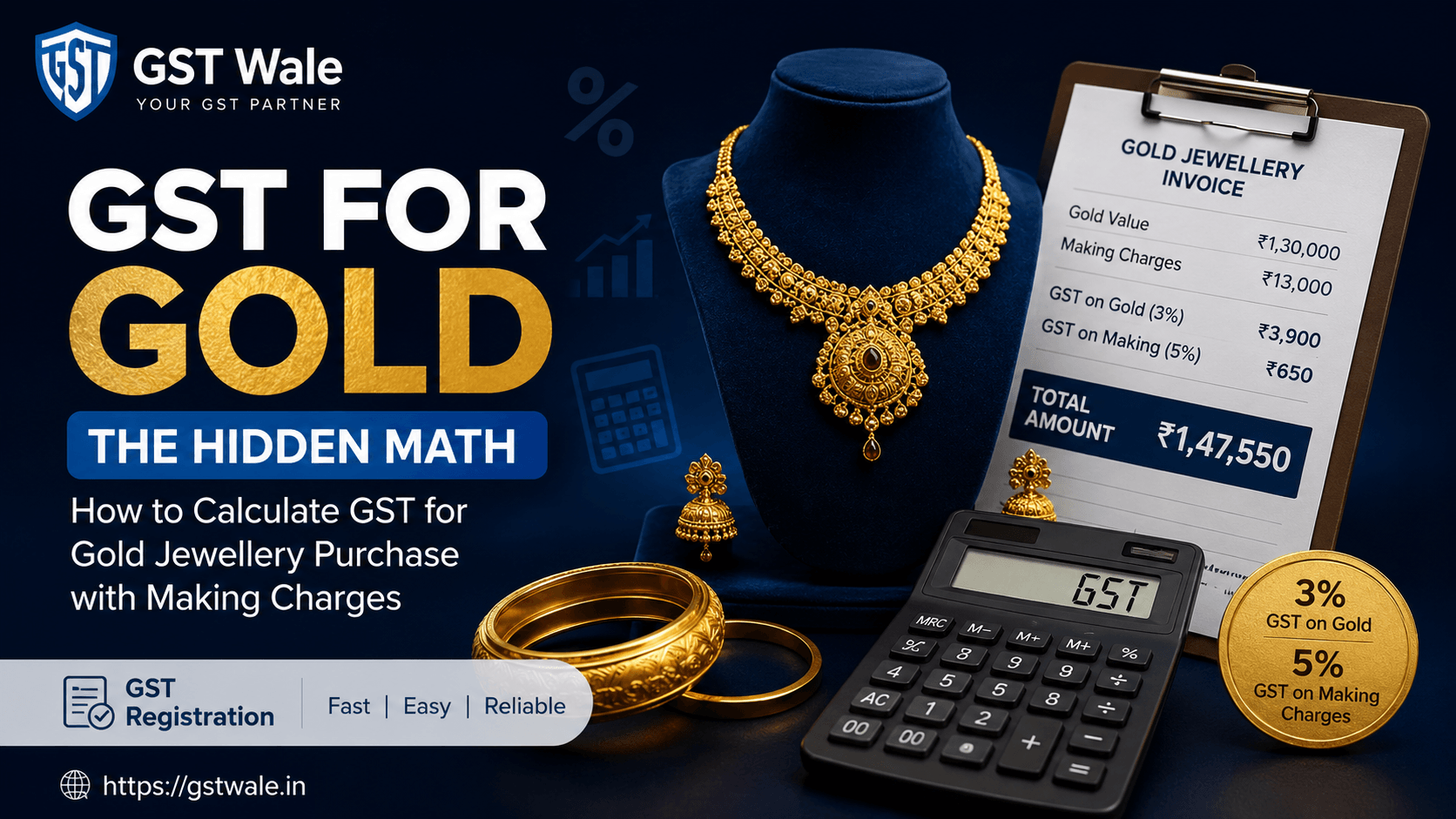
Buying gold jewellery in India is not just an emotional decision; it is also a financial one. Whether you are purchasing jewellery for a wedding, investment, or festive occasion, understanding gst for gold is extremely important. Many buyers focus only on the gold rate and ignore the hidden tax calculations involved in the final bill. However, GST on gold jewellery is more than just a flat percentage on the ornament price.
At GST Wale, we regularly guide businesses and individuals on tax compliance, billing, and GST Registration. One of the most common questions we receive is how GST is calculated when making charges are added to the jewellery value.
In this article, we will break down the hidden math behind gold jewellery taxation in a simple and practical manner so that you can understand exactly what you are paying for.
Understanding GST for Gold in India
Before calculating anything, it is important to understand the applicable gst rates on gold purchases.
Currently, the GST structure for gold jewellery in India is divided into two components:
- 3% GST on the value of gold
- 5% GST on jewellery making charges
This applies to most retail jewellery purchases across India.
So, when you buy a gold necklace, ring, or bracelet, GST is not calculated only on the gold price. The making charges also attract tax separately.
This is where many customers get confused while reading the final invoice.
Why GST for Gold Jewellery Feels Complicated
Gold invoices often contain multiple cost elements such as:
- Gold weight price
- Wastage charges
- Jewellery making charges
- Stone charges (if applicable)
- Hallmarking charges
- GST components
Because of these multiple entries, buyers sometimes fail to understand the actual tax amount.
The complexity increases further when jewellers apply making charges as:
- Percentage of gold value
- Per gram rate
- Fixed amount
Each method changes the final calculation.
GST for Gold: Step-by-Step Calculation
Let us understand the complete process with a practical example.
Example of Gold GST Calculation
Suppose you purchase:
- 20 grams gold jewellery
- Gold rate = ₹6,500 per gram
- Making charges = 10% of gold value
Step 1: Calculate Gold Value
Gold Value=20×6500=130000\text{Gold Value} = 20 \times 6500 = 130000Gold Value=20×6500=130000
Gold value = ₹1,30,000
Step 2: Calculate Jewellery Making Charges
Making charges at 10%:
Making Charges=130000×10%=13000\text{Making Charges} = 130000 \times 10\% = 13000Making Charges=130000×10%=13000
Making charges = ₹13,000
Step 3: GST on Gold Value
GST at 3% on gold:
GST on Gold=130000×3%=3900\text{GST on Gold} = 130000 \times 3\% = 3900GST on Gold=130000×3%=3900
GST on gold = ₹3,900
Step 4: GST on Making Charges
GST at 5% on making charges:
GST on Making Charges=13000×5%=650\text{GST on Making Charges} = 13000 \times 5\% = 650GST on Making Charges=13000×5%=650
GST on making charges = ₹650
Step 5: Final Invoice Amount
Total Bill=130000+13000+3900+650=147550\text{Total Bill} = 130000 + 13000 + 3900 + 650 = 147550Total Bill=130000+13000+3900+650=147550
Final payable amount = ₹1,47,550
This is the actual hidden math behind gst for gold jewellery purchases.
Understanding the Gold Invoice Breakdown
A proper gold invoice breakdown should clearly mention:
Gold Value
This is based on:
- Net weight
- Purity
- Current market gold rate
Jewellery Making Charges
These are labour and design charges charged by the jeweller.
GST Components
Separate GST calculations should appear on:
- Gold value
- Making charges
Always verify whether the invoice mentions:
- HSN code
- GSTIN of jeweller
- GST breakup
This helps ensure transparency and avoids future disputes.
GST in Gold Coins and Biscuits
Many investors buy gold coins instead of jewellery. However, the taxation works slightly differently.
Tax on Gold Coins
The tax on gold coins is generally charged at:
- 3% GST on the coin value
There are usually no making charges involved unless the coin comes in premium packaging or decorative casing.
For example:
If a gold coin costs ₹50,000:
GST=50000×3%=1500\text{GST} = 50000 \times 3\% = 1500GST=50000×3%=1500
Total payable = ₹51,500
This makes coins relatively simpler to calculate compared to jewellery purchases.
Important Factors Affecting GST for Gold
Purity of Gold
Whether it is:
- 18K
- 22K
- 24K
The GST rate generally remains the same.
However, the final value changes because of purity-based pricing.
Wastage Charges
Some jewellers add wastage charges separately. These charges may also become part of the taxable amount depending on invoice structuring.
Embedded Stones
If jewellery contains:
- Diamonds
- Precious stones
- Artificial stones
The tax treatment can vary depending on the invoice breakup.
This is why proper precious metal valuation becomes important.
Common Mistakes Buyers Make While Calculating Gold GST
Ignoring Making Charges
Many people calculate only 3% GST on gold value and forget the additional GST on making charges.
Not Checking Invoice Transparency
Always ask for:
- Detailed GST breakup
- Separate mention of making charges
Comparing Only Gold Rates
A jeweller offering lower gold rates may compensate by charging very high making charges.
So, compare:
- Gold rate
- Making charges
- Final GST impact
Tips to Save Money on Gold Jewellery Purchases
Choose Lower Making Charges
Since making charges attract additional GST, lower charges reduce your overall bill.
Buy During Festive Discounts
Jewellers often waive off part of the making charges during:
- Diwali
- Akshaya Tritiya
- Wedding seasons
Request a Detailed Invoice
A transparent invoice helps you:
- Understand taxation
- Avoid overcharging
- Maintain purchase records
Prefer BIS Hallmarked Jewellery
This ensures purity and proper billing practices.
How Jewellers Handle GST Compliance
Jewellers registered under GST must:
- Issue GST invoices
- Maintain sales records
- File GST returns
- Report taxable turnover correctly
Improper invoicing can create issues during departmental scrutiny.
At GST Wale, we help jewellers and businesses manage GST compliance smoothly with proper documentation and filing support.
FAQs on GST for Gold
What is the GST rate on gold jewellery in India?
Currently, 3% GST applies on gold value and 5% GST applies on jewellery making charges.
Is GST applicable on making charges separately?
Yes. Jewellery making charges attract 5% GST separately from the gold value.
How do I calculate gold GST correctly?
To calculate gold gst, first calculate the gold value, then add making charges, and finally apply the respective GST rates separately.
Is there GST on gold coins?
Yes. The tax on gold coins is generally 3% on the coin value.
Can jewellers charge extra GST beyond the standard rates?
No. Jewellers must follow the prescribed GST structure. Always ask for a proper invoice to verify charges.
Understanding the hidden math behind gst for gold purchases can save you from confusion and unnecessary expenses. Many buyers focus only on daily gold prices but overlook how jewellery making charges and GST components increase the final bill.
A smart buyer should always review:
- Gold value
- Making charges
- GST breakup
- Invoice transparency
Whether you are buying jewellery for investment or personal use, knowing how gst in gold works helps you make informed financial decisions.
If you are a jeweller, trader, or business owner looking for expert GST assistance, GST Wale can help you with registration, invoicing, return filing, and complete compliance support. Connect with GST Wale today and simplify your GST journey with experienced professionals.
 Previous