


Can You Save GST in Car Insurance? Tips for Vehicle Owners
Can You Save GST in Car Insurance? Tips for Vehicle Owners
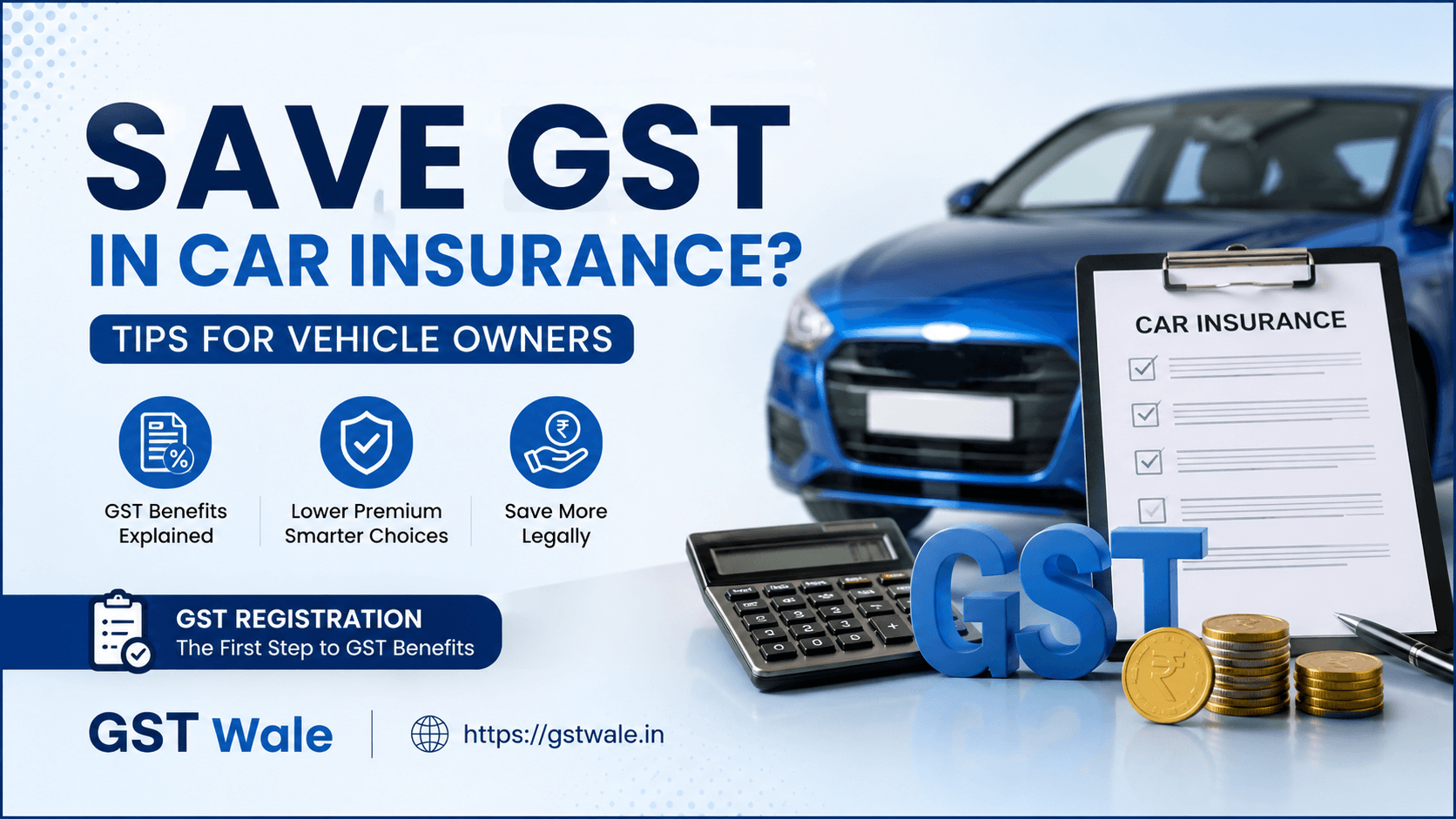
Car insurance is a necessary expense for every vehicle owner in India. However, many people are unaware that understanding gst in car insurance can help reduce tax costs in certain situations, especially for businesses. Whether you own a personal vehicle or use cars for business purposes, knowing how GST applies to insurance premiums and whether you can claim Input Tax Credit (ITC) can make a significant difference.
If you are starting a business or planning to claim eligible GST benefits, obtaining proper GST Registration is one of the first steps. At GST Wale, we regularly help businesses understand GST compliance, including the rules surrounding gst in car insurance and related tax benefits.
Understanding GST in Car Insurance
The concept of gst in car insurance is simple. Whenever you purchase or renew a car insurance policy, GST is charged on the insurance premium. The insurance company collects this GST and deposits it with the government.
Currently, the GST applicable on most motor insurance policies is 18%. This applies to:
- Third-party insurance
- Comprehensive insurance
- Zero depreciation add-on covers
- Other optional riders
Although everyone pays GST on insurance premiums, not everyone can claim its benefit. The availability of Input Tax Credit depends upon how the vehicle is used and the provisions of the GST law.
Motor Insurance Tax Rate Explained
The motor insurance tax rate under GST is generally 18%.
For example:
- Insurance Premium: ₹20,000
- GST @18%: ₹3,600
- Total Amount Payable: ₹23,600
This GST becomes an additional expense unless you are eligible to claim Input Tax Credit under GST provisions.
Can You Save GST in Car Insurance?
The answer depends on how the vehicle is used.
For Personal Vehicle Owners
If the car is used exclusively for personal purposes, you cannot claim ITC on the GST paid on insurance premiums. Therefore, the GST paid becomes part of your overall insurance cost.
In such cases, there is no direct way to save gst in car insurance through GST credit.
For Business Vehicle Owners
Businesses may be eligible to claim GST benefits in specific circumstances.
If the vehicle is used for eligible business purposes and the GST law permits ITC, the GST paid on insurance premiums may be available as Input Tax Credit.
However, GST rules relating to motor vehicles are highly specific. Claiming ITC without proper eligibility can result in notices, penalties, or reversal of credit.
ITC on Car Insurance: Who Can Claim It?
One of the most common questions we receive at GST Wale is about itc on car insurance.
Input Tax Credit is generally blocked for motor vehicles used for personal transportation. However, exceptions exist.
ITC May Be Available When:
- The vehicle is used for passenger transportation services.
- The vehicle is used for driving training.
- The vehicle is used for further supply, leasing, or renting.
- GST law specifically allows credit under applicable provisions.
ITC Is Generally Not Available When:
- The vehicle is used for personal purposes.
- The vehicle is purchased for employee transportation without meeting GST exceptions.
- The vehicle falls under blocked credit provisions.
Before claiming itc on car insurance, always consult a qualified GST professional because eligibility depends on the facts of each case.
Understanding Premium Breakdown CGST SGST
Your insurance policy usually contains a detailed invoice showing the premium breakdown cgst sgst.
A typical invoice may include:
- Own Damage Premium
- Third Party Premium
- Personal Accident Cover
- Add-on Covers
- CGST
- SGST
If the insurer and customer are located in different states, IGST may apply instead of CGST and SGST.
Checking the premium breakdown cgst sgst helps businesses verify the correctness of tax charged before claiming eligible credits.
GST on Zero Depreciation Insurance
Many vehicle owners prefer zero depreciation policies because they provide better claim settlements.
The GST applicable on zero depreciation insurance gst follows the same standard rate applicable to insurance premiums.
Although the add-on increases your premium, it often reduces your out-of-pocket expenses during repairs because depreciation on replaced parts is not deducted.
When comparing insurance plans, always evaluate:
- Premium amount
- Coverage benefits
- Zero depreciation insurance gst implications
- Claim settlement record
- Network garages
How Claims Settlement and Tax Work
Many people confuse insurance claims with GST liability.
Understanding claims settlement and tax can help avoid misconceptions.
Cashless Claims
In cashless claims, the insurer directly settles the repair bill with the garage as per policy terms.
Reimbursement Claims
The policyholder first pays for repairs and later receives reimbursement from the insurer.
In both situations, claims settlement and tax treatment depends upon the nature of repair invoices, GST charged, and the eligibility of ITC under GST law.
Businesses should preserve:
- Insurance invoice
- Garage invoice
- GST tax invoice
- Payment records
- Claim settlement documents
Practical Tips to Save GST in Car Insurance
1. Verify Business Eligibility
If the vehicle qualifies under GST provisions, ensure your business claims eligible ITC correctly.
2. Keep Proper Documentation
Maintain insurance invoices, GST invoices, and payment proofs for future verification.
3. Review Every Premium Invoice
Always check the GST amount and ensure the GSTIN is correctly mentioned wherever applicable.
4. Avoid Incorrect ITC Claims
Wrongly claiming GST credit can lead to notices, interest, and penalties.
5. Seek Professional Advice
GST provisions relating to motor vehicles frequently create confusion. Expert guidance helps avoid costly mistakes.
Common Mistakes Vehicle Owners Make
- Assuming every business can claim ITC.
- Ignoring blocked credit provisions.
- Not checking the insurance invoice.
- Failing to maintain documentation.
- Misunderstanding GST treatment during claim settlements.
Why Understanding GST in Car Matters
Knowing the rules relating to gst in car insurance helps individuals and businesses make informed financial decisions. While personal vehicle owners generally cannot recover the GST paid, eligible businesses may reduce costs through lawful ITC claims. Understanding the motor insurance tax rate, verifying the premium breakdown, and maintaining proper documentation can prevent unnecessary tax issues.
Frequently Asked Questions
1. What is the GST rate on car insurance?
The motor insurance tax rate is generally 18% on most car insurance policies, including comprehensive and third-party insurance.
2. Can individuals claim ITC on car insurance?
Generally, no. Personal vehicle owners cannot claim ITC on GST paid on insurance premiums.
3. Can companies claim ITC on car insurance?
Only in situations specifically permitted under the GST Act, such as eligible passenger transport, leasing, driving training, or further supply of vehicles.
4. Is GST applicable on zero depreciation insurance?
Yes. Zero depreciation insurance gst follows the applicable GST rate on insurance premiums.
5. Does GST affect insurance claim settlements?
Yes, claims settlement and tax treatment may vary depending on the repair invoice, GST charged, and whether ITC is legally available.
Understanding gst in car insurance is more than just knowing the tax rate. It involves evaluating ITC eligibility, reviewing insurance invoices, understanding premium breakdowns, and ensuring compliance with GST provisions. Making informed decisions today can help businesses reduce unnecessary costs while staying compliant with tax laws.
Need Expert GST Guidance?
At GST Wale, we help businesses and professionals understand GST rules with confidence. Whether you need assistance with GST compliance, registrations, ITC eligibility, or tax advisory, our experienced experts are here to simplify the process. Get in touch with GST Wale today and let us help you make smarter GST decisions while ensuring complete compliance with the law.
 Previous