


The Importance of Form 26AS and AIS Reconciliation in ITR Filing
The Importance of Form 26AS and AIS Reconciliation in ITR Filing
When it comes to accurate ITR Filing, one of the most ignored yet most important steps is reconciling Form 26AS and AIS before submitting your return. Many taxpayers assume that simply entering income details from salary slips or bank statements is enough. However, the Income Tax Department now cross-verifies multiple data sources, and even a small mismatch can trigger notices, delayed refunds, or scrutiny.
At GST Wale, we often see individuals and business owners facing issues because they skipped reconciliation of their tax records. Before starting your ITR Filing, it is essential to verify whether your income, TDS deductions, investments, and financial transactions are correctly reflected in government records.
In this article, we will explain why Form 26AS and AIS reconciliation matters, how it impacts ITR Filing, and the practical steps every taxpayer should follow to avoid costly mistakes.
Understanding Form 26AS and AIS
Before discussing reconciliation, let us first understand what these documents actually are.
What is Form 26AS?
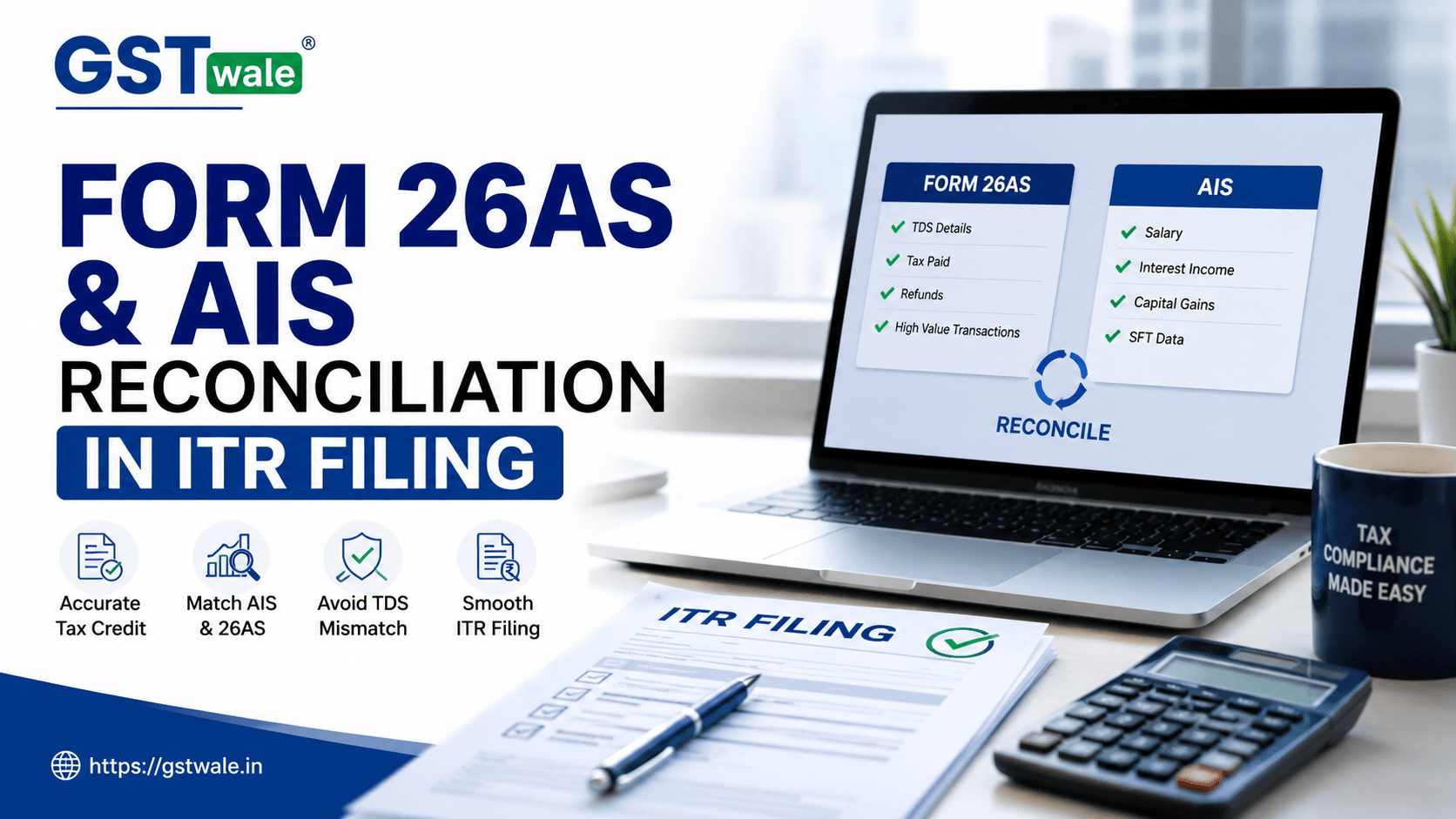
Form 26AS is a consolidated tax credit statement maintained by the Income Tax Department. It contains details such as:
- TDS deducted by employers or clients
- TCS collected by sellers
- Advance tax paid
- Self-assessment tax
- Refund details
- High-value transactions
It acts as proof that taxes deducted from your income have been deposited with the government.
What is AIS?
AIS, or Annual Information Statement, is a more detailed financial statement introduced by the Income Tax Department. It includes:
- Salary income
- Interest income
- Dividend income
- Stock market transactions
- Mutual fund investments
- Foreign remittances
- SFT data reported by banks and institutions
AIS provides a broader financial picture compared to Form 26AS.
Why Reconciliation is Important in ITR Filing
Many taxpayers directly file returns without comparing their documents with Form 26AS and AIS. This can lead to major errors during ITR Filing.
Avoids TDS Mismatch Issues
One of the most common reasons for income tax notices is a TDS mismatch.
For example:
- Your employer deducted TDS from salary.
- But due to an error, the TDS was not correctly reflected in Form 26AS.
- You claimed the credit during ITR Filing.
- The department rejects the claim because records do not match.
This may result in:
- Reduced refunds
- Additional tax demand
- Interest penalties
Reconciling Form 26AS helps confirm that all deducted taxes are properly credited.
AIS Helps Maintain Financial Transparency
The Income Tax Department now tracks various financial activities through AIS.
Transactions Reported in AIS
AIS may contain:
- Large cash deposits
- Credit card payments
- Purchase of property
- Share trading activity
- Mutual fund investments
If your ITR Filing does not reflect these transactions properly, it may raise red flags.
Example from Real Practice
Suppose a taxpayer sold shares and earned capital gains but forgot to disclose them while filing returns. Since brokerage companies report this information in AIS, the department can easily identify the mismatch.
At GST Wale, we advise clients to carefully review AIS before finalising their ITR Filing to maintain complete financial transparency.
Importance of Salary Matching During ITR Filing
Salaried employees often assume Form 16 alone is sufficient. However, salary matching is equally important.
Common Salary Mismatch Problems
Sometimes:
- Employer reports incorrect salary figures
- Bonus or incentives are excluded
- TDS entries are wrongly uploaded
- Multiple employers report overlapping income
Such discrepancies can create complications during ITR Filing.
What You Should Compare
Always compare:
- Form 16
- Salary slips
- Form 26AS
- AIS
If the figures do not match, contact your employer immediately for correction.
Role of SFT Data in Income Tax Compliance
SFT data refers to Statement of Financial Transactions reported by banks, mutual funds, registrars, and other institutions.
Transactions Covered Under SFT
Examples include:
- Fixed deposit investments
- Property purchases
- Large savings account deposits
- High-value credit card payments
- Mutual fund transactions
The Income Tax Department uses SFT data to verify whether your declared income matches your financial activities.
Why Ignoring SFT Data is Risky
Suppose your AIS reflects a property purchase worth ₹60 lakhs, but your reported income does not justify such an investment. This could attract scrutiny.
Proper reconciliation ensures your ITR Filing aligns with all reported financial transactions.
Step-by-Step Process for Form 26AS and AIS Reconciliation
Step 1: Download Form 26AS
Login to the Income Tax portal and download the latest Form 26AS.
Check:
- TDS entries
- Advance tax details
- Refund information
Step 2: Download AIS
Review all income and transaction details mentioned in AIS.
Pay special attention to:
- Interest income
- Capital gains
- Dividend income
- SFT data
Step 3: Match with Your Financial Records
Compare AIS and Form 26AS with:
- Bank statements
- Form 16
- Investment statements
- Business books of accounts
Step 4: Identify Mismatches
Look for:
- Missing TDS
- Incorrect salary reporting
- Unreported bank interest
- Duplicate entries
Step 5: Rectify Before ITR Filing
If discrepancies exist:
- Contact deductors
- Revise incorrect records
- Report accurate income in return
This reduces the risk of future notices.
Common Mistakes Taxpayers Make
Ignoring Small Interest Income
Many individuals forget savings account interest or FD interest. However, AIS captures these entries.
Claiming Incorrect TDS Credit
Claiming excess TDS not appearing in Form 26AS may lead to refund rejection.
Not Reviewing AIS Properly
AIS often includes stock trading and dividend details that taxpayers miss while filing returns.
Filing Returns in Hurry
Last-minute ITR Filing usually increases chances of errors and incomplete reconciliation.
Benefits of Proper Reconciliation Before ITR Filing
Faster Refund Processing
Accurate returns with matched data are processed faster.
Reduced Chances of Notices
When income and tax details align with government records, scrutiny risk decreases.
Better Financial Transparency
Proper reporting strengthens your financial credibility.
Peace of Mind
You can confidently complete ITR Filing knowing your records are accurate.
Expert Tips from GST Wale
Keep Documents Organised
Maintain:
- Salary records
- Investment proofs
- Bank statements
- TDS certificates
Review AIS Every Year
Do not assume government data is always correct. Cross-check carefully.
File Returns Early
Early ITR Filing gives enough time to correct mismatches.
Take Professional Assistance
Complex transactions like:
- Capital gains
- Foreign income
- Business income
should ideally be reviewed by experts.
FAQs
Is Form 26AS mandatory for ITR Filing?
Yes, Form 26AS is extremely important because it reflects tax credits and TDS deposited against your PAN.
What happens if AIS and ITR do not match?
Mismatch may result in notices, scrutiny, or delayed refunds from the Income Tax Department.
Can AIS contain incorrect information?
Yes, sometimes institutions may report incorrect details. Taxpayers should verify and provide feedback if required.
Why is salary matching important?
Salary matching ensures that income and TDS details reported by the employer are accurate during ITR Filing.
Does AIS include bank interest income?
Yes, AIS generally includes savings account and fixed deposit interest reported by banks.
Proper reconciliation of Form 26AS and AIS is no longer optional in modern ITR Filing. With the Income Tax Department using advanced data analytics and transaction monitoring, even minor mismatches can create unnecessary complications.
Whether you are a salaried employee, freelancer, trader, or business owner, reviewing your tax credit statement, verifying salary matching, checking SFT data, and resolving TDS mismatch issues should always be part of your tax filing process.
At GST Wale, we help taxpayers complete accurate and hassle-free ITR Filing with proper reconciliation, expert guidance, and complete compliance support. If you want to avoid notices, maximise refunds, and file confidently, connect with GST Wale today.
 Previous