


The Connection Between GST and Income Tax Updates
The Connection Between GST and Income Tax Updates
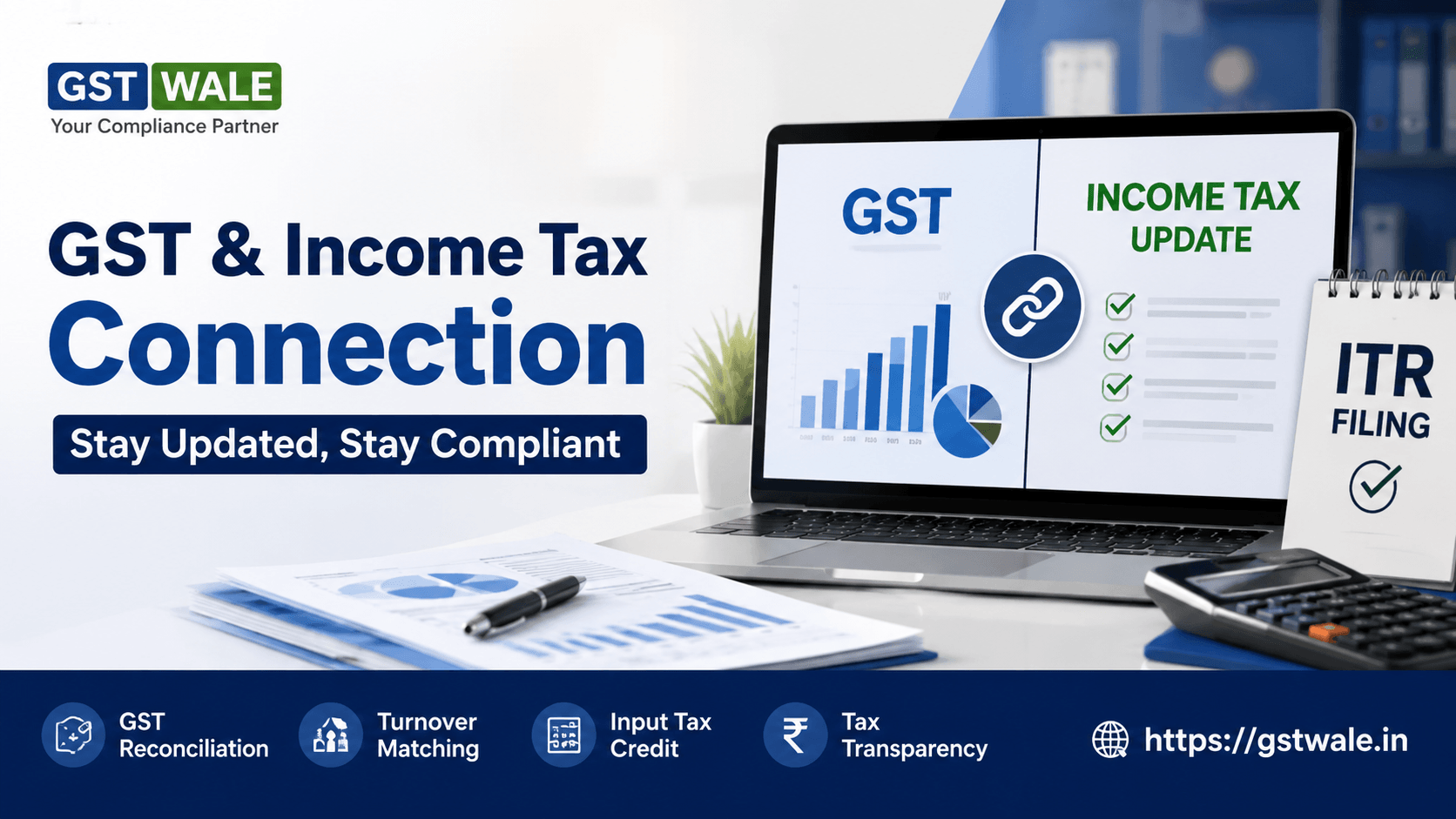
In recent years, the Indian tax system has become more interconnected than ever before. One of the biggest reasons behind this shift is the growing relationship between GST compliance and Income Tax Updates. Today, businesses cannot treat GST and income tax as two separate areas because both departments actively share financial data to ensure better compliance and tax transparency.
At GST Wale, we often guide business owners who are surprised to receive notices simply because their GST turnover did not match their income tax records. This is why staying updated with the latest Income Tax Updates is no longer optional for taxpayers, traders, freelancers, startups, or companies.
If you are planning your ITR Filing, understanding how GST affects your income tax reporting can help you avoid penalties, mismatches, and unnecessary scrutiny.
Why GST and Income Tax Are Closely Connected
The Government of India has significantly improved digital tax monitoring systems. GST returns, e-invoicing, TDS filings, and income tax returns are now linked through PAN-based reporting.
Whenever you file:
- GST returns
- GSTR-1
- GSTR-3B
- annual return
- Income Tax Return (ITR)
the authorities can cross-check the information automatically.
This integration helps the government improve:
- Tax transparency
- Revenue tracking
- Fraud detection
- Fake invoice prevention
- Proper turnover matching
As a result, recent Income Tax Updates strongly focus on data consistency between GST and income tax filings.
How GST Data Impacts Income Tax Assessments
Turnover Matching Is Now Critical
One of the most important Income Tax Updates for businesses is turnover verification.
Suppose your GST returns show annual sales of ₹1.2 crore, but your income tax return reports only ₹95 lakh turnover. Such differences can trigger notices from the Income Tax Department.
Authorities now compare:
- GST sales data
- Bank transactions
- E-invoices
- TDS records
- Income declared in ITR
This process is called turnover matching.
Example
A trader in Delhi reported:
- ₹80 lakh turnover in ITR
- ₹1 crore turnover in GST returns
The mismatch resulted in an income tax scrutiny notice asking for clarification and supporting documents.
This is becoming increasingly common under recent Income Tax Updates.
GST Reconciliation and Its Role in Income Tax Compliance
What Is GST Reconciliation?
GST reconciliation means comparing:
- Purchase records
- Sales records
- GST returns
- Books of accounts
- E-way bills
- Bank entries
Proper GST reconciliation helps ensure that the figures reported in income tax returns are accurate.
Why It Matters
Recent Income Tax Updates emphasize reconciliation because discrepancies often indicate:
- Underreported income
- Incorrect expenses
- Fake purchases
- Wrong input claims
Businesses that fail to reconcile GST data may face:
- Tax notices
- Penalties
- Interest liabilities
- Delayed refunds
Input Tax Credit and Income Tax Implications
Understanding Input Tax Credit
Input tax credit (ITC) allows businesses to claim GST paid on purchases and reduce tax liability.
However, improper ITC claims can also affect income tax calculations.
Connection Between ITC and Income Tax
Here’s how both are connected:
| GST Aspect | Income Tax Impact |
|---|---|
| Excess ITC claim | May inflate expenses |
| Blocked credit | Incorrect accounting treatment |
| Fake invoices | Possible tax evasion scrutiny |
| Vendor mismatch | Expense disallowance risk |
One of the major Income Tax Updates for businesses is stricter verification of expenses linked to GST invoices.
Practical Tip from GST Wale
Always ensure:
- Vendor GSTIN is active
- Purchases are genuine
- GSTR-2B matches books
- Invoices are properly maintained
This reduces future tax disputes.
Annual Return Filing and Income Tax Verification
The GST annual return has become an important compliance document for tax authorities.
When businesses file the annual return, authorities compare it with:
- Profit & Loss Account
- Balance Sheet
- ITR figures
- Audit reports
Any inconsistency may raise compliance concerns.
Common Areas Checked
Authorities usually verify:
- Gross turnover
- Taxable turnover
- Exempt sales
- Input tax credit
- Net profit ratios
This is why modern Income Tax Updates encourage businesses to maintain clean and transparent accounting records.
Tax Transparency Is Increasing Every Year
India’s tax administration is moving toward complete digital tax transparency.
The government now uses:
- AI-based analytics
- Data integration systems
- PAN-linked monitoring
- AIS and TIS reporting
- GST intelligence systems
Because of these changes, even small businesses must stay aware of Income Tax Updates regularly.
What Tax Transparency Means for Taxpayers
Greater tax transparency means:
- Less scope for hidden income
- Faster mismatch detection
- Automated notices
- Higher compliance expectations
Businesses should now focus on proactive tax planning instead of reactive correction.
Common Mistakes Businesses Should Avoid
Reporting Different Turnover Figures
Never report different sales values in:
- GST returns
- ITR
- Financial statements
This is one of the biggest triggers under current Income Tax Updates.
Ignoring GST Reconciliation
Many businesses file returns without proper GST reconciliation. This can create long-term tax complications.
Incorrect Expense Claims
Expenses without proper GST invoices may get disallowed during assessment.
Delayed Return Filing
Late GST or ITR filing increases scrutiny risks and penalties.
Best Practices to Stay Compliant
Maintain Proper Accounting Records
Keep:
- Purchase invoices
- Sales records
- Bank statements
- GST filings
- Expense proofs
organized and updated.
Reconcile Monthly
Monthly reconciliation helps identify mismatches early.
Review AIS and GST Data Together
Always compare:
- AIS data
- GST turnover
- Bank credits
- Books of accounts
before filing ITR.
Consult Tax Experts
Professional guidance helps avoid notices and improve tax planning.
At GST Wale, we help businesses align GST compliance with the latest Income Tax Updates to ensure smooth and accurate filings.
How Recent Income Tax Updates Affect Small Businesses
Small businesses often assume only large companies face scrutiny. That is no longer true.
Recent Income Tax Updates have expanded digital monitoring for:
- Proprietorships
- Freelancers
- Online sellers
- Consultants
- MSMEs
Even businesses under composition schemes must ensure proper reporting consistency.
Special Attention for Online Sellers
E-commerce businesses are especially monitored because platforms report transaction data directly to tax authorities.
If GST turnover and ITR income do not match, notices may follow quickly.
FAQs on GST and Income Tax Updates
Is GST turnover checked during income tax assessment?
Yes. Authorities now compare GST turnover with ITR turnover during assessments and scrutiny.
Can mismatch between GST and ITR lead to notices?
Absolutely. Turnover mismatch is one of the most common reasons for tax notices today.
Why is GST reconciliation important?
GST reconciliation helps ensure accuracy in sales, purchases, and tax reporting across GST and income tax filings.
Does input tax credit affect income tax?
Yes. Incorrect input tax credit claims may impact expense reporting and attract scrutiny.
Are small businesses also monitored?
Yes. Recent Income Tax Updates have strengthened digital tracking for businesses of all sizes.
Income Tax Updates and GST Compliance
The connection between GST and Income Tax Updates is becoming stronger every year. Businesses can no longer treat tax compliance as separate activities. Proper GST reconciliation, accurate turnover matching, correct input tax credit claims, and transparent accounting are now essential for avoiding notices and penalties.
At GST Wale, we believe proactive compliance is the key to stress-free business operations. Whether you are a startup, trader, freelancer, or established company, staying updated with the latest Income Tax Updates can protect your business from future tax complications.
 Previous