


TDS vs. TCS: Understanding the Difference for Better ITR Filing
TDS vs. TCS: Understanding the Difference for Better ITR Filing
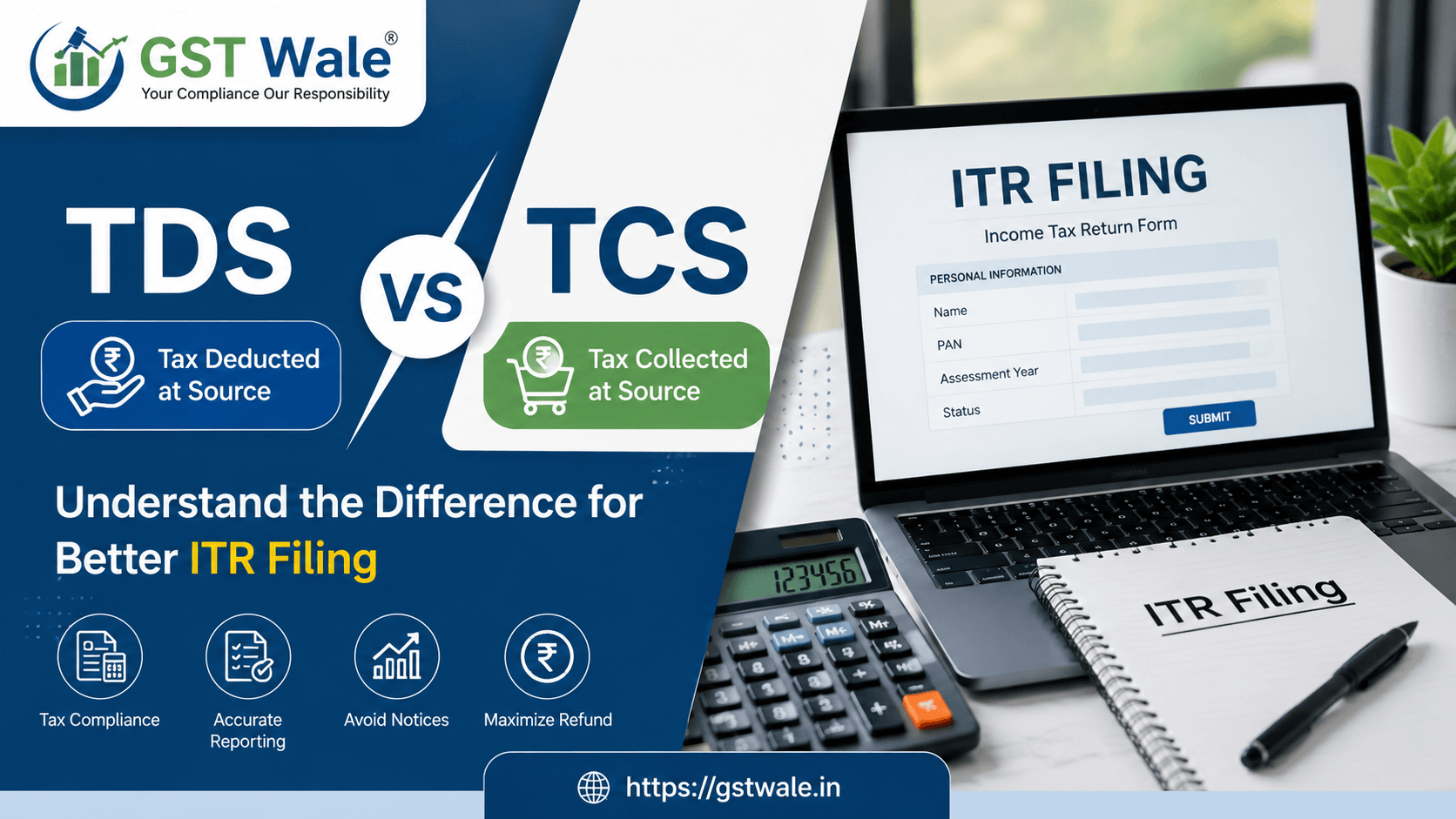
When it comes to smooth and error-free ITR Filing, understanding the difference between TDS and TCS is extremely important. Many taxpayers in India often get confused between these two concepts because both involve tax collection by the government before the final tax payment. However, the purpose, applicability, and compliance requirements of TDS and TCS are quite different.
At GST Wale, we regularly assist businesses, salaried employees, freelancers, and traders with proper tax planning and ITR Filing. One common issue we notice is that taxpayers ignore entries related to tax deducted at source or tax collected at source, which later leads to notices, refund delays, or mismatches in Form 26AS.
In this article, we will explain TDS vs TCS in simple language so that your ITR Filing becomes easier, more accurate, and fully compliant.
What is TDS?
TDS stands for Tax Deducted at Source. As the name suggests, tax is deducted by the payer before making payment to the recipient. The deducted amount is then deposited with the Income Tax Department on behalf of the recipient.
The concept of tax deducted at source was introduced to ensure timely tax collection and reduce tax evasion.
Common Examples of TDS
TDS is applicable on various payments such as:
- Salary
- Interest income
- Professional fees
- Contractor payments
- Rent payments
- Commission income
For example, if a company pays ₹1,00,000 as professional fees to a consultant, it may deduct 10% TDS under Section 194J before making the payment.
The consultant receives ₹90,000, while ₹10,000 is deposited with the government.
What is TCS?
TCS means Tax Collected at Source. In this system, the seller collects tax from the buyer at the time of sale and deposits it with the government.
Unlike TDS, where tax is deducted from income, tax collected at source applies mainly to specified goods and transactions.
Common Examples of TCS
TCS may apply on:
- Sale of scrap
- Timber and forest products
- Minerals
- Foreign remittance under LRS
- Sale of motor vehicles above specified limits
- E-commerce transactions
For instance, if a car dealer sells a vehicle worth more than ₹10 lakh, TCS may be collected from the buyer.
TDS vs TCS: Key Differences
Understanding these differences is essential for proper ITR Filing and avoiding tax mismatches.
| Basis | TDS | TCS |
|---|---|---|
| Full Form | Tax Deducted at Source | Tax Collected at Source |
| Collected By | Payer | Seller |
| Deducted/Collected From | Payment to recipient | Buyer at time of sale |
| Applicable On | Income payments | Sale of specified goods |
| Governing Sections | Various sections including Section 194 | Section 206C |
| Purpose | Advance tax collection | Tracking high-value transactions |
Importance of TDS and TCS in ITR Filing
During ITR Filing, taxpayers must correctly report TDS and TCS details to claim tax credit. Any mismatch can result in:
- Reduced tax refunds
- Income tax notices
- Incorrect tax liability
- Delayed processing of returns
This is why checking Form 26AS before ITR Filing is extremely important.
Understanding Form 26AS
Form 26AS is like a tax passbook maintained by the Income Tax Department. It contains:
- TDS deducted by employers or clients
- TCS collected by sellers
- Advance tax paid
- Self-assessment tax
- High-value transactions
Before submitting your ITR Filing, always compare your income details with Form 26AS to ensure accuracy.
Why Form 26AS Matters
Many taxpayers rely only on salary slips or bank statements. However, Form 26AS provides the official tax records available with the government.
Suppose your employer deducted tax deducted at source but failed to deposit it correctly. In that case, the mismatch may affect your refund claim during ITR Filing.
What is a TDS Certificate?
A TDS certificate is proof that tax has been deducted and deposited with the government.
Types of TDS Certificates
- Form 16 – Issued for salary income
- Form 16A – Issued for non-salary payments
- Form 16B – TDS on property purchase
These certificates help taxpayers verify deductions while preparing their ITR Filing.
Understanding Section 194 and Its Relevance
Section 194 of the Income Tax Act covers different categories where TDS is applicable.
Some commonly used provisions include:
Section 194C
Applicable on contractor payments.
Section 194H
Applicable on commission or brokerage.
Section 194I
Applicable on rent payments.
Section 194J
Applicable on professional or technical services.
Businesses making payments covered under Section 194 must deduct TDS at prescribed rates. Failure to comply may attract penalties and interest.
Real-Life Example: TDS vs TCS
Let’s understand with a practical example.
Example of TDS
A company hires a freelance designer for ₹50,000. Under Section 194J, the company deducts 10% TDS.
- Payment made to designer: ₹45,000
- TDS deposited: ₹5,000
The designer can claim this ₹5,000 while doing ITR Filing.
Example of TCS
A car dealer sells a luxury car worth ₹15 lakh.
- Buyer pays vehicle amount + TCS
- Dealer deposits TCS with the government
The buyer can later claim this amount during ITR Filing if eligible.
Common Mistakes Taxpayers Make
At GST Wale, we frequently notice these mistakes during ITR Filing:
Ignoring Form 26AS
Taxpayers file returns without verifying tax credits.
Claiming Incorrect TDS
Many people claim TDS based on assumptions instead of actual records.
Missing TCS Entries
Buyers often forget to report TCS collected on high-value purchases.
Wrong PAN Details
Incorrect PAN can result in unmatched TDS records.
How to Ensure Accurate ITR Filing
Here are some practical tips from GST Wale:
Keep All Tax Documents Ready
Maintain:
- Form 16
- Form 16A
- TDS certificates
- Bank statements
- Investment proofs
Verify Form 26AS
Always reconcile income and tax credits before ITR Filing.
Match AIS and TIS Data
Check Annual Information Statement (AIS) and Taxpayer Information Summary (TIS) for complete reporting.
File Returns on Time
Late filing may lead to penalties and delayed refunds.
Seek Professional Guidance
Complex cases involving TDS, TCS, capital gains, or business income should be handled carefully.
How Businesses Should Manage TDS and TCS
Businesses must ensure proper compliance because errors can affect both parties involved.
Best Practices for Businesses
- Deduct or collect tax at correct rates
- Deposit taxes within due dates
- File TDS/TCS returns timely
- Issue TDS certificates properly
- Maintain transaction records
Proper compliance helps avoid notices and supports smooth ITR Filing for vendors and customers.
FAQs on TDS vs TCS
Is TDS refundable during ITR Filing?
Yes. If excess TDS has been deducted compared to your actual tax liability, you can claim a refund during ITR Filing.
Can TCS be claimed in income tax return?
Yes. TCS reflected in Form 26AS can be claimed as tax credit.
What happens if TDS is not reflected in Form 26AS?
You should contact the deductor immediately and request correction in TDS return filing.
Is TCS applicable to salaried employees?
Generally, TCS is linked to specific transactions and not directly to salary income.
Why is Form 26AS important for ITR Filing?
It helps verify all taxes deducted or collected against your PAN.
Understanding the difference between tax deducted at source and tax collected at source is essential for accurate and hassle-free ITR Filing. While TDS applies mainly to income payments, TCS is related to specified sales transactions. Both directly impact your tax credit, refund eligibility, and overall compliance.
Before filing your return, always verify Form 26AS, check your TDS certificate, and ensure all entries are correctly reported. Even small mismatches can create unnecessary complications.
At GST Wale, we help individuals, professionals, and businesses manage tax compliance with confidence. Whether you need support with TDS reconciliation, TCS reporting, or expert assistance in ITR Filing, our experienced team is here to guide you at every step.
Don’t wait for notices or refund delays. Connect with GST Wale today and make your tax journey simple, accurate, and stress-free.
 Previous