


Income Tax Updates: New Rules for Charitable Trusts and NGOs
Income Tax Updates: New Rules for Charitable Trusts and NGOs
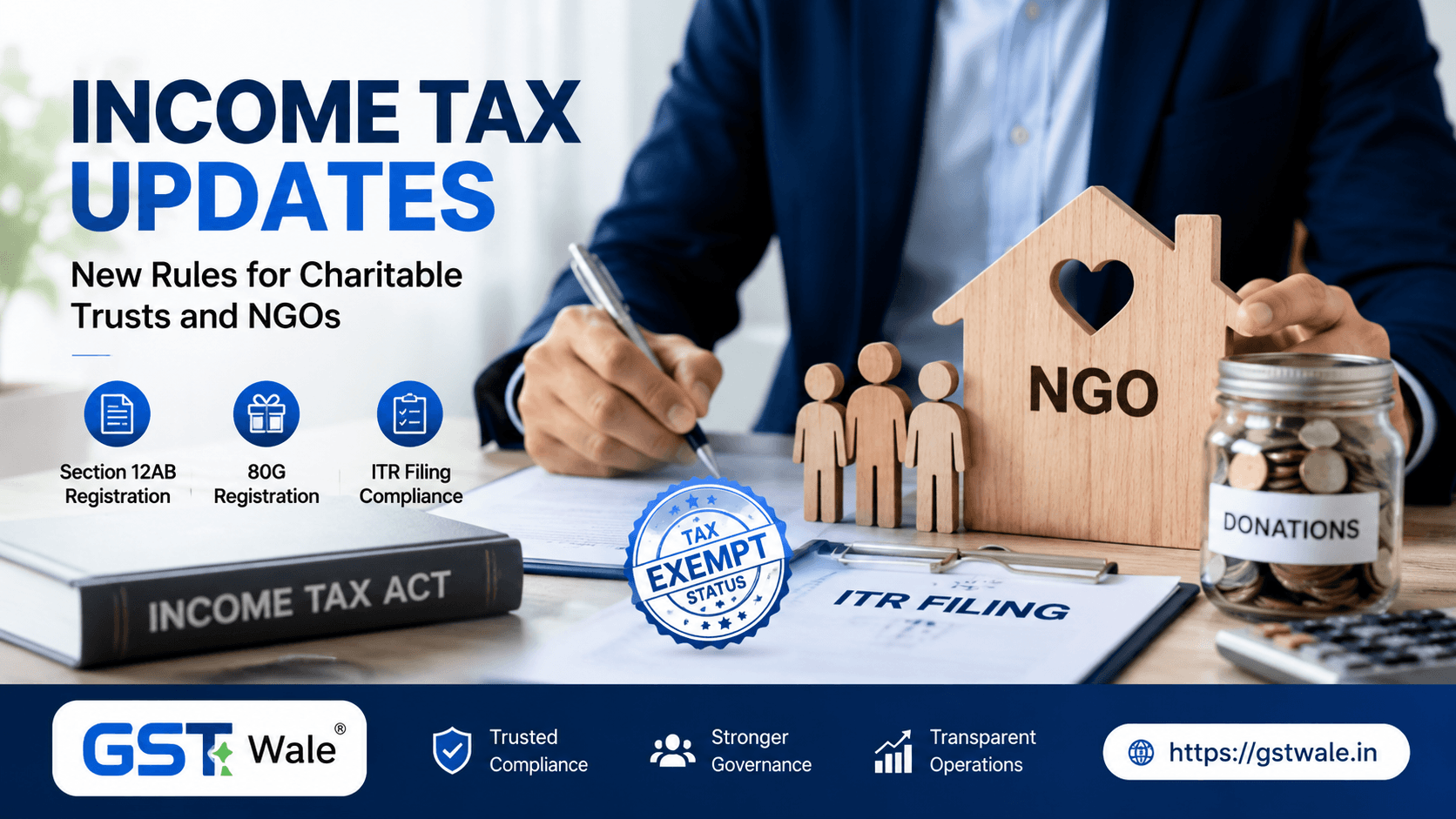
Charitable trusts and NGOs in India are going through significant regulatory changes, and staying updated has become more important than ever. These latest Income Tax Updates directly impact registration, compliance, tax exemptions, and funding eligibility for non-profit organizations. Whether you run a small trust, educational society, religious institution, or a large NGO receiving CSR funding, understanding these changes is essential to avoid penalties and maintain your tax-exempt status.
At GST Wale, we regularly assist NGOs and charitable institutions with registrations, compliance filings, audits, and ITR Filing. In recent months, many organizations have approached us with questions regarding Section 12AB renewal, 80G registration validity, and stricter scrutiny by the Income Tax Department.
In this article, we will explain the latest Income Tax Updates for charitable trusts and NGOs in simple language so you can stay compliant and focus on your social mission without unnecessary tax troubles.
Income Tax Updates for Charitable Trusts and NGOs
The government has introduced several important changes to improve transparency and accountability in the non-profit sector. These Income Tax Updates mainly affect:
- Registration procedures
- Renewal timelines
- Filing obligations
- Donation reporting
- Audit compliance
- Utilization of funds
Organizations failing to comply with these updated rules may lose their tax-exempt status or face heavy penalties.
Understanding Section 12AB Registration
One of the most important Income Tax Updates is the mandatory migration to Section 12AB registration.
Earlier, charitable trusts received lifetime registration under Section 12A or 12AA. However, now all trusts and NGOs must obtain fresh registration under Section 12AB with periodic renewals.
Key Features of Section 12AB
- Registration validity is limited
- Existing trusts need renewal every 5 years
- Provisional registration available for new NGOs
- Department can verify activities before approval
- Non-compliance can lead to cancellation
Why Section 12AB Matters
Without valid Section 12AB registration:
- The NGO cannot claim income tax exemption
- Donations may not qualify for deduction
- CSR funding opportunities may reduce
- Tax liabilities can increase significantly
For example, if an NGO receives ₹50 lakh in donations but fails to renew Section 12AB on time, the entire income may become taxable.
New Rules for 80G Registration
Another major part of the latest Income Tax Updates involves 80G registration.
Under Section 80G, donors receive tax deductions for donations made to eligible NGOs and charitable trusts. This benefit encourages public donations and improves fundraising opportunities.
Latest Changes in 80G Compliance
The government has tightened reporting requirements to ensure transparency.
NGOs must now:
- File statements of donations received
- Issue proper donation certificates
- Maintain accurate donor records
- Link PAN and Aadhaar details where required
Impact on Donors and NGOs
If an NGO fails to file donation statements correctly:
- Donors may lose tax deduction benefits
- NGO credibility may suffer
- Funding may decline
This is particularly important for NGOs relying heavily on CSR funding and corporate partnerships.
Income Tax Updates on NGO Compliance
Recent Income Tax Updates clearly show that compliance is now a top priority for the Income Tax Department.
Authorities are actively monitoring:
- Application of funds
- Cash transactions
- Foreign contributions
- Related-party transactions
- Political or commercial activities
Important Compliance Requirements
Maintain Proper Books of Accounts
Every charitable organization must maintain:
- Cash book
- Ledger
- Donation records
- Expense vouchers
- Bank statements
File Income Tax Returns on Time
Even tax-exempt NGOs must file annual returns within due dates.
Late filing can result in:
- Penalties
- Loss of exemptions
- Increased scrutiny
Audit Requirements
If total income exceeds prescribed limits, tax audit becomes mandatory.
Professional audits help ensure:
- Transparency
- Accurate reporting
- Better donor confidence
Tax-Exempt Status: What NGOs Must Know
Maintaining tax-exempt status is becoming more challenging due to stricter verification procedures introduced under recent Income Tax Updates.
Situations That Can Lead to Cancellation
An NGO may lose its tax exemption if:
- Funds are used for personal benefit
- Activities are not genuinely charitable
- Income is diverted for commercial purposes
- Returns are not filed regularly
- Compliance conditions are violated
Practical Example
Suppose an educational trust uses donations for unrelated business activities without proper disclosure. During assessment, the Income Tax Department may cancel its Section 12AB registration and impose taxes retrospectively.
This is why proper governance and documentation are extremely important.
CSR Funding and New Compliance Expectations
Corporate Social Responsibility (CSR) funding has become a major source of income for NGOs. However, recent Income Tax Updates have increased compliance expectations for organizations receiving CSR funds.
What Corporates Now Check Before Funding
Companies usually verify:
- Valid Section 12AB registration
- Active 80G registration
- Timely return filing
- Audit reports
- Past compliance history
How NGOs Can Improve Funding Opportunities
To attract CSR funding:
- Maintain transparent accounting
- Submit annual reports regularly
- Keep registrations updated
- Ensure proper utilization certificates
- Maintain donor communication
Organizations with strong NGO compliance practices are more likely to receive long-term corporate support.
Important Filing Deadlines NGOs Should Track
One of the biggest mistakes NGOs make is missing compliance deadlines. These recent Income Tax Updates have made timelines stricter than before.
Key Deadlines Include
| Compliance | Due Date |
|---|---|
| Income Tax Return Filing | As applicable annually |
| Audit Report Submission | Before ITR filing |
| 80G Donation Statement | Prescribed due dates |
| Section 12AB Renewal | Every 5 years |
| TDS Returns | Quarterly |
Missing these deadlines can trigger notices and penalties.
Best Practices for NGO Compliance
To smoothly handle the latest Income Tax Updates, NGOs should adopt a proactive compliance approach.
Recommended Best Practices
Maintain Digital Records
Store all records securely, including:
- Donation receipts
- Bills and invoices
- Meeting resolutions
- Audit reports
Conduct Internal Reviews
Periodic compliance reviews help identify issues before departmental scrutiny.
Separate Personal and NGO Expenses
Avoid mixing personal and organizational transactions.
Seek Professional Guidance
A qualified CA can help manage:
- Registrations
- Tax planning
- Audit compliance
- Return filing
- Department notices
At GST Wale, we strongly recommend annual compliance reviews for all charitable institutions.
Common Mistakes NGOs Should Avoid
Many organizations unknowingly violate compliance rules despite genuine intentions.
Frequent Errors Include
- Delayed Section 12AB renewal
- Incorrect 80G certificates
- Failure to maintain documentation
- Cash donations without records
- Non-filing of returns
- Using funds outside charitable objectives
Avoiding these mistakes can help protect your tax-exempt status and maintain donor trust.
FAQs on Income Tax Updates for NGOs
What is the validity period of Section 12AB registration?
Section 12AB registration is generally valid for 5 years and must be renewed before expiry.
Is 80G registration mandatory for NGOs?
It is not mandatory, but it helps donors claim tax deductions and improves fundraising opportunities.
Can an NGO lose its tax-exempt status?
Yes. Non-compliance, misuse of funds, or failure to follow charitable objectives can result in cancellation.
Are NGOs required to file income tax returns every year?
Yes. Even tax-exempt NGOs must file income tax returns within prescribed due dates.
Why is NGO compliance becoming stricter?
The government aims to improve transparency, prevent misuse of funds, and ensure genuine charitable activities.
The latest Income Tax Updates have significantly changed the compliance landscape for charitable trusts and NGOs in India. From Section 12AB renewal to 80G registration and stricter reporting requirements, organizations must now maintain higher transparency and better financial discipline.
Ignoring these changes can lead to penalties, cancellation of tax-exempt status, and loss of donor confidence. On the other hand, NGOs that follow proper compliance practices can build stronger credibility and improve their chances of receiving CSR funding and public support.
At GST Wale, we help charitable trusts, societies, and NGOs manage registrations, audits, return filings, and complete tax compliance with confidence. If your organization needs professional support regarding the latest Income Tax Updates, our expert team is ready to assist you with practical and reliable solutions.
 Previous