


How AI is Changing ITR Filing: Automated Tax Preparation Tools
How AI is Changing ITR Filing: Automated Tax Preparation Tools
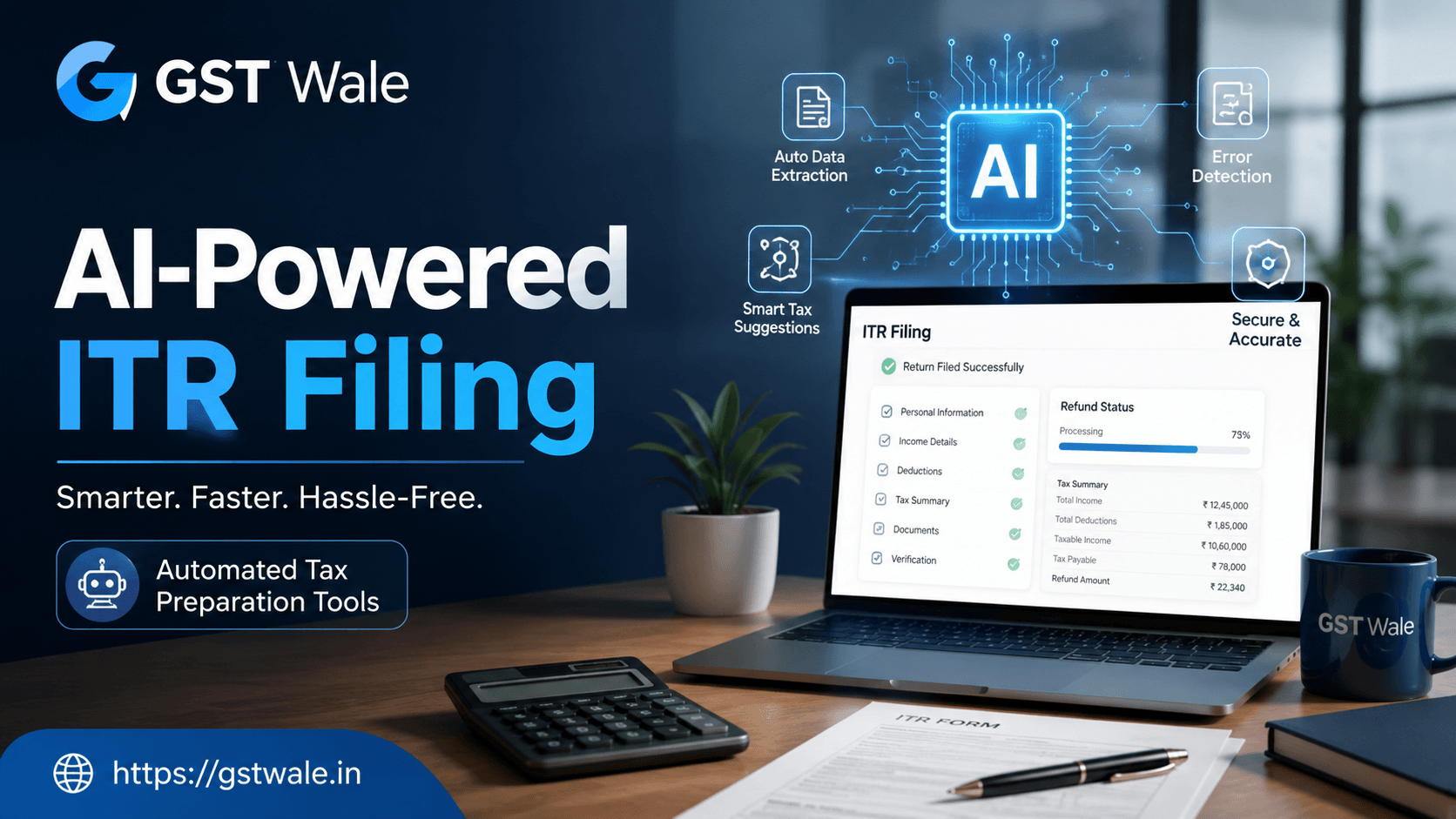
Over the last few years, the process of ITR Filing in India has changed significantly. What used to be a time-consuming task involving paperwork, manual calculations, and repeated corrections has now become much faster and smarter with the help of technology. Today, artificial intelligence and automation are making tax compliance easier for salaried individuals, freelancers, startups, and business owners alike.
At GST Wale, we regularly assist clients who are surprised by how modern tax platforms can simplify their returns. Whether it is automated document reading, pre-filled ITR data, or smart error detection, AI-powered systems are reducing stress and improving accuracy in tax filing. If you are planning your ITR Filing this year, understanding these digital advancements can help you save both time and money.
How AI is Transforming ITR Filing in India
Artificial intelligence is no longer limited to large corporations. Today, even individual taxpayers benefit from AI tax software and automated filing systems.
Modern tax tools can now:
- Read financial documents automatically
- Match Form 16 and AIS data
- Detect deduction opportunities
- Identify filing errors instantly
- Suggest the correct ITR form
- Track refund status in real time
This has made ITR Filing much more convenient, especially for taxpayers who previously depended entirely on manual calculations.
The Rise of Automated Tax Preparation Tools
Faster Data Collection and Processing
One of the biggest improvements in ITR Filing is the use of automated data collection. Earlier, taxpayers had to manually enter salary details, bank interest, capital gains, and deduction information.
Now, fintech tax tools can automatically import:
- Form 16 details
- Bank transaction summaries
- TDS information
- Investment records
- GST-related income data
- Capital gains statements
This reduces human error and speeds up the entire filing process.
Smart Document Recognition
Modern AI tax software can scan uploaded PDFs and images to identify financial details instantly. For example, if a taxpayer uploads Form 16, the software can automatically extract:
- Salary income
- TDS deducted
- Employer details
- Taxable income
- Deductions claimed
This automation has made ITR Filing much easier for salaried employees and consultants.
Benefits of AI-Based ITR Filing
Improved Accuracy
Mistakes in tax returns can lead to notices, delayed refunds, or penalties. AI-powered systems can cross-check information with government databases and detect mismatches before submission.
For example:
- PAN mismatches
- Incorrect bank account details
- Missing TDS credits
- Wrong deduction claims
These checks significantly improve the accuracy of ITR Filing.
Time-Saving Process
Traditional filing methods could take several hours or even days. With automated filing systems, many taxpayers can complete the process within minutes.
Pre-filled forms and digital tax assistant features reduce repetitive manual work and simplify compliance.
Better Tax Planning
Some advanced AI tax software tools also provide tax-saving recommendations. Based on your income and investments, they may suggest:
- Additional deductions under Section 80C
- Health insurance benefits under Section 80D
- Home loan tax benefits
- Capital gains planning strategies
This makes ITR Filing more strategic instead of just a compliance activity.
Understanding Pre-Filled ITR Forms
What is a Pre-Filled ITR?
The Income Tax Department has introduced pre-filled ITR forms to simplify return filing. These forms automatically populate taxpayer information using data available with the department.
Pre-filled details may include:
- Personal information
- Salary income
- TDS details
- Interest income
- Dividend income
- Securities transactions
This has reduced manual entry work considerably.
How AI Supports Pre-Filled ITR Verification
While pre-filled ITR forms are helpful, they may not always capture complete financial details. AI systems help verify whether the available information matches actual records.
For instance, a digital tax assistant can identify:
- Missing freelance income
- Incorrect interest entries
- Unreported capital gains
- Duplicate deductions
This extra layer of verification improves the quality of ITR Filing.
How Businesses Benefit from Automated Filing
Simplified Compliance for SMEs
Small businesses often struggle with tax compliance due to limited accounting resources. AI-powered automated filing tools help business owners manage returns more efficiently.
Key advantages include:
- Automated expense categorization
- GST and income tax reconciliation
- Real-time financial reporting
- Reduced dependency on manual bookkeeping
This allows businesses to focus more on operations instead of paperwork.
Better Record Management
Modern fintech tax tools can securely store financial records in cloud-based systems. Taxpayers no longer need to maintain physical files for years.
This becomes especially useful during:
- Income tax scrutiny
- Loan applications
- Business audits
- Financial planning
Efficient documentation also improves future ITR Filing accuracy.
Challenges and Limitations of AI in ITR Filing
Data Accuracy Still Matters
AI tools are powerful, but they depend on the quality of the data provided. Incorrect bank statements, missing invoices, or outdated records can still create filing issues.
Taxpayers should always review:
- Income details
- Deduction claims
- Capital gains
- Business expenses
before final submission.
Human Expertise Remains Important
Although automation simplifies compliance, complex tax matters still require professional guidance.
Situations where expert consultation becomes important include:
- Foreign income reporting
- Business restructuring
- Tax notices
- High-value transactions
- Capital gains taxation
- GST-related disputes
At GST Wale, we believe the best approach combines technology with expert tax advisory support.
The Future of ITR Filing in India
The future of ITR Filing is expected to become even more technology-driven. In the coming years, taxpayers may see:
- Fully automated return preparation
- Real-time tax calculation
- AI-based tax notice prediction
- Voice-enabled digital tax assistant services
- Instant refund processing
As government systems become more integrated, compliance will likely become smoother and faster.
However, taxpayers should remain cautious about choosing reliable and secure AI tax software platforms. Data privacy and financial security must always remain a priority.
Practical Tips for Taxpayers Using AI Tax Tools
Always Verify Auto-Populated Data
Do not blindly trust pre-filled information. Cross-check all details carefully before submitting your return.
Keep Documents Organized
Maintain digital copies of:
- Form 16
- Investment proofs
- Bank statements
- Rent receipts
- GST invoices
This helps automated filing systems work more accurately.
Choose Trusted Platforms
Use only reliable fintech tax tools with strong security standards and professional support.
Consult Experts for Complex Cases
Automation helps simplify regular returns, but expert advice remains valuable for complicated tax situations.
FAQs on AI and ITR Filing
Is AI-based ITR Filing safe?
Yes, most reputed platforms use encrypted systems and secure data protection measures. However, taxpayers should always choose trusted service providers.
Can automated filing completely replace tax professionals?
No. Automated filing is useful for routine returns, but professional guidance is still important for complex tax matters.
What is a pre-filled ITR form?
A pre-filled ITR is a return form where taxpayer data is automatically populated using information available with the Income Tax Department.
Are AI tax software tools suitable for businesses?
Yes. Many businesses use AI tax software for expense tracking, reconciliation, compliance management, and automated filing.
Can AI help reduce tax filing errors?
Absolutely. AI systems can detect mismatches, missing details, and calculation mistakes before submission.
Technology is rapidly changing the way taxpayers approach ITR Filing in India. From AI tax software to pre-filled ITR systems and digital tax assistant platforms, automation is making compliance faster, smarter, and more accurate.
Still, successful tax filing is not only about using software. It also requires proper understanding, careful verification, and professional guidance whenever needed. At GST Wale, we help individuals and businesses combine modern technology with expert tax support to ensure smooth and stress-free compliance.
If you want accurate, hassle-free, and professionally managed ITR Filing support, GST Wale is here to guide you every step of the way.
 Previous