


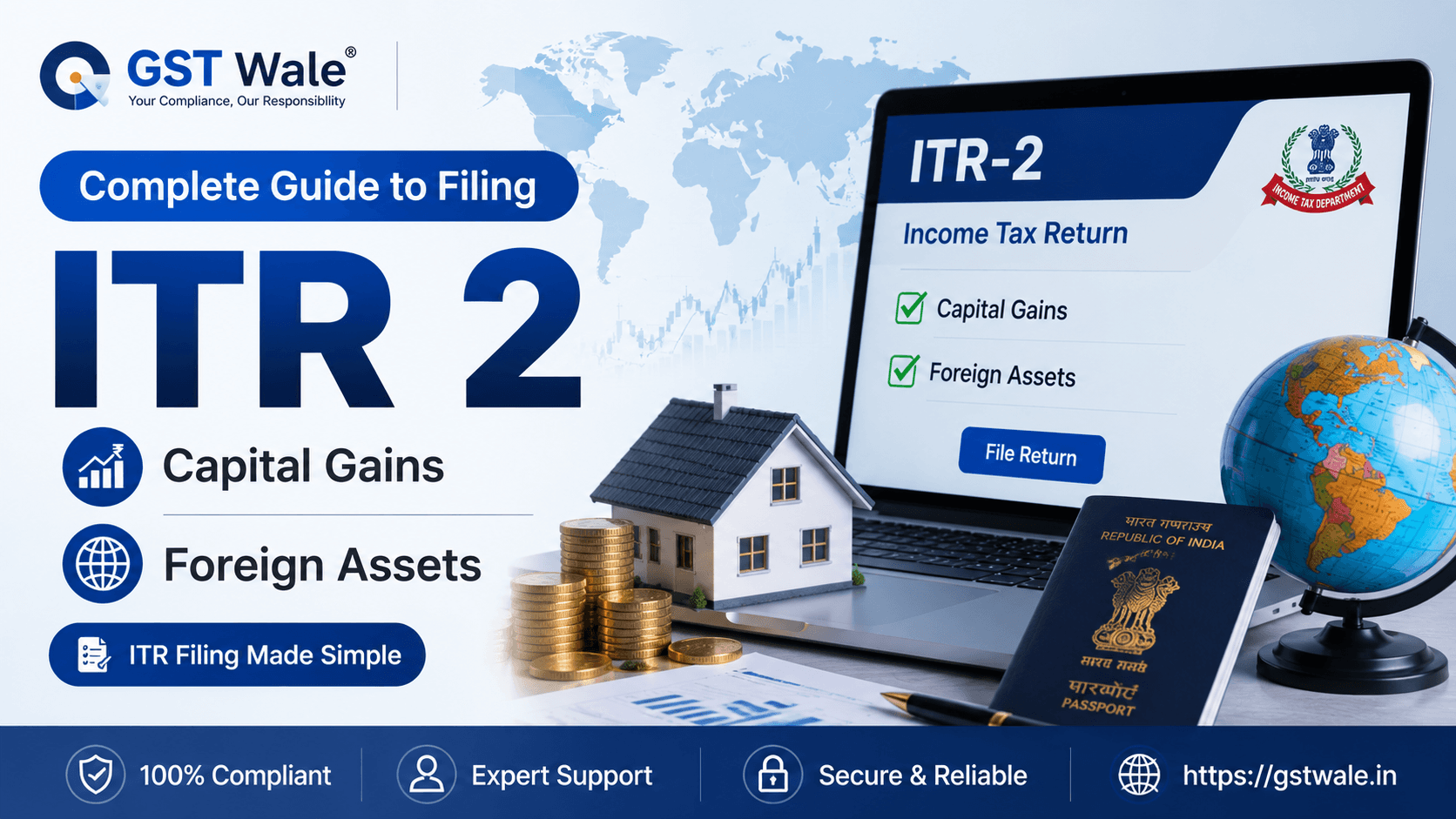
Complete Guide to Filing ITR 2 for Capital Gains and Foreign Assets
Complete Guide to Filing ITR 2 for Capital Gains and Foreign Assets
Tax season in India can be overwhelming, especially when your financial portfolio includes diverse investments or international holdings. If you have been earning from market investments, selling property, or maintaining assets outside India, you need to understand the nuances of the itr 2 form. At GST Wale, we regularly assist professionals and investors who feel uncertain about their compliance obligations; consequently, simplifying your ITR Filing process is our top priority. Selecting the correct income tax return form is the crucial first step toward a stress-free compliance experience.
Who is Required to File itr 2?
The itr 2 is specifically designed for individuals and Hindu Undivided Families (HUFs) who do not earn income from a business or profession. Many taxpayers mistakenly believe they can file a simpler form, but once you earn income from capital gains or hold foreign assets, this form becomes mandatory. Essentially, it is the appropriate choice for those earning income through salary, pension, house property, and capital gains (both short-term and long-term), as well as income from other sources.
Understanding Capital Gains in itr 2
Capital gains represent one of the primary reasons our clients transition to the itr 2. Whether you have sold equity shares, mutual funds, or real estate, you must report these transactions with absolute accuracy. Within this itr form, you are required to categorize your gains as either Short-Term Capital Gains (STCG) or Long-Term Capital Gains (LTCG).
For example, if you sold company shares, the specific details—including purchase price, sale price, and holding period—must be reported in 'Schedule CG'. Inaccuracies in these figures can trigger unnecessary notices from the Income Tax Department.
Reporting Foreign Assets Accurately
For those holding financial interests, bank accounts, or shares outside India, the it filing process requires additional diligence. The itr 2 includes dedicated schedules for foreign assets, which must be completed with precision. Please note that even if a foreign bank account is currently dormant, you remain legally obligated to disclose it.
A Professional Workflow to File it Returns Online
To successfully file it returns online, we recommend following this systematic approach:
Consolidate Your Documents: Keep your Form 16, Annual Information Statement (AIS), Taxpayer Information Summary (TIS), and capital gain reports from your broker accessible.
Verify Data: Always cross-reference the information displayed in your AIS with your own financial records.
Prioritize Schedules: Complete the capital gains and foreign asset schedules before attempting to calculate your final tax liability.
E-Verify: Once submitted, do not forget to complete the e-verification process using your Aadhaar OTP to finalize the filing.
Avoiding Common Filing Mistakes
We often observe taxpayers making preventable errors that lead to unwanted scrutiny. A common pitfall when navigating itr 2.0 features is the misreporting of grandfathering provisions for long-term capital gains on shares. Furthermore, failing to report interest earned on foreign bank accounts under 'Income from Other Sources' is a frequent oversight that should be avoided.
Frequently Asked Questions Regarding itr 2
Is itr 2 the right choice for salary earners with business income?
No. If you have income from a business or profession, you must file ITR-3, not the itr 2.
How should I report foreign shares?
You must disclose any foreign shareholdings in 'Schedule FA' of your itr form. Failure to report these can lead to significant penalties under the Black Money Act.
Can non-residents file using this form?
Yes. Non-residents who earn income sourced in India and do not have business income are eligible to use this form.
Why is my ITR marked as 'Defective'?
This usually occurs due to missing schedules or data discrepancies. If this happens, it is advisable to consult with a professional to rectify the error promptly.
Navigating the complexities of itr 2 requires a clear understanding of your financial landscape. At GST Wale, we specialize in helping individuals and business owners stay compliant without the added stress. Do not risk a tax notice—let our experts handle your filings while you focus on your long-term financial goals. Contact us today to ensure your itr 2 is filed correctly and on time!
 Previous