


ROC Compliance in India: Complete Guide for Companies (2026)
ROC Compliance in India: Complete Guide for Companies (2026)
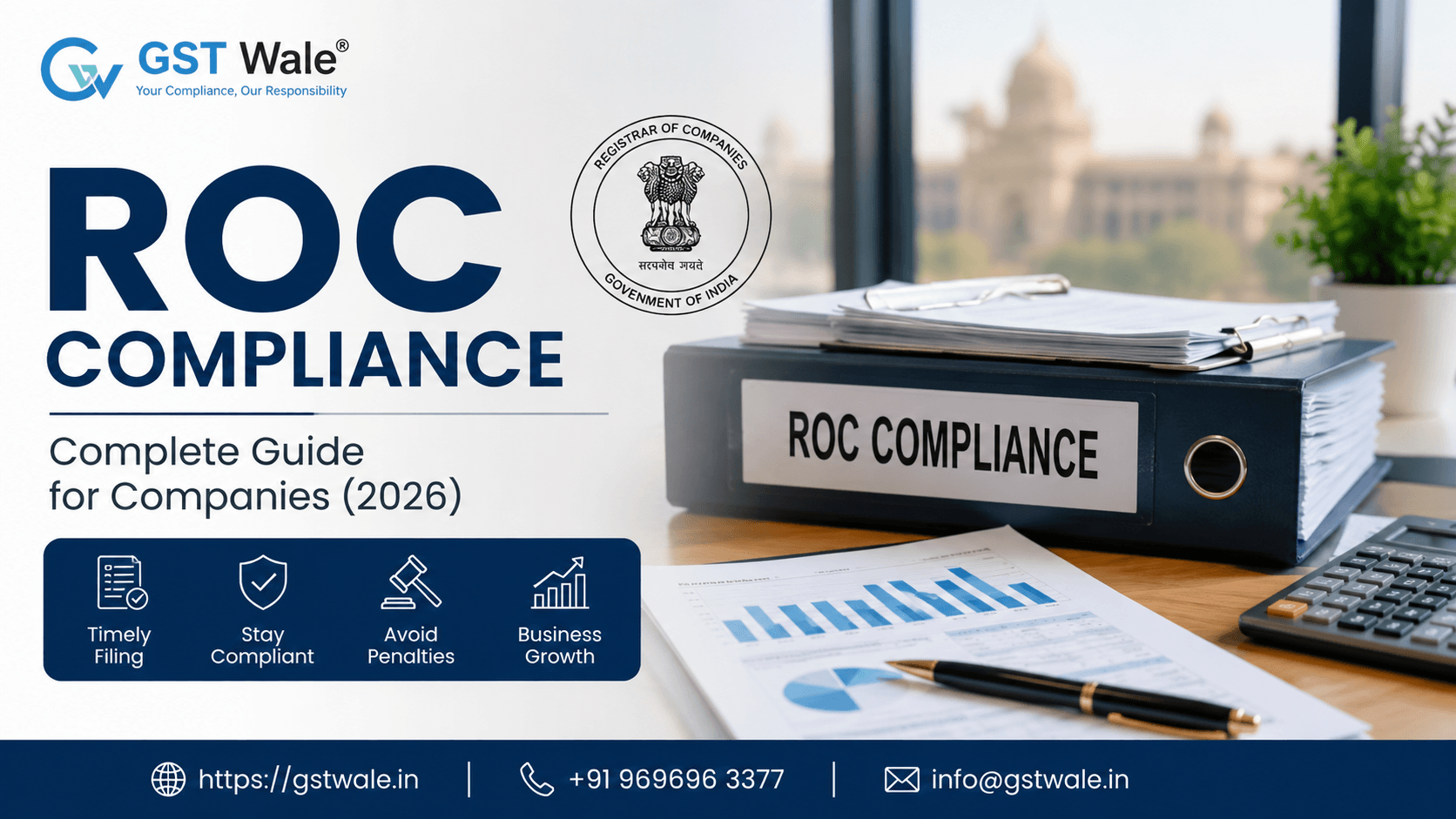
Running a company in India is not just about generating sales and growing profits. Every registered company must follow certain legal and regulatory obligations under the Companies Act, 2013. This is where ROC Compliance becomes extremely important. Whether you own a private limited company, OPC, LLP, or a public company, staying compliant with the Registrar of Companies (ROC) is essential to avoid penalties, legal notices, and unnecessary complications.
At GST Wale, we regularly help startups, MSMEs, and growing businesses manage their annual filings and corporate obligations smoothly. If you are looking for professional support for ROC Compliance, understanding the basic compliance structure can save your business from heavy penalties and compliance risks.
In this complete guide, we will explain everything you need to know about ROC Compliance in India in 2026, including filing requirements, due dates, penalties, and best practices.
What is ROC Compliance?
ROC Compliance refers to the mandatory legal filings and disclosures that companies must submit to the Registrar of Companies under the Ministry of Corporate Affairs (MCA).
The Registrar of Companies monitors whether businesses are following company law compliance India requirements properly. Every company incorporated in India must maintain transparency in financial reporting, shareholder records, annual returns, and board decisions.
These compliance obligations are governed mainly under:
- Companies Act, 2013
- MCA compliance requirements
- Secretarial standards
- ROC filing rules
Failure to comply can lead to penalties, director disqualification, and even company strike-off proceedings.
Why ROC Compliance is Important for Companies
Many business owners think ROC Compliance is only about annual filing. In reality, it plays a much bigger role in maintaining a legally healthy business.
Key Benefits of ROC Compliance
Avoid Heavy Penalties
Late filing fees under registrar of companies compliance rules can become very expensive. MCA imposes additional fees per day of delay.
Maintain Company Credibility
Investors, banks, and financial institutions often verify ROC records before funding or approving loans.
Prevent Director Disqualification
Continuous non-compliance can disqualify directors under the Companies Act.
Smooth Business Operations
Proper corporate compliance India practices help companies during audits, funding rounds, and mergers.
Legal Protection
Compliant businesses face fewer legal complications and notices from authorities.
Types of ROC Compliance in India
ROC Compliance requirements differ based on the type and size of the company. However, certain filings are common for most entities.
Annual ROC Compliance
Annual filings are mandatory for almost every company registered in India.
Form AOC-4
This form is used for filing financial statements with ROC.
It generally includes:
- Balance sheet
- Profit & loss statement
- Auditor’s report
- Board report
Form MGT-7 or MGT-7A
This form contains the annual return of the company.
It includes:
- Shareholding details
- Director information
- Registered office details
- Corporate governance information
Event-Based ROC Compliance
Certain ROC Compliance obligations arise when specific business events occur.
Examples include:
- Appointment or resignation of directors
- Change in registered office
- Increase in authorized capital
- Share allotment
- Transfer of shares
Board Meeting Compliance
Under company law compliance India rules, companies must conduct board meetings periodically and maintain proper records.
Statutory Register Maintenance
Companies must maintain:
- Register of members
- Register of directors
- Share transfer records
- Minutes books
ROC Compliance Due Dates for 2026
Understanding filing timelines is critical for avoiding penalties.
Important Due Dates
AOC-4 Filing
- Due within 30 days from the Annual General Meeting (AGM)
MGT-7 Filing
- Due within 60 days from AGM
DIR-3 KYC
- Usually due on or before 30th September annually
DPT-3 Filing
- Generally due on or before 30th June
Businesses should always monitor MCA notifications because due dates may change occasionally.
ROC Compliance for Private Limited Companies
Private limited companies have the highest number of ROC Compliance obligations in India.
Mandatory Requirements
Conduct Board Meetings
A minimum number of board meetings must be held every year.
Hold Annual General Meeting
Every company must conduct an AGM within prescribed timelines.
File Annual Returns
Financial statements and annual returns must be filed through MCA portals.
Maintain Books of Accounts
Companies must maintain accurate accounting records at the registered office.
Example
Suppose a startup in Noida raises investment from angel investors. Before funding, investors typically check:
- MCA filing status
- ROC Compliance history
- Director records
- Pending penalties
Even a profitable company may lose funding opportunities if compliance records are poor.
ROC Compliance for LLPs
Limited Liability Partnerships also have compliance obligations under MCA.
Key LLP ROC Compliance Filings
Form 8
Statement of Account & Solvency.
Form 11
Annual Return filing.
LLPs generally enjoy lower compliance compared to private limited companies, but delays still attract penalties.
Penalties for Non-Compliance
Ignoring ROC Compliance can become costly for businesses.
Common Consequences
Additional Filing Fees
MCA charges extra fees for delayed filing.
Company Strike-Off
Inactive companies may be removed from ROC records.
Director Disqualification
Directors of defaulting companies can become disqualified.
Legal Proceedings
The ROC may initiate legal action for severe non-compliance.
Practical Insight
We often see businesses ignoring compliance during the initial years to save costs. Later, they face huge penalties running into lakhs while trying to raise funding or close the company. Timely registrar of companies compliance is always more affordable than corrective action later.
Common ROC Compliance Mistakes
Many companies unintentionally violate compliance rules.
Frequent Errors Include
- Missing filing deadlines
- Incorrect financial reporting
- Failure to conduct AGM
- Not updating director KYC
- Ignoring event-based filings
- Improper maintenance of statutory registers
Avoiding these mistakes can protect your business from unnecessary notices and penalties.
How to Maintain Proper ROC Compliance
Managing ROC Compliance becomes easier with a structured approach.
Step-by-Step Best Practices
Maintain a Compliance Calendar
Track all MCA compliance requirements and due dates.
Hire Professional Experts
Professional CA and CS support reduces compliance risks significantly.
Conduct Regular Reviews
Quarterly compliance reviews help identify pending issues early.
Maintain Proper Documentation
Keep all board resolutions, registers, and financial records organized.
Use MCA Portal Regularly
Monitor notices, filing acknowledgments, and compliance status.
Difference Between ROC Compliance and Tax Compliance
Business owners often confuse ROC Compliance with tax compliance.
ROC Compliance Covers
- Company filings
- Annual returns
- Board resolutions
- Director disclosures
Tax Compliance Covers
- GST filings
- Income tax returns
- TDS returns
- Tax audits
Both are equally important for smooth business operations.
Digital Changes in ROC Compliance in 2026
The MCA is increasingly focusing on digital compliance systems.
Latest Trends
- AI-based scrutiny of filings
- Increased transparency requirements
- Faster penalty generation
- Online adjudication systems
- Integrated MCA filing platforms
Businesses must now maintain more accurate and updated records than ever before.
FAQs on ROC Compliance
Is ROC Compliance mandatory for all companies?
Yes. Every registered company in India must comply with ROC filing and disclosure requirements.
What happens if ROC filing is delayed?
Delayed filings attract additional fees and may lead to penalties or director disqualification.
Can dormant companies skip ROC Compliance?
No. Even dormant companies have certain minimum compliance obligations.
Is ROC Compliance required for LLPs?
Yes. LLPs must also complete annual ROC filings such as Form 8 and Form 11.
How can small businesses manage ROC Compliance easily?
Maintaining a compliance calendar and hiring professionals can help businesses manage filings smoothly.
ROC Compliance is not just a legal formality; it is a critical part of running a secure and trustworthy business in India. From annual filings to event-based disclosures, every company must follow proper registrar of companies compliance procedures to stay legally protected.
With increasing scrutiny under MCA compliance requirements, businesses can no longer afford to ignore company law compliance India obligations. Timely filings, proper documentation, and professional guidance are the keys to avoiding penalties and ensuring smooth operations.
At GST Wale, we help businesses across India handle ROC Compliance efficiently with expert support, timely filings, and practical guidance. Whether you are a startup, private limited company, or LLP, our team ensures your compliance stays accurate, updated, and stress-free.
If you want hassle-free corporate compliance India services, connect with GST Wale today and keep your business fully compliant in 2026 and beyond.
 Previous