


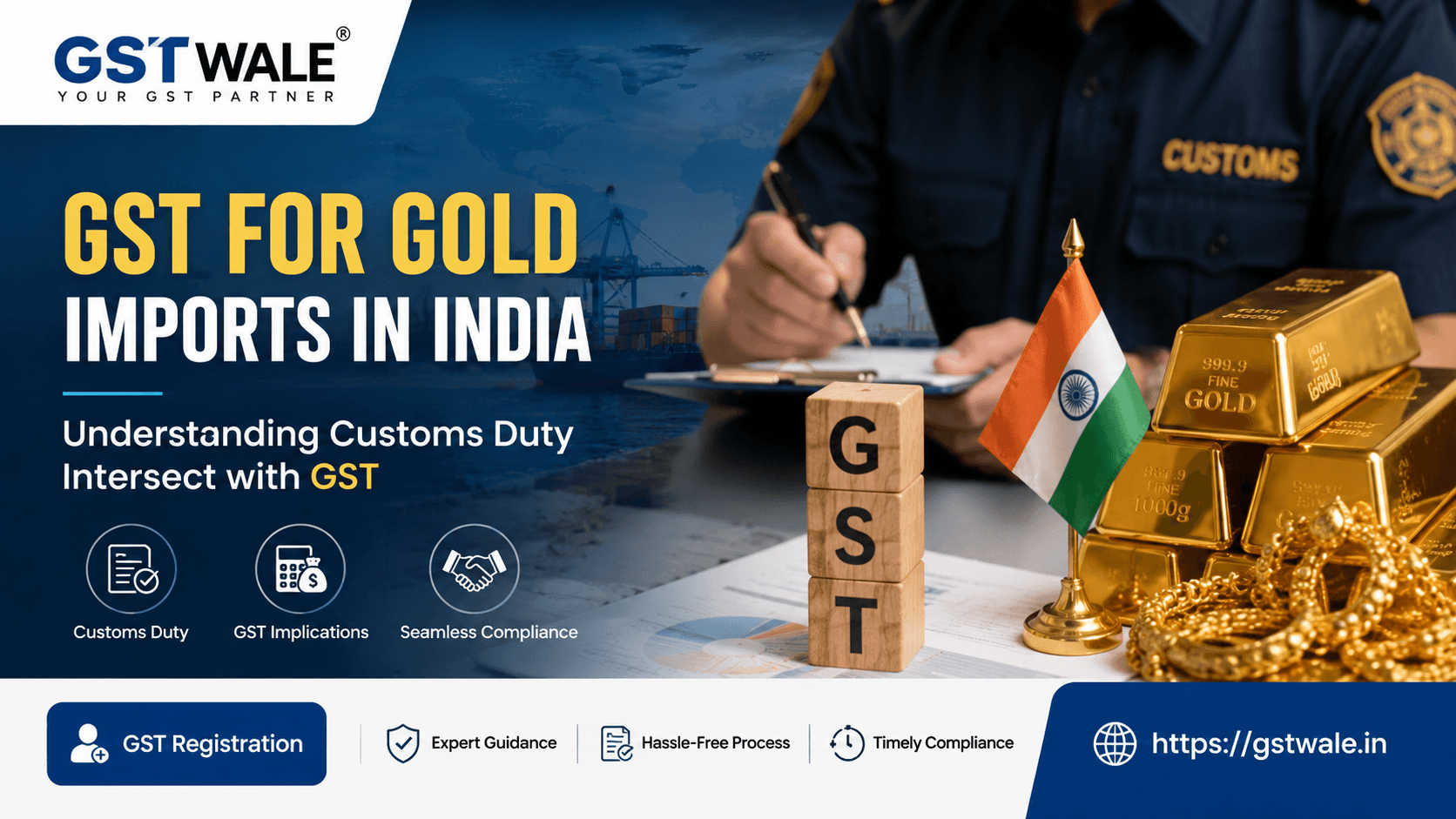
Understanding the Customs Duty Intersect with GST for Gold Imports in India
Understanding the Customs Duty Intersect with GST for Gold Imports in India
Gold has always held a special place in the Indian psyche—not just as an ornament, but as a robust store of value and an investment hedge. However, for traders and business owners entering the bullion market, the regulatory landscape can feel like a labyrinth. When we talk about the taxation on precious metals, understanding the gst for gold is essential, but it is only half the picture. If you are starting a business in this sector, ensuring your compliance starts with GST Registration, which is the foundation for all your future tax credits and legal operations.
At GST Wale, we frequently get queries from jewelers and importers trying to untangle the web of customs duties and the gst for gold. When you are importing gold bullion, it is not just about the international gold rates; it is about calculating the total landing cost, which involves a complex interaction between Customs Duty and IGST.
The Mechanics: How Customs Duty and IGST Interact
When gold arrives at Indian customs, the tax journey begins. The government levies a Basic Customs Duty (BCD) on the import. Once that is added to the assessable value of the gold, the IGST (Integrated Goods and Services Tax) is calculated on the cumulative amount.
It is important to remember that gst for gold is applied at the point of importation, not just at the point of sale. This makes the import stage critical for your cash flow planning. If you are importing gold bullion, you are essentially paying tax upfront, which can be claimed as an Input Tax Credit (ITC) later, provided your filings are accurate.
Deciphering the Tax Structure
The taxation structure for precious metals in India is subject to periodic revisions. Currently, the landscape looks like this:
Basic Customs Duty (BCD): This is the primary duty charged by the government on the value of the imported gold.
IGST on Imported Metals: This is levied on the transaction value plus the BCD. This is where most importers get confused. The tax is compounded, meaning you pay tax on the tax.
Social Welfare Surcharge: Often applied on top of the BCD, further increasing the effective duty rate.
When you look at gst in gold transactions, you must realize that the government’s intent is to streamline the supply chain. By bringing gold under the GST net, they have reduced the likelihood of grey-market transactions, though it does require meticulous record-keeping.
Key Considerations for Gold Importers
The Role of Custom Bonded Warehouse Tax
If you are not ready to pay the full tax liability immediately upon arrival, you might consider utilizing a custom bonded warehouse. By storing goods in a bonded facility, you can defer the payment of customs duty and the gst for gold until the gold is removed for domestic consumption. This is a brilliant strategy for managing liquidity, especially when international gold rates are volatile.
Compliance and DGCA Rules Gold
While most importers focus on the tax, do not ignore the regulatory framework. If you are handling large physical quantities, ensuring you are aligned with the relevant import-export policies and the DGCA rules gold guidelines (where applicable to logistics) is crucial. Non-compliance here can lead to heavy penalties that far outweigh any tax savings.
Practical Tips from GST Wale
Reconciliation is Key: Always reconcile your Bill of Entry with your GSTR-2B. Since IGST on imports is auto-populated in your portal, any mismatch can trigger a notice.
Monitor GST Rates: The gst rates for gold have remained relatively stable at 3%, but the underlying customs duty components are subject to change in the Union Budget. Keep a close watch on these notifications.
Documentation: Keep a clean file of all import documents. In the event of an audit, your ability to prove the payment of IGST on imported gold is your strongest defense.
Frequently Asked Questions
Q: Is the GST rate for gold the same as the customs duty?
A: No. The gst for gold is a flat 3%, whereas customs duty is a separate levy that changes based on government policy. You pay both when importing.
Q: Can I claim ITC on the IGST paid during import?
A: Yes, if you are a registered dealer, the IGST paid at the time of import is available as an input tax credit, which you can use to offset your output tax liability.
Q: Do I need to pay GST if I bring gold through a bonded warehouse?
A: You defer the payment. Once you clear the goods from the warehouse for sale or use in India, the applicable customs duty and gst for gold must be paid.
Q: How do international gold rates affect my tax liability?
A: Since customs duty is often calculated based on the value of the goods, higher international rates lead to a higher absolute amount of tax paid per gram.
The intersection of customs duty and the gst for gold might seem overwhelming, but it is manageable with the right expertise. Whether you are an established jeweler or a budding trader, understanding these layers is vital for your profitability.
At GST Wale, we don’t just offer advice; we provide a roadmap for compliance. Don't let tax complexities hold your business back. Reach out to our expert team today to streamline your gold import processes and ensure your business stays ahead of the curve. Your compliance is our business!
 Previous