


Explaining the Concept of Inverted Duty Structure Under the Revised GST New Rate
Explaining the Concept of Inverted Duty Structure Under the Revised GST New Rate
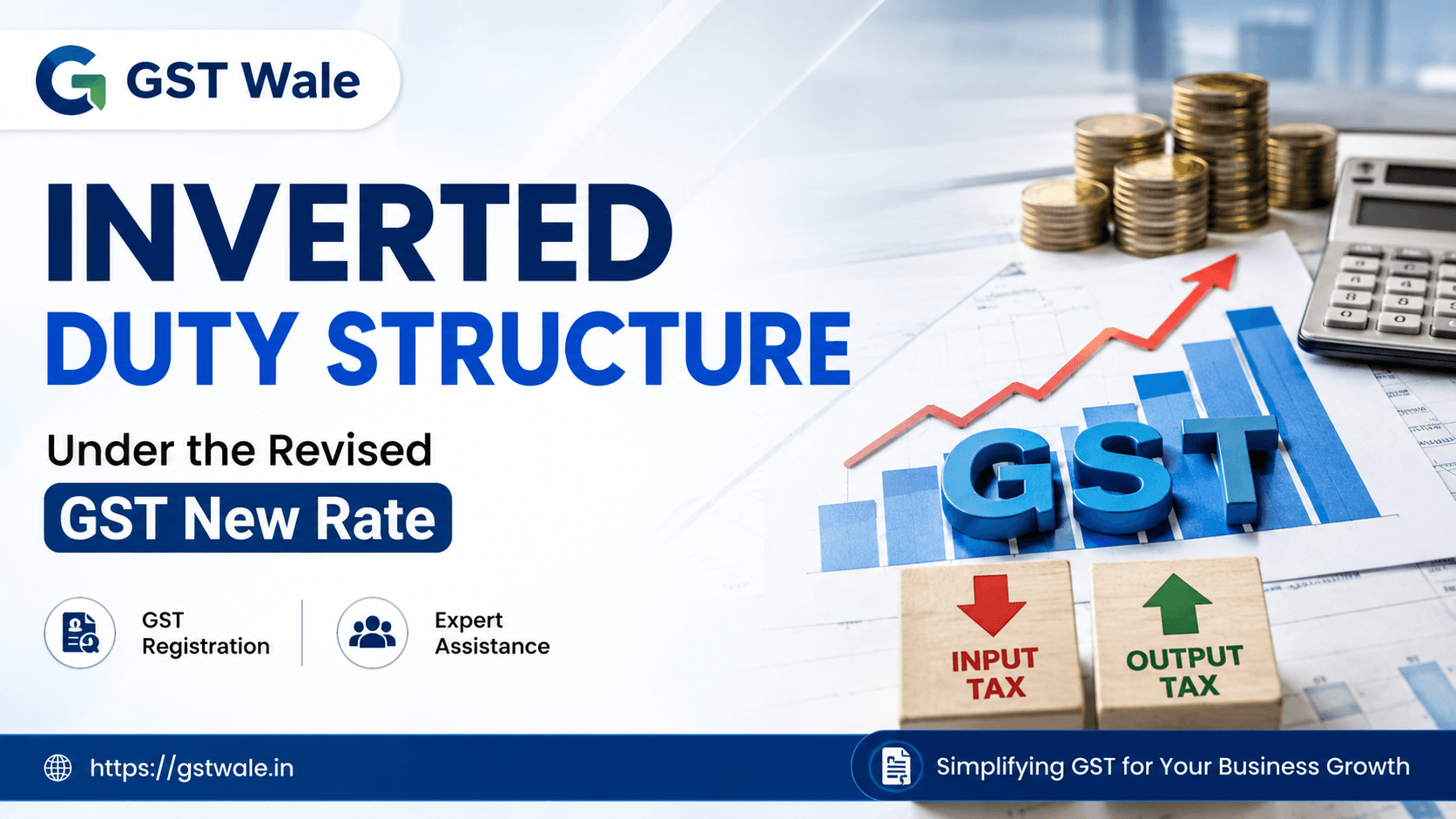
Managing taxes in India can feel like a maze, especially when the government introduces changes to the tax framework. Many business owners reach out to us at GST Wale feeling overwhelmed by the complexities of the current tax regime. Whether you are a small trader or a large-scale manufacturer, understanding the nuances of tax compliance is crucial for your bottom line. If you are just starting your business journey or are looking to streamline your existing filings, ensuring your GST Registration is handled correctly is the first step toward avoiding penalties. Today, we want to simplify a concept that often confuses entrepreneurs: the Inverted Duty Structure under the gst new rate.
Understanding the Inverted Duty Structure
In simple terms, an Inverted Duty Structure occurs when the tax rate on your inward supplies (the raw materials or services you buy) is higher than the tax rate on your outward supplies (the finished goods or services you sell).
For example, imagine you manufacture a product where the raw material is taxed at 18%, but the final product you sell is taxed at only 5%. In this scenario, you end up with a pile of unutilized input tax credit (ITC) in your electronic credit ledger because the output tax you collect is insufficient to offset the high tax paid on your inputs.
This happens frequently due to adjustments in the gst new rate list. When the government modifies tax brackets, sometimes they inadvertently—or strategically—create a scenario where raw material tax higher than the output tax becomes a permanent hurdle for manufacturers.
Why Does This Happen with the GST New Rate?
The government often revises GST slabs to promote certain sectors or control inflation. When they implement a gst new slab or change a gst new rate, the primary goal is usually to make finished goods more affordable for the end consumer.
However, this creates a mismatch. As a business owner, you are paying a higher GST on your procurement, but your sales revenue is taxed at a lower rate. This directly impacts your working capital. Instead of the tax credit flowing smoothly through the supply chain, it gets stuck, leading to cash flow crunches.
How Can You Manage Inverted Duty Refund?
If you find your business in this position, the law provides a way out through an inverted duty refund. Under the GST Act, you are entitled to claim a refund of the accumulated unutilized input tax credit where the credit has accumulated on account of the rate of tax on inputs being higher than the rate of tax on output supplies.
Steps to Claim Your Refund:
Analyze your ITC: Ensure your ledger reflects the correct balance of unutilized credit.
Verify eligibility: Confirm that your specific case falls under the scope of Section 54(3) of the CGST Act.
File Form GST RFD-01: This is the primary form for claiming refunds.
Documentation: Keep your purchase invoices, sales invoices, and GSTR-2B reconciliations ready.
Audit Trail: Maintain a clear audit trail of your manufacturing cost optimization efforts to show the tax authorities that your operations are compliant.
Strategic Tips for Manufacturing Cost Optimization
Since the gst rates can shift with various financial bill updates, you shouldn't just sit and wait for a refund. You need to be proactive.
Review your Procurement: Sometimes, changing your supplier or sourcing strategy can help balance the tax liability.
Pricing Strategy: Evaluate if your selling price needs adjustment to account for the trapped input tax credit.
Stay Updated: Regularly monitor the gst new rate list to see if your product category has been moved to a different slab.
Automated Accounting: Use robust accounting software that tracks tax credits in real-time, making it easier to identify when you are hitting an inverted duty situation.
Frequently Asked Questions
Is an inverted duty refund available for all sectors?
No, the government has specifically excluded certain goods from the refund eligibility list even if they suffer from an inverted duty structure. It is best to consult with an expert at GST Wale to see if your specific product qualifies.
How often can I claim an inverted duty refund?
You can file for a refund on a monthly basis, provided you meet all the criteria and have filed your mandatory GSTR-1 and GSTR-3B returns.
What is the biggest challenge in claiming these refunds?
Documentation is key. If your GSTR-2B data does not match your purchase invoices, or if there is a mismatch in HSN codes, your refund claim is likely to be rejected.
Does the GST new rate apply to service providers?
The inverted duty refund is generally restricted to the supply of goods. Service providers typically do not qualify for refunds on the grounds of an inverted duty structure under current laws.
Navigating the nuances of the gst new rate requires a balance of financial foresight and strict compliance. While an inverted duty structure can be a significant pain point for your cash flow, it is a manageable challenge if you understand the refund mechanism and keep your books in order.
At GST Wale, we specialize in helping businesses simplify these complex tax structures. Whether you are struggling with a high raw material tax higher than your output tax or need help filing for your refund, we are here to ensure your business remains compliant and profitable.
 Previous