


How to Claim Income Tax Rebate Under Section 89(1) for Salary Arrears in ITR 2.0
How to Claim Income Tax Rebate Under Section 89(1) for Salary Arrears in ITR 2.0
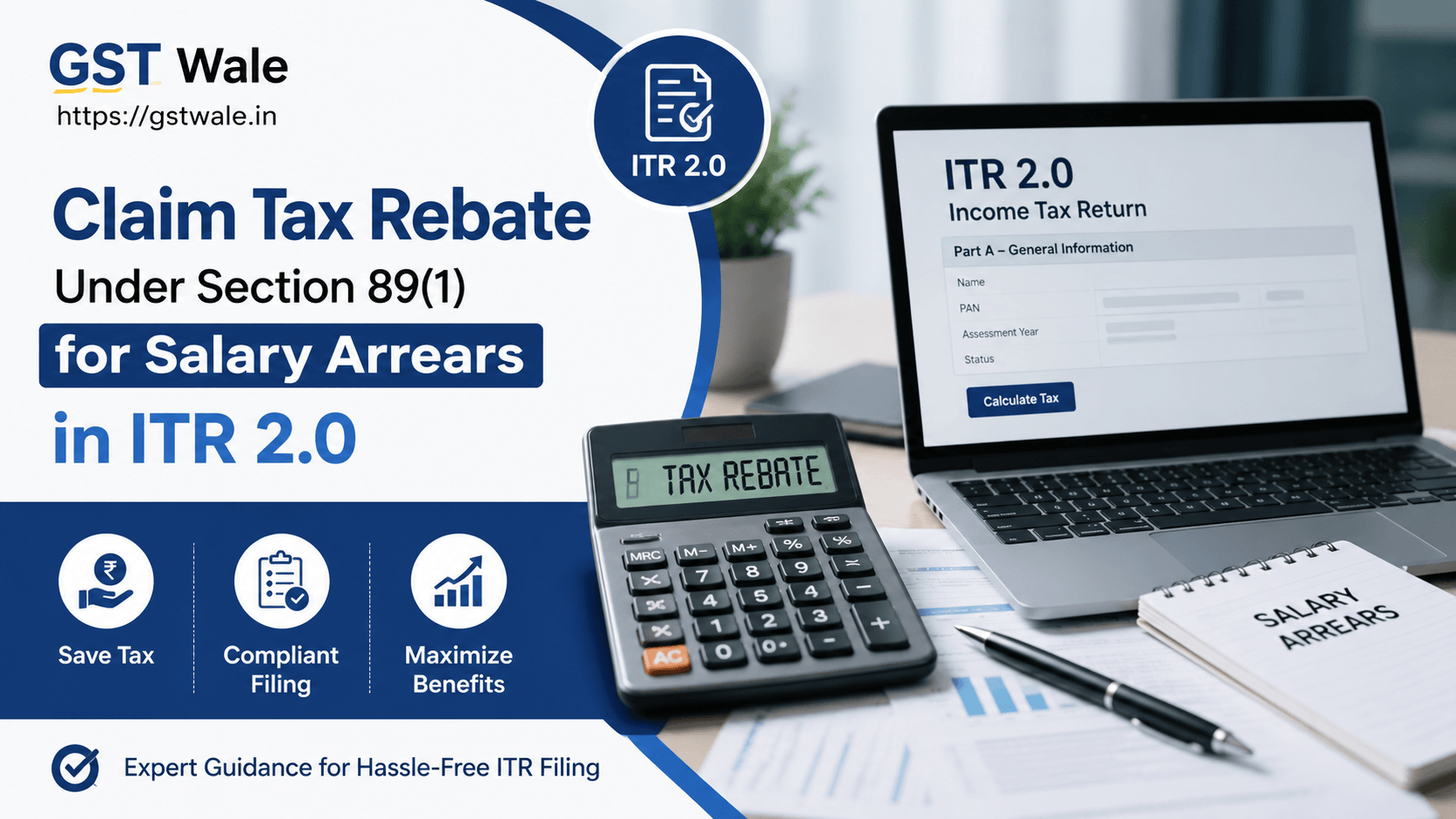
Receiving salary arrears is good news, but it can sometimes increase your tax liability if not reported correctly. Fortunately, the Income Tax Act provides relief under Section 89(1), allowing eligible taxpayers to reduce the additional tax burden arising from salary received in arrears or advance. If you are filing itr 2.0, understanding this provision can help you save tax legally while ensuring complete compliance.
If you're unsure about calculations or documentation, professional ITR Filing assistance can make the process simple and error-free. Whether you're preparing your income tax return form for the first time or have been filing returns regularly, knowing how Section 89(1) works in itr 2.0 is extremely beneficial.
Understanding Section 89(1) in itr 2.0
Section 89(1) provides tax relief when salary, pension, family pension, gratuity, or other eligible payments are received in arrears or in advance. Without this relief, the additional income received in one financial year could push you into a higher tax slab, resulting in a larger tax liability than you would have paid if the income had been taxed in the year it actually belonged.
While filing itr 2.0, eligible taxpayers can claim this relief after submitting Form 10E and calculating the eligible rebate according to the Income Tax Rules.
Who Can Claim Section 89(1) Relief in itr 2.0?
You may be eligible to claim relief in itr 2.0 if you have received:
- Salary arrears
- Salary in advance
- Pension arrears
- Family pension arrears
- Gratuity
- Compensation received after delay
- Commuted pension in eligible cases
The relief is available only if the income is taxable and relates to previous financial years.
Why Form 10E is Important Before Filing itr 2.0
One of the biggest mistakes taxpayers make is claiming Section 89(1) relief without filing Form 10E.
Before submitting itr 2.0, you must:
- Log in to the Income Tax e-Filing portal.
- Fill and submit Form 10E.
- Keep the acknowledgement for future reference.
- Enter the relief amount while filing your itr form.
Failure to submit Form 10E may result in your claim being rejected even if you are otherwise eligible.
Step-by-Step Process to Claim Section 89(1) Relief in itr 2.0
Step 1: Collect Salary Arrear Details
Obtain the salary arrear statement from your employer showing:
- Financial year to which arrears relate
- Amount received
- Tax deducted at source (if applicable)
Step 2: Calculate Tax Without Arrears
Compute your tax liability for the current financial year excluding the arrears.
Step 3: Calculate Tax Including Arrears
Now calculate your tax by including the arrears received during the current year.
Step 4: Calculate Additional Tax
Find the difference between the two tax amounts calculated above.
Step 5: Recalculate Previous Year's Tax
Add the arrear amount to the income of the year to which it actually relates and calculate the revised tax for that year.
Step 6: Compute Relief
Compare both tax calculations. The difference becomes the eligible relief under Section 89(1), which can be claimed while filing itr 2.0.
Practical Example
Suppose Mr. Rajesh received salary arrears of ₹2,50,000 during FY 2025-26 relating to FY 2023-24.
Without Section 89(1):
- Current year's taxable income increases.
- He moves into a higher tax slab.
- Additional tax payable increases significantly.
With Section 89(1):
- Tax is recalculated considering the arrears in FY 2023-24.
- The excess tax payable due to timing differences is reduced.
- He pays only the legitimate tax amount.
This is why correctly claiming relief in itr 2.0 becomes extremely important.
Documents Required While Filing itr 2.0
Keep the following documents ready:
- Form 16
- Salary arrear statement
- Form 10E acknowledgement
- Previous years' income details
- TDS certificates
- PAN and Aadhaar
- Bank account details
Having these documents available helps ensure accurate it filing without unnecessary delays.
Common Mistakes to Avoid in itr 2.0
Many taxpayers lose their eligible relief due to avoidable mistakes.
Not Filing Form 10E
This is the most common reason for rejection of Section 89(1) claims.
Wrong Arrear Calculation
Always verify the year-wise breakup provided by your employer.
Selecting the Wrong Return
Ensure you are using the correct income tax return form applicable to your income sources.
Ignoring Previous Year's Income
Relief calculation depends on comparing tax across different years. Incorrect figures can lead to inaccurate relief.
Relying Only on Employer Calculations
Cross-check the computation before submitting your return.
Benefits of Claiming Section 89(1) in itr 2.0
Properly claiming this relief offers several advantages:
- Reduces unnecessary tax burden
- Prevents higher tax due to salary timing differences
- Ensures compliance with Income Tax provisions
- Improves accuracy of your itr form
- Minimises the chances of notices due to incorrect reporting
Expert Tips from GST Wale
As experienced tax professionals, we recommend a few practical steps before you file income tax return online.
- Verify salary arrear details carefully.
- Submit Form 10E before filing the return.
- Keep supporting documents safely.
- Review the tax computation thoroughly.
- Avoid last-minute filing to reduce errors.
- Seek professional guidance if the arrear calculation involves multiple financial years.
These simple precautions can make your itr 2.0 filing smoother and help you maximise eligible tax relief.
FAQs
Is Form 10E mandatory for claiming Section 89(1) relief?
Yes. Filing Form 10E is mandatory before claiming relief under Section 89(1). Without it, your claim may be rejected during processing.
Can pension arrears also qualify for Section 89(1)?
Yes. Pension arrears and certain family pension arrears are eligible, subject to the prescribed conditions under the Income Tax Act.
Can I claim relief if my employer has already deducted TDS?
Yes. TDS deduction does not prevent you from claiming Section 89(1) relief. You can still calculate the eligible rebate and claim it while filing itr 2.0.
Which taxpayers generally use itr 2.0?
Generally, taxpayers having salary income along with certain other eligible income sources, where itr 2 is applicable, may need to use itr 2.0 based on the Income Tax Department's filing utilities and requirements.
What happens if I forget to claim Section 89(1)?
You may end up paying more tax than necessary. If eligible, you should compute the relief correctly and claim it while filing your return after submitting Form 10E.
Claiming tax relief under Section 89(1) is an effective way to reduce the additional tax burden arising from salary arrears. By filing Form 10E, maintaining proper records, and accurately reporting the relief in itr 2.0, taxpayers can ensure compliance while avoiding excess taxation. Whether you are filing your first return or have years of experience, understanding these provisions helps you complete your return with confidence.
At GST Wale, our experienced tax professionals help individuals and businesses prepare accurate returns, calculate eligible tax relief, and complete every compliance requirement with confidence. If you want a hassle-free filing experience and expert guidance for itr 2.0, connect with GST Wale today and let our professionals help you file your return accurately and on time.
 Previous