


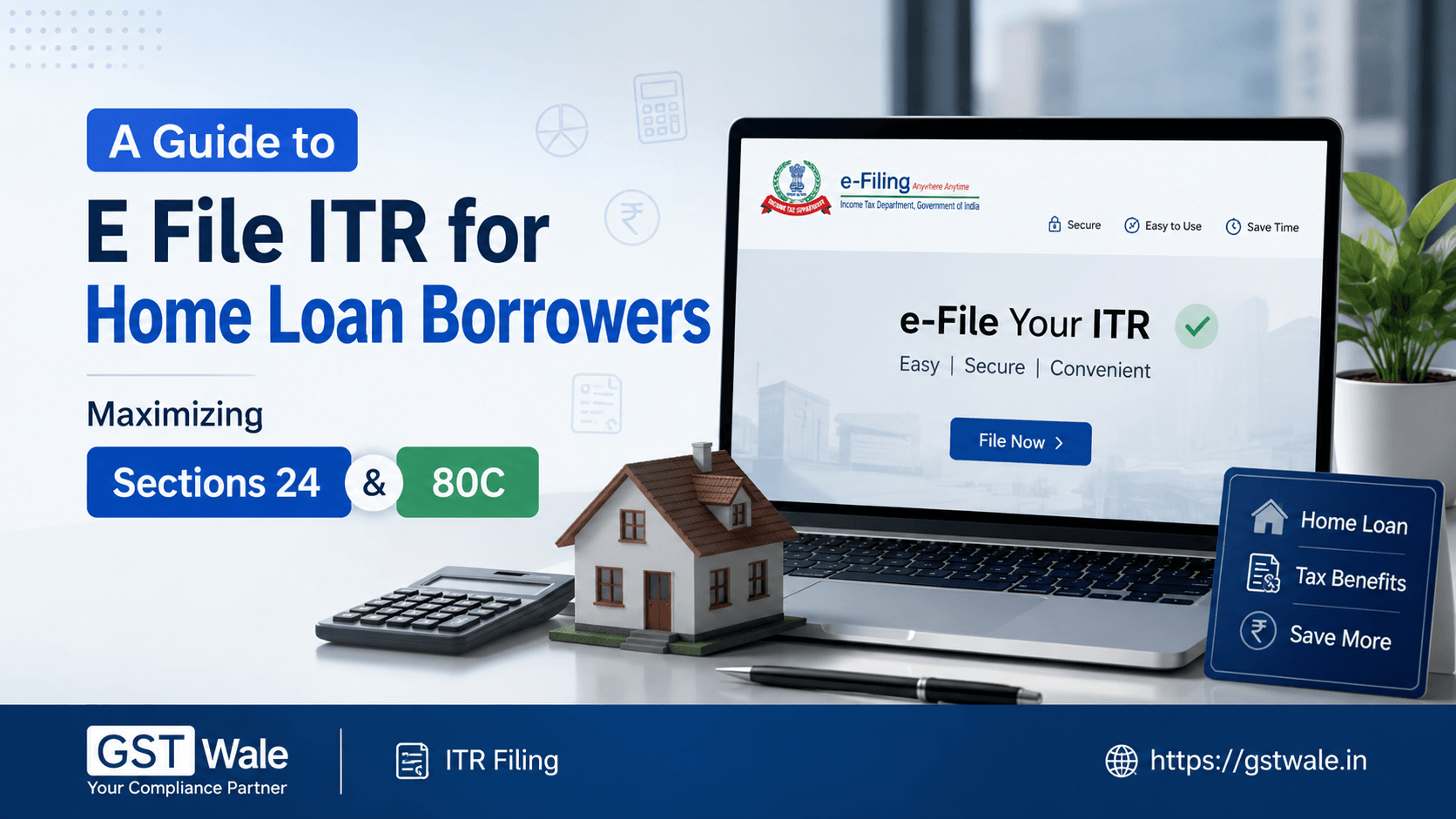
A Guide to E File ITR for Home Loan Borrowers: Maximizing Sections 24 and 80C
A Guide to E File ITR for Home Loan Borrowers: Maximizing Sections 24 and 80C
Buying a home is one of the biggest milestones in an Indian's life, but managing the tax implications that follow can feel like a maze. Many taxpayers leave money on the table simply because they don’t understand how to claim deductions effectively during the ITR Filing process. If you have taken a home loan, you aren't just paying EMIs; you are also sitting on a goldmine of tax savings. Today, we at GST Wale are going to demystify how you can e file itr while ensuring you squeeze every possible benefit out of your home loan repayment.
Understanding the Tax Benefits of Your Home Loan
When you e file itr, the Income Tax Department allows you to reduce your taxable income significantly through specific sections. Most borrowers focus on the EMI, but it is crucial to understand that your EMI is a mix of principal and interest. The law treats these two components differently, and that is where your tax planning starts.
Maximizing Section 24(b): The Interest Deduction
Section 24(b) is the most popular benefit for borrowers. You can claim a deduction of up to ₹2 lakh per financial year on the interest portion of your home loan.
Self-Occupied Property: The limit is capped at ₹2 lakh.
Let-out Property: There is no upper limit on the interest deduction for rented properties, though the overall loss from house property that can be set off against other heads of income is capped at ₹2 lakh per year.
Always ensure you have your housing loan tax certificate handy before you start the process. This document is issued by your bank and clearly segregates the interest and principal components for the year.
Cracking the Code: Section 80C for Principal Repayment
While Section 24 covers interest, Section 80C covers the principal portion of your EMI. You can claim up to ₹1.5 lakh under this section. However, remember that this limit is an aggregate. If you have already maxed out your 80C through PPF, LIC premiums, or children's tuition fees, you cannot claim the home loan principal separately. Still, for many, this is an excellent way to reach that ₹1.5 lakh threshold.
How to Properly E File ITR with Home Loan Deductions
When you decide to e file itr, accuracy is paramount. A small error in reporting can lead to a scrutiny notice, which is the last thing you want. Follow these steps to ensure your deductions are reflected correctly.
Gather Documents: Collect your housing loan tax certificate, your PAN card, and your Form 16.
Choose the Correct Form: For most salaried individuals with home loan income, ITR-1 or ITR-2 is applicable. If you have house property income, ensure you select the form that allows for 'Income from House Property' reporting.
Reporting Interest: In the 'Income from House Property' section, enter the interest paid. If it is a self-occupied property, this will typically result in a loss, which is allowed under the tax laws.
Reporting Principal: Enter the principal repayment amount under the 'Section 80C' deductions tab.
Review and Submit: Double-check the figures against your bank certificate. Many taxpayers rush to e file itr and enter the total EMI instead of the segregated amounts. This is a common mistake—always use the break-up provided by your bank.
Important Considerations for Joint Borrowers
If you and your spouse have taken a joint home loan ITR, you both can claim tax benefits. Both of you must be co-borrowers and co-owners of the property.
Benefit Sharing: You can claim the interest and principal deductions in the ratio of your ownership or the actual repayment split.
Multiplier Effect: This is a clever strategy. If you are in the higher tax bracket, you can potentially claim a higher portion of the interest (up to ₹2 lakh each) to maximize total household savings.
Expert Tips for Seamless E-Filing
At GST Wale, we have handled thousands of returns. Here are some 'insider' tips to make your filing smoother:
Keep Proofs Ready: Even though you don't need to upload the housing loan tax certificate while filing, keep it safe for at least six years. The Income Tax Department may ask for it during an assessment.
Pre-construction Interest: If you bought an under-construction property, you can claim the interest paid during the pre-construction period. This can be claimed in five equal installments starting from the year the construction is completed.
Don't Ignore E-filing Property Deductions: Whether it's the municipal taxes you paid or the standard deduction of 30% on the Gross Annual Value (for rented properties), ensure these are accounted for to lower your tax liability.
Frequently Asked Questions
Can I claim home loan benefits if the property is under construction?
You cannot claim interest for the period before the year of possession. However, once possession is granted, you can claim the accumulated pre-construction interest in five equal installments.
Does the home loan interest tax break apply to home renovation loans?
Yes, you can claim up to ₹30,000 as a deduction for interest paid on a loan taken for the repair, renewal, or reconstruction of your house, provided you do not exceed the overall ₹2 lakh limit under Section 24.
What if I am a joint owner but my spouse is not earning?
If your spouse is not a co-borrower and does not have an income, they cannot claim the benefit. Only the person who is both a co-borrower and co-owner can claim the tax deduction.
Is the principal repayment deduction available for stamp duty?
Yes, the stamp duty and registration charges paid at the time of purchase are also eligible for deduction under Section 80C, subject to the overall limit of ₹1.5 lakh.
Tax planning is not about evading taxes; it is about using the provisions of the law to keep more of your hard-earned money. When you e file itr, every entry counts. By leveraging the home loan interest tax break under Section 24 and the principal repayment tax deduction under Section 80C, you can significantly reduce your tax outflow.
Navigating these sections can be complex, and one wrong entry can trigger a notice. If you want peace of mind and the assurance that your taxes are filed by professionals, reach out to the team at GST Wale. We specialize in helping individuals and business owners optimize their tax positions. Let us take the stress out of your compliance—get in touch with us today and let us handle your tax filings with expertise and care!
 Previous