


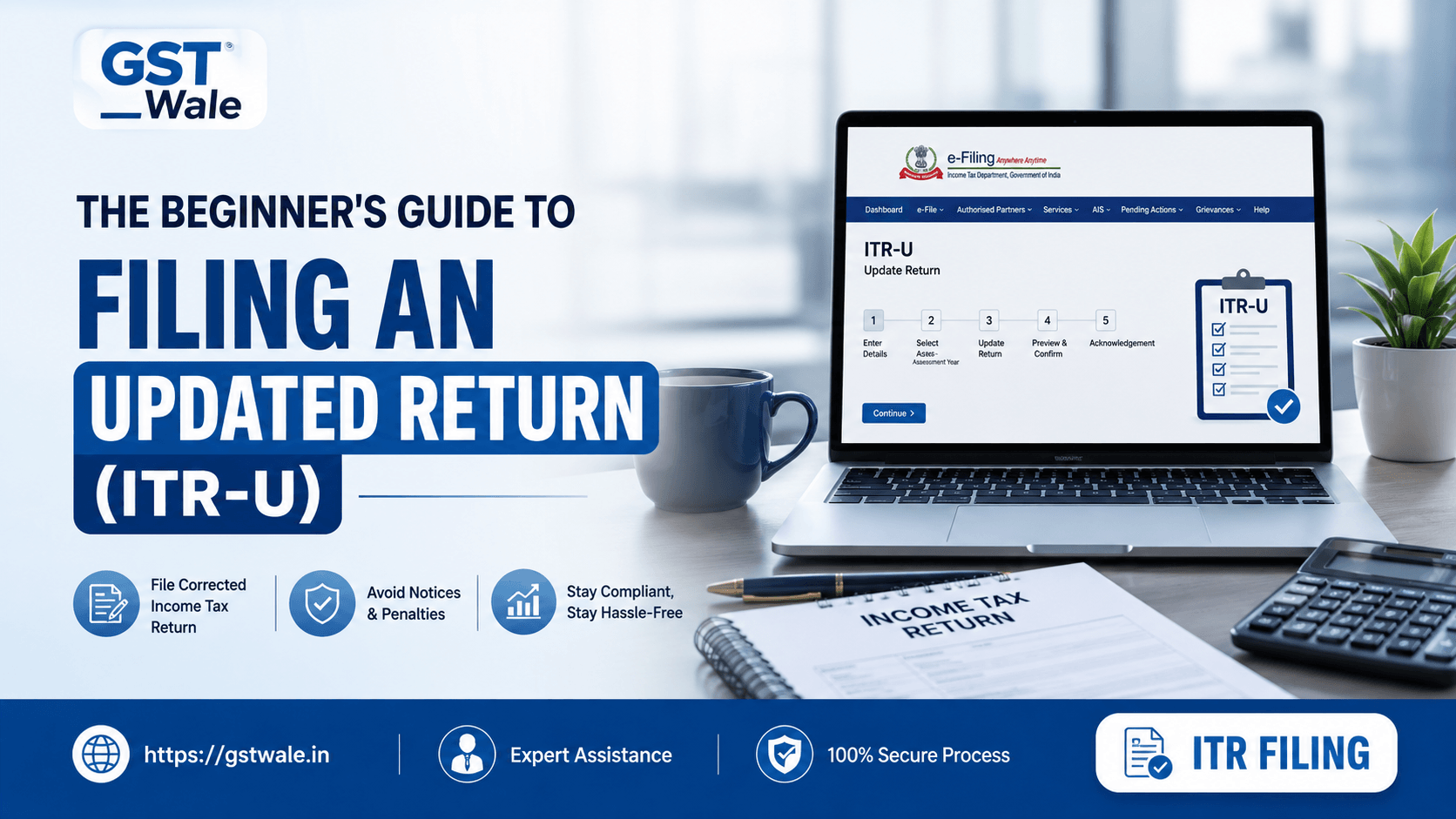
The Beginner's Guide to filing an Updated Return (ITR-U)
The Beginner's Guide to filing an Updated Return (ITR-U)
Making mistakes with your taxes is common, but it can be stressful. We often see clients at "GST Wale" who realize a few months after the deadline that they missed reporting some rental income or forgot to claim a specific deduction. In the past, this was a major headache, but the introduction of the updated tax return has changed the game. Whether you are looking for assistance with your regular ITR Filing or need to rectify a previous mistake, understanding the process of ITR return filing is essential to keep your financial house in order.
In this guide, we will break down everything you need to know about Section 139 8A—the provision that allows you to file an updated return.
What is ITR-U and Why Does It Matter?
Think of ITR-U as a "second chance." Introduced in the Union Budget 2022, this provision allows taxpayers to update their tax returns up to 24 months from the end of the relevant assessment year. If you realized you didn't report income, made a calculation error, or want to fix missed tax assets, you no longer have to wait for a scrutiny notice from the Income Tax Department to correct your records.
The primary goal of this facility is to promote voluntary tax compliance. By proactively filing an updated return, you acknowledge the error and pay the due tax along with the additional interest and penalty, effectively closing the matter before it escalates into a legal issue.
ITR-U Eligibility Criteria: Who Can File?
Not everyone can use this facility, and there are specific conditions you must meet. Before proceeding with your ITR return filing, ensure you fall under the following ITR-U eligibility criteria:
You filed a return earlier: You can file an updated return even if you filed a NIL return or a return showing a loss.
You missed the deadline: If you completely failed to file your ITR within the original due date or the belated return deadline, ITR-U is your path forward.
One-time opportunity: You can file only one updated return per assessment year. Make sure it is accurate before submitting.
Not for refunds: You cannot use ITR-U to claim a fresh refund or to increase your existing refund amount.
Exclusion from scrutiny: If a search or survey has been initiated against you, or if the Assessing Officer has already started proceedings, you are generally not eligible to file an updated return.
Understanding the Penalty for Updated Return
It is important to remember that there is no "free lunch" when it comes to filing an updated return. The government levies an additional tax to discourage negligence during the initial ITR return filing process.
The penalty structure is as follows:
Within 12 months: If you file the updated return after the end of the assessment year but within 12 months, you must pay an additional tax of 25% on the tax and interest due.
Between 12 and 24 months: If you file after 12 months but within 24 months from the end of the assessment year, the additional tax increases to 50% of the tax and interest due.
At GST Wale, we always advise clients to act as soon as they discover an error. The longer you wait, the more expensive it becomes to correct your tax records.
How to File Your Updated Return: A Step-by-Step Approach
The process for filing ITR-U is integrated into the e-filing portal. However, it requires meticulous attention to detail.
Step 1: Gather Information: Collect all documents you missed earlier, such as Form 16, bank statements, or investment proofs.
Step 2: Log in to the Portal: Access your account on the Income Tax e-filing website.
Step 3: Select the Assessment Year: Navigate to the "File" section and choose the relevant Assessment Year for which you are submitting the update.
Step 4: Choose the Correct Form: Select the applicable ITR form (e.g., ITR-1, ITR-2, etc.) and choose the option "Updated Return under Section 139(8A)."
Step 5: Provide Reasons: You are required to select a reason for updating the return, such as "income not reported" or "wrong heads of income chosen."
Step 6: Compute Tax and Penalty: The system will automatically calculate the additional tax based on the timeline. Ensure you have sufficient funds in your bank account to pay the total liability.
Step 7: Verification: Once submitted, verify the return using Aadhar OTP or EVC.
Common FAQs
Can I file an updated return if my original return is under scrutiny?
No. If the income tax department has already initiated assessment, reassessment, or search proceedings, you are barred from filing an ITR-U.
Is it mandatory to pay the additional tax?
Yes. Your ITR-U will be considered invalid if you do not pay the additional tax (including interest and penalties) before or at the time of filing.
Can I reduce my tax liability using ITR-U?
No, ITR-U is designed to declare additional income or correct mistakes that result in higher tax liability. You cannot use it to reduce your total income to claim a tax refund.
Do I need a CA to file an updated return?
While you can do it yourself, we recommend consulting an expert. Because ITR-U is a one-time opportunity, any further errors could lead to unnecessary scrutiny from the department.
Expert Advice from GST Wale
The process of ITR return filing can be complex, and ITR-U is even more technical. Mistakes here can lead to heavy financial penalties or unwanted attention from the tax authorities. At GST Wale, we have helped hundreds of taxpayers navigate the complexities of tax compliance. Whether you have missed an asset declaration or simply made a clerical error in your original filing, we are here to ensure your records are corrected accurately and efficiently.
Don't let a small oversight turn into a big problem. Reach out to the experts at GST Wale today. We will guide you through the process, calculate your exact liability, and help you file your updated return with total peace of mind. Your compliance is our priority!
 Previous