


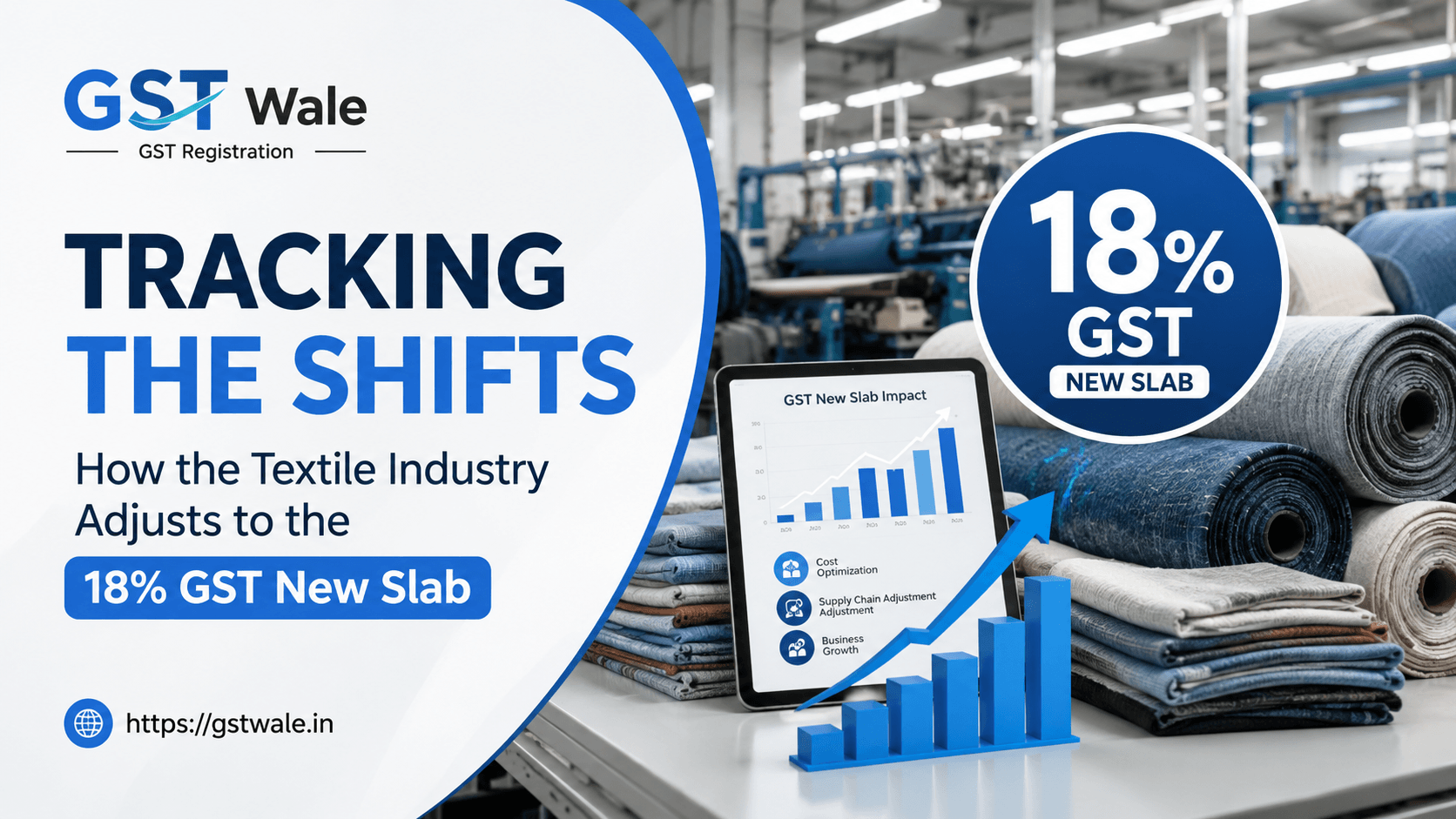
Tracking the Shifts: How the Textile Industry Adjusts to the 18% GST New Slab
Tracking the Shifts: How the Textile Industry Adjusts to the 18% GST New Slab
The Indian textile sector is currently undergoing a massive transformation. For years, manufacturers and traders have grappled with the complexities of tax structures, but the recent regulatory updates have brought significant changes to the way we calculate and report taxes. If you are a business owner in this space, staying updated on the gst new slab is no longer optional—it is essential for your operational survival.
Navigating these shifts can be daunting, especially when trying to maintain compliance while managing thin margins. Many businesses often find themselves struggling with documentation and the technicalities of filing returns. If you find your business overwhelmed by these periodic regulatory updates, securing professional help through GST Registration is the first step toward building a stress-free, compliant foundation for your company.
Understanding the GST New Slab in Textiles
The recent revisions have introduced a more tiered approach to how we classify and tax garments. The core of the gst new slab philosophy is to balance affordability for the common man while ensuring that premium and luxury items contribute their fair share to the economy.
Under the latest guidelines, the industry has seen a clear distinction based on the price point of the finished product. This move is designed to simplify the gst new rate list by focusing on the transaction value per unit, rather than just the type of fabric used.
Why the Price Threshold Matters
The most significant change for retailers and manufacturers involves apparel priced above 2500. As per the current structure, readymade garments are bifurcated based on their sale value:
Up to ₹2,500: These items generally attract a lower GST rate of 5%, keeping them affordable for the average consumer.
Above ₹2,500: These products fall into the higher bracket, attracting an 18% GST rate.
This shift means that every invoice you generate must accurately reflect the sale price. If you are selling a bulk order, you cannot simply apply a flat rate across all items; you must segment them based on the individual unit price.
The Challenge of Inverted Duty Structure
For those of you involved in manufacturing, the conversation often circles back to the manmade fiber inverted duty correction. An inverted duty structure occurs when the taxes you pay on your raw materials (like synthetic fibers, dyes, and chemicals) are higher than the tax rate on your finished goods (like fabric).
In the past, this led to a massive accumulation of unused Input Tax Credit (ITC) in electronic ledgers, locking up vital working capital. The government’s move toward a more rationalized tax system aims to alleviate this burden. However, as a business owner, you must remain diligent. To claim your rightful refunds, your purchase and sales data must be perfectly reconciled. Any mismatch in your GSTR-2B or outward supply records can lead to delays in receiving your ITC refunds.
Key Considerations for Business Owners
When adapting your business to the gst new slab, keep these practical tips in mind:
HSN Code Accuracy: Ensure that your HSN codes are up to date. Using the wrong code for cotton fabric gst or synthetic materials can lead to classification disputes with tax authorities.
Invoicing Discipline: Since the tax rate is now price-dependent, ensure your point-of-sale (POS) software is configured to handle the 5% vs. 18% switch automatically.
Regular ITC Monitoring: Do not let your ITC sit idle. If you are facing an inverted duty scenario, initiate the refund process systematically.
Frequently Asked Questions
What is the primary difference in the gst new slab for garments?
The main change is the application of different rates (5% and 18%) based on the sale value of the garment, specifically setting a threshold at ₹2,500 per piece.
Is the GST rate for cotton fabric the same as readymade garments?
Not necessarily. While cotton fabric typically attracts 5% GST, the readymade garments tax depends on the price threshold mentioned above.
How does the gst new rate impact small textile retailers?
Small retailers benefit from the lower 5% slab for affordable clothing, but they must be more careful with their inventory billing to ensure they are applying the correct rate to each item.
What should I do if I am caught in an inverted duty structure?
You should reconcile your input tax invoices against your outward supply invoices and file for a refund of the accumulated credit using the correct GSTR formats on the portal.
Can I claim ITC on all business expenses?
ITC is generally available on inputs used for business, but it is restricted for certain personal expenses or non-business-related procurements. Always consult with your tax advisor regarding specific items.
Adapting to the gst new slab might seem like a complex hurdle, but with the right processes in place, it is a manageable part of your business growth. Whether you are dealing with the intricacies of gst rates or planning to expand your textile footprint, compliance is the key to longevity. At GST Wale, we understand the nuances of the textile industry better than anyone else. Let us handle your tax complexities so you can focus on what you do best—growing your business. Reach out to GST Wale today for expert guidance on all your GST-related needs!
 Previous