


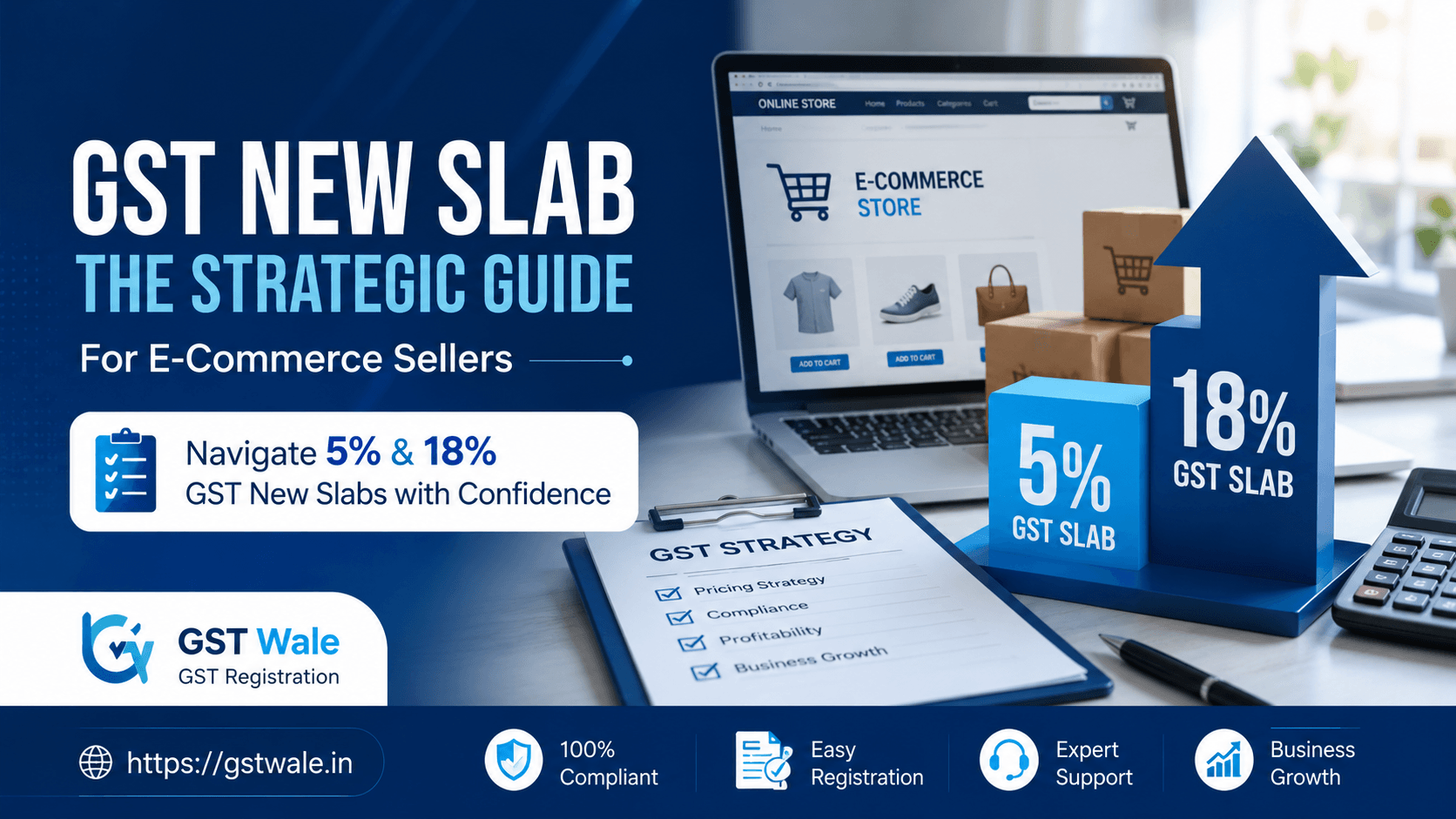
The Strategic Guide for E-Commerce Sellers Navigating the 5% and 18% GST New Slabs
The Strategic Guide for E-Commerce Sellers Navigating the 5% and 18% GST New Slabs
Managing an online business in India is a constant balancing act between marketing, logistics, and, of course, keeping your books in order. If you have been keeping an eye on the latest tax updates, you know that the gst new slab structure has created both opportunities and headaches for e-commerce sellers. As a professional, I often see business owners losing sleep over whether their products fall under the 5% bracket or the 18% category. If you are just starting your journey or looking to streamline your tax compliance, it is crucial to ensure you have your GST Registration in place, as it serves as the foundation for claiming legitimate tax benefits.
Understanding how to classify your goods under the gst new slab isn't just about avoiding a notice from the department; it is about protecting your bottom line. At GST Wale, we believe that tax compliance shouldn't be a hurdle—it should be a strategic tool. Let’s break down how these changes affect your digital storefront.
Why the GST New Slab Matters for Your Profitability
The core challenge for any online merchant is the impact of taxes on the digital selling profit margin. When the government introduces a gst new rate, it doesn't just change the invoice amount; it ripples through your entire pricing strategy.
For instance, if your product category moved from a lower bracket to the 18% slab, your selling price might need adjustment to maintain competitiveness. On the other hand, if you are lucky enough to operate within the 5% category, you have more room to maneuver your marketing spends. A clear understanding of the gst new rate list allows you to price your products accurately so that your margins aren't eroded by unexpected tax liabilities.
Decoding the 5% vs. 18% GST Slabs
In the evolving landscape of Indian e-commerce, most consumer goods are bifurcated between the 5% and 18% buckets. Here is how you should categorize your operations:
The 5% Tier: Essentials and Niche Items
Generally, goods of daily necessity or specific categories fall under the 5% gst new slab. This is a favorable rate, but it comes with a catch: the input tax credit (ITC) chain is often restricted. If you sell goods at 5%, you must ensure that your procurement costs are managed, as you might not be able to claim a refund for excess ITC.
The 18% Tier: Standard Goods and Services
Most electronic goods, apparel, and lifestyle products land in the 18% slab. While this seems high, the advantage here is the full availability of input tax credit. You can claim credit on your packing materials input credit, logistics, and even electricity bills related to your warehouse. If you aren't claiming these, you are essentially overpaying your taxes.
Strategic Tips for Online Merchant Billing
When you are generating an online merchant billing invoice, precision is key. A simple mismatch in the HSN code can lead to a demand notice.
HSN Code Accuracy: Always double-check your HSN codes against the official gst rates database. Never guess the code; if you are unsure, consult a professional.
Shipping Fees Tax Rate: One common mistake I see is sellers applying the wrong rate to shipping. Remember, if you are bundling shipping with the product, the tax rate of the principal supply usually applies.
Consolidated Records: Maintain a clean digital ledger. If you are moving products across states, ensure your e-way bill data matches your tax invoices exactly.
Optimizing Your Input Tax Credits (ITC)
Many sellers focus so much on the gst new slab that they forget about the "credit" side of the equation. Whether your product is taxed at 5% or 18%, your business expenses are eligible for credit.
What can you claim?
Packing Materials: Boxes, tape, bubble wrap—these all carry GST. You can claim this as packing materials input credit.
Logistics: The service tax paid to your courier partners is fully adjustable against your output tax liability.
Marketing Services: If you hire an agency to run ads, the GST on their professional fees is a valid claim.
By maximizing these credits, you effectively reduce the "real" tax impact on your business, regardless of the headline rate.
Frequently Asked Questions
How do I check if my product falls under the new gst slab?
You can verify your product's specific gst new rate by looking up its 6-digit HSN code on the official GST portal or by checking the latest gst new rate list provided by the CBIC.
Does the 18% slab apply to the shipping cost too?
Generally, if you charge a separate shipping fee, the tax rate applicable to the shipping service (often 18%) applies. However, if shipping is bundled as part of a composite supply, the rate of the main product usually takes precedence.
Can I claim credit for packing materials if I am in the 5% slab?
Yes. Even if your output is taxed at a lower rate, you are entitled to claim input tax credit on your business inputs, including packing materials, subject to standard GST rules.
How often do these gst rates change?
GST rates are revised periodically by the GST Council. As a seller, it is vital to stay updated through reliable sources like GST Wale to ensure your billing software is always compliant.
Navigating the gst new slab requirements shouldn't feel like a guessing game. By understanding the difference between the 5% and 18% brackets, optimizing your packing materials input credit, and maintaining precise online merchant billing, you can ensure your business remains both compliant and profitable.
Tax laws in India are dynamic, and staying ahead requires expert guidance. At GST Wale, we specialize in helping e-commerce sellers simplify their tax journey, from initial registration to complex audits. Don’t let confusion over the latest gst new rate stop your business from scaling.
 Previous