


Master Guide: Cross-Border Software Services and IGST Refunds Under Your Business GSTIN
Master Guide: Cross-Border Software Services and IGST Refunds Under Your Business GSTIN
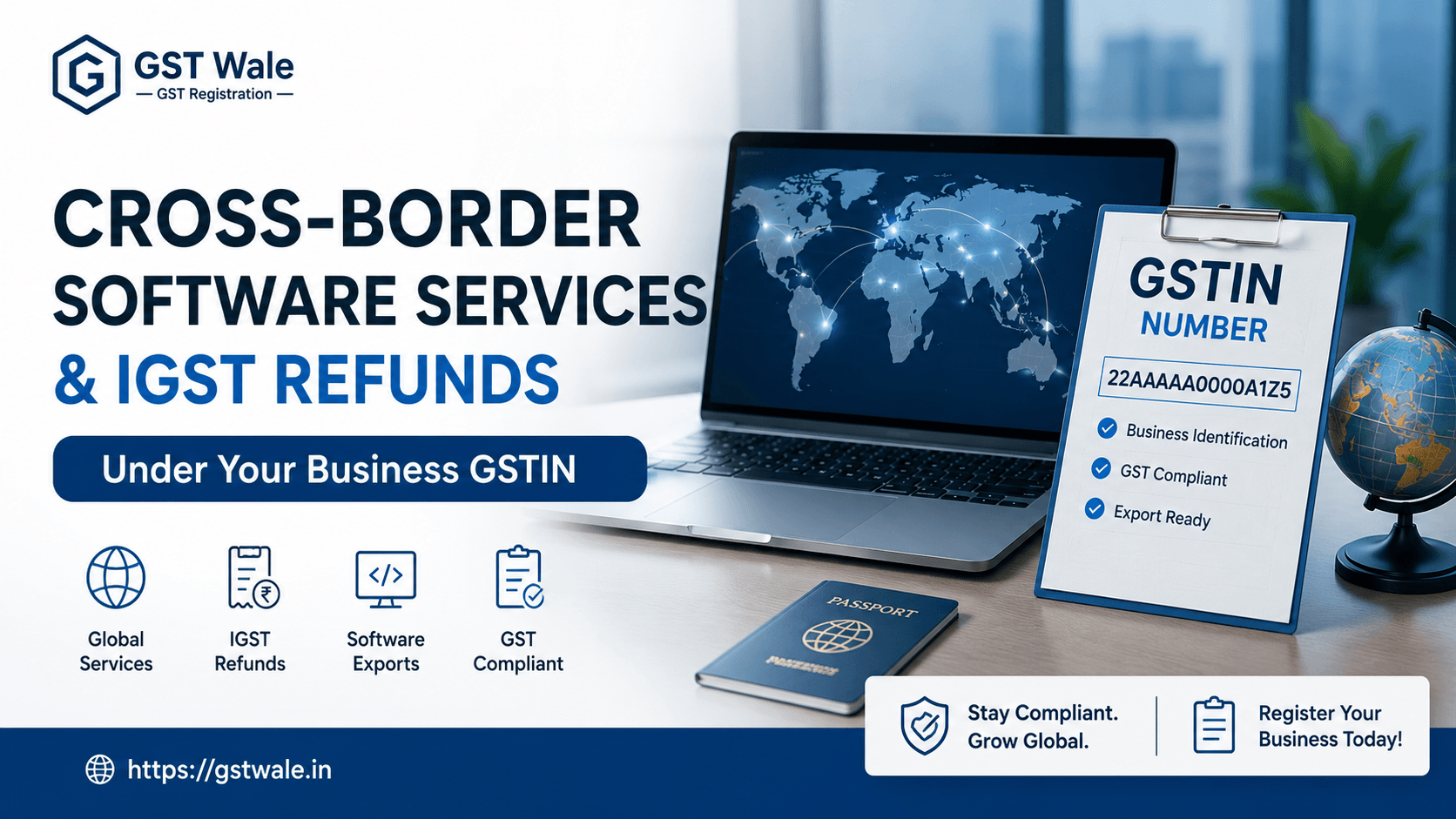
Exporting software services from India is a thriving business, but it comes with a complex set of tax compliance requirements that can baffle even seasoned entrepreneurs. As you grow your business, understanding how to manage your gstin number for cross-border transactions is not just a legal necessity but a strategic advantage. Whether you are a freelance developer or a growing IT firm, ensuring that your GST Registration is accurate and up-to-date is the first step toward seamless operations. At GST Wale, we have seen many businesses leave money on the table because they didn't fully leverage the benefits of exporting services.
Decoding the Taxability of Software Exports
When you provide software services to a client located outside India, it is generally treated as a "zero rated service export." This is a massive benefit because the government does not want to export taxes along with the services. However, the documentation must be watertight.
The core of this process relies on your gstin number. Without a valid registration, you cannot prove the origin of the service, nor can you claim the benefits associated with exports. When you invoice a foreign client, you are essentially charging them 0% GST, provided you meet the specific conditions laid down in the IGST Act.
Navigating the Place of Supply and Intermediary Rules
One of the biggest hurdles our clients face is the "place of supply intermediary rule." If you are acting as an intermediary—meaning you are facilitating the supply of software services between a principal and a third party—the place of supply is often considered to be the location of the service provider (India).
This creates a tax trap. If the authorities categorize your transaction as an intermediary service rather than a direct export, you lose the zero-rated status, and suddenly, you are liable for domestic GST rates. To avoid this, your contracts and invoices must clearly demonstrate that you are the principal service provider, not an agent. Always keep your gstin number documented in every agreement to maintain clear records of your professional identity.
Step-by-Step Guide to Claiming IGST Refunds
If you have paid IGST on inputs or services utilized to create your software, you are entitled to claim those back. The process of claiming input credits is vital for maintaining healthy cash flow.
Ensure Compliance: Confirm that your gstin number is correctly reflected on all inward supply invoices.
File GSTR-1 and GSTR-3B: Your outward supply details must match your shipping bill or the relevant export documents.
The FIRC Requirement: The Foreign Inward Remittance Certificate (FIRC) or the Bank Realization Certificate (BRC) is your lifeline. This document proves that you have actually received payment in convertible foreign exchange.
Refund Application: File the refund application on the GST portal. The system will automatically verify your gstin number against the electronic credit ledger.
Why the FIRC Bank Certificate is Non-Negotiable
Many business owners treat the FIRC as just another piece of paper. From our experience at GST Wale, this is the most critical document for auditors. The FIRC confirms the exact date and amount of foreign currency received. When you are claiming a refund against your gstin number, the tax authorities will cross-reference the date of the export invoice with the date of the FIRC. Any discrepancy here can lead to a show-cause notice.
Practical Tips for Managing Input Tax Credits
Claiming input credits is the most effective way to optimize your tax liability. Here is how you can stay ahead:
Reconciliation: Perform a monthly reconciliation of your GSTR-2B versus your books of accounts. If a vendor has not uploaded an invoice, your gstin number won't reflect that credit, and you will miss out on the refund.
Segregate Expenses: Clearly differentiate between inputs used for export services and those used for local operations.
Timely Filing: Delaying your monthly returns can lead to a freezing of your ability to claim refunds. Keep your compliance calendar marked.
Frequently Asked Questions
1. Is it mandatory to have a gstin number for software exports? Yes, if you wish to claim zero-rated benefits and IGST refunds, a valid gstin number is mandatory. Without it, you cannot formalize the export of services under the GST law.
2. Can I export software without charging GST? Yes, software services can be exported as zero-rated supplies under the Letter of Undertaking (LUT) route or by paying IGST and claiming a refund. However, you must maintain proper records associated with your gstin number.
3. What happens if I make a mistake in my GSTR-1? Errors in GSTR-1 can lead to a mismatch in the system, delaying your refunds. Always double-check your gstin number entries and the service recipient's details.
4. How long does the refund process take? Once you submit the claim with the required FIRC and proof of export, the process typically takes a few weeks, provided there are no discrepancies in your gstin number data.
Expert Support from GST Wale
Managing cross-border tax compliance is a specialized task. One wrong entry on your gstin number filings can trigger unnecessary inquiries from the tax department. At GST Wale, we specialize in helping businesses like yours navigate the complexities of international trade taxation.
Don't let tax compliance hold your business back. Reach out to the experts at GST Wale today to streamline your export documentation, optimize your input tax credits, and ensure your business stays compliant and profitable. Let us handle the taxes so you can focus on writing the next generation of software!
 Previous