


How to Safely Transfer Input Tax Credit When Changing Your Business Structure
How to Safely Transfer Input Tax Credit When Changing Your Business Structure
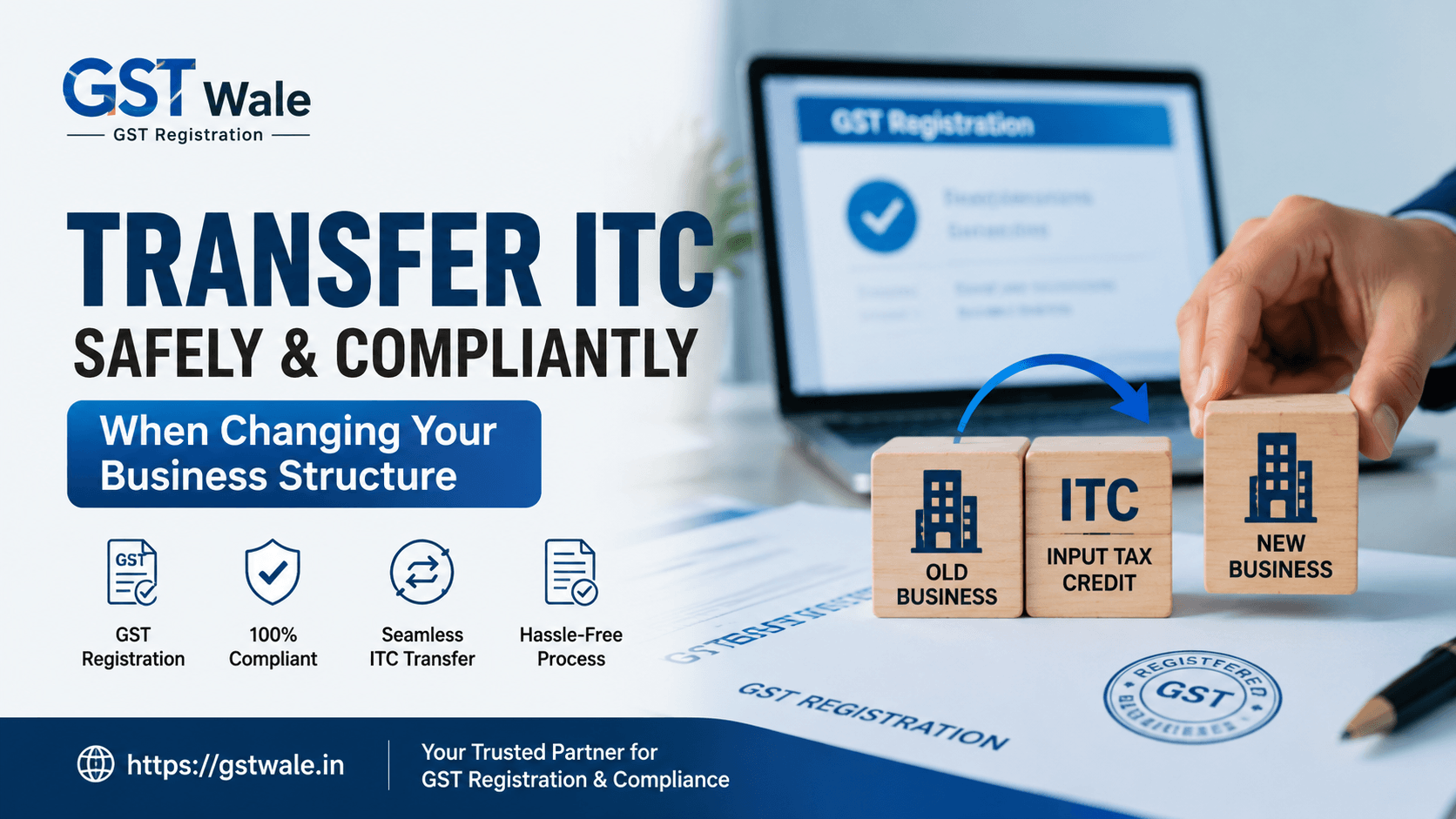
Moving your business to a new legal structure is an exciting milestone for any entrepreneur. Whether you are converting a sole proprietorship into a private limited company or merging with another firm, this growth often necessitates a fresh gst registration. While the excitement of expansion is natural, many business owners get stuck when it comes to the technicalities of their tax credits. At GST Wale, we frequently see clients worry about losing their hard-earned Input Tax Credit (ITC) during this transition. If you are currently navigating this shift, understanding the legal framework is essential to ensure your transition is seamless. For those needing professional assistance with the initial GST Registration process or ongoing compliance, our team is always here to help you get it right from day one.
The Importance of ITC in Business Restructuring
When you undergo a change in business ownership, the law recognizes that the "person" behind the business is legally shifting. Under the Goods and Services Tax (GST) regime, the ITC sitting in your electronic credit ledger is tied to your specific tax identity. If you simply close one entity and open another without following the correct procedure, that credit could become locked or, worse, lost forever.
When you transfer business ownership, the unutilized ITC must be legally migrated to the successor entity. This isn't just about filing a form; it is about maintaining a clean audit trail that proves to the tax authorities that the business operations are continuing, just under a different legal umbrella.
Understanding Form GST ITC-02
The bridge between your old tax identity and your new one is form gst itc 02. This is the most critical document you will encounter during a merger and acquisition gst scenario.
Think of this form as a formal request to the government to move your balance from the old GSTIN to the new one. Once you file this, the recipient entity—the new business structure—must accept these details on the common portal. Only after this mutual "handshake" between the two GSTINs is the credit actually moved to your new electronic credit ledger.
Steps to Safely Transfer ITC During Restructuring
To ensure you don’t hit any roadblocks, follow these steps carefully:
Audit Your Credit: Before starting the gst registration process for the new entity, perform a full reconciliation of your books. Ensure your GSTR-2A/2B matches your actual purchases.
Update Your Identity: When you change your structure, you will likely need a new pan card update tax filing. Since GST is PAN-based, your new entity must have its own PAN before you can apply for the new GST number.
File Form GST ITC-02: The transferor (old entity) must file this form. Ensure you provide the certificate issued by a practicing Chartered Accountant. This certificate is proof that the transfer of liabilities and assets is accurate.
Acceptance by Transferee: The new entity must log in to the GST portal and accept the transfer. Without this confirmation, the process remains incomplete.
Verification: Once the transfer is complete, check your electronic credit ledger in the new portal to ensure the amount reflects correctly.
Common Challenges and How to Avoid Them
Many business owners rush through the goods and services tax registration of their new entity and forget that the old entity must remain "active" until the transfer is fully processed.
The CA Certificate Requirement: A common mistake is failing to attach a valid certificate from a CA. The tax department requires professional verification to ensure that the transfer is genuine and not an attempt to siphon off credits.
Matching Compliance: If the transferor has any outstanding tax liabilities, the system may block the transfer. Always clear your dues before initiating the move.
Timing is Everything: Do not wait until the last day of the financial year to initiate this. Restructuring takes time, and the portal can sometimes be finicky with data synchronization.
Frequently Asked Questions
Can I transfer ITC if the new entity is in a different state?
Generally, the transfer is intended for business restructuring within the same state or involving the transfer of a going concern. If you are moving operations to a different state, the rules regarding the transfer of ITC can be complex and may require specific state-level approvals.
Is the CA certificate mandatory?
Yes, for the purpose of filing form gst itc 02, a certificate from a practicing Chartered Accountant is mandatory. It serves as an audit report confirming that the transfer of assets and liabilities is accurate.
What happens to the ITC if I don't file the form?
If you fail to file the form, the ITC balance associated with the old GSTIN will effectively expire once you cancel your old registration. You cannot simply "carry it over" without following the legal procedure.
Does the new entity get the same GST registration number?
No. A change in business structure (e.g., sole proprietorship to a private limited company) involves a change in the PAN. Because the GSTIN is linked to the PAN, you must obtain a fresh gst registration for the new entity.
Expert Advice from GST Wale
Restructuring your business is a significant step forward, but don't let tax compliance dampen your growth. At GST Wale, we have helped countless businesses navigate the intricacies of gst registration registration and credit migration.
Whether you are planning a merger, a conversion, or just need clarity on your tax position, our team of experienced CAs is ready to provide the guidance you need. Don't leave your ITC to chance—reach out to us today to ensure your business transition is as profitable as it is smooth. Let us handle the tax paperwork so you can focus on building your future.
 Previous