


Is Gold a Safe Haven Asset Against Inflation When Accounting for High GST in Gold Rates?
Is Gold a Safe Haven Asset Against Inflation When Accounting for High GST in Gold Rates?
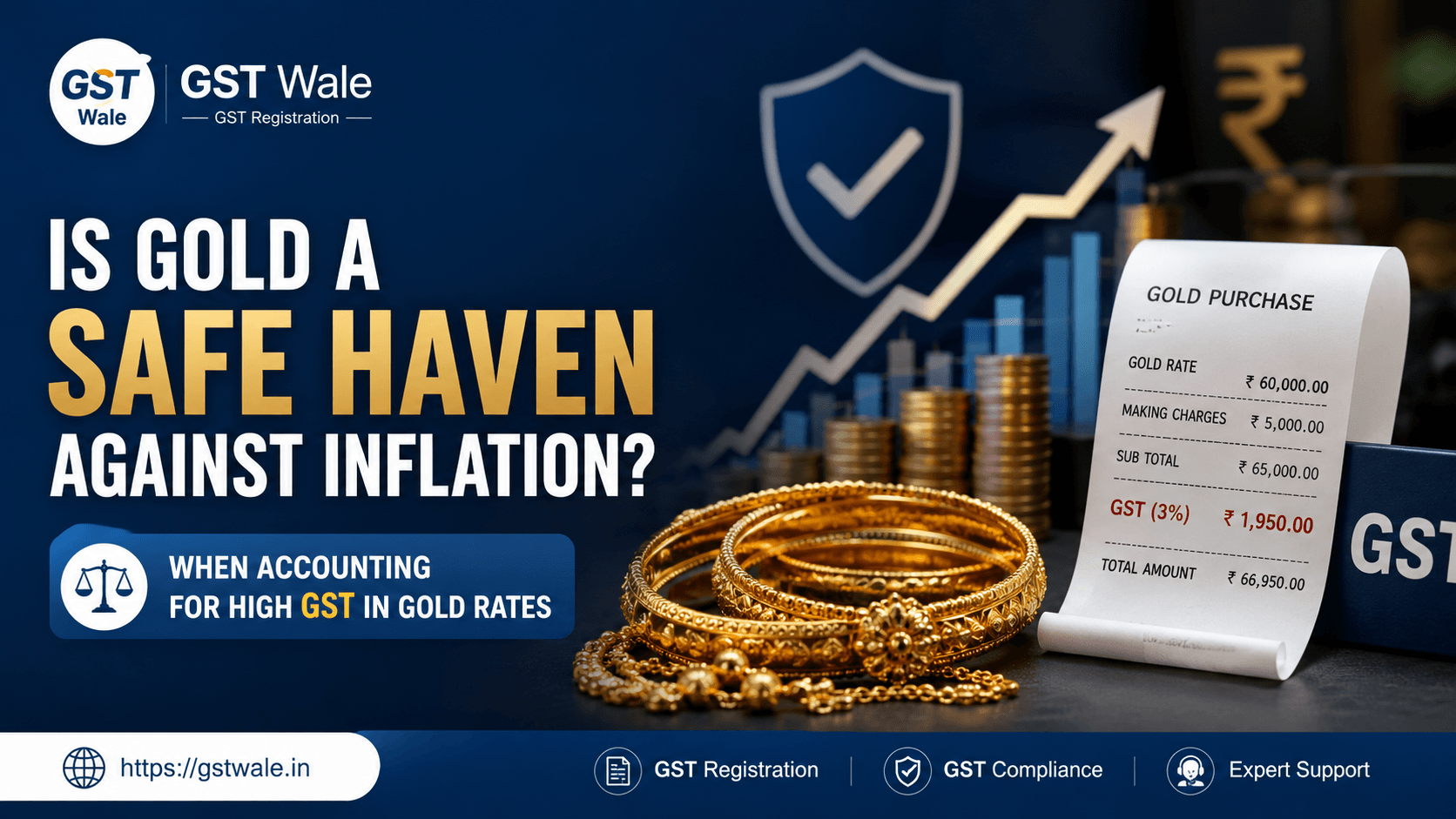
For generations, Indian families have viewed gold not just as jewelry, but as a dependable financial fortress. As a Chartered Accountant, I often hear clients ask whether the precious metal still holds its charm as a global inflation hedge given the current tax landscape. When you walk into a jeweler’s shop today, the final invoice includes a mandatory 3% gst in gold, which naturally makes many investors pause and reconsider their strategy. If you are a business owner looking to streamline your tax compliance or need professional help with GST Registration, understanding how these levies impact your overall portfolio is the first step toward smart wealth management.
The Reality of GST in Gold: Understanding the Impact
When the government introduced the unified tax structure, the gst for gold was pegged at a flat 3%. While this is relatively moderate compared to other luxury goods, it fundamentally changes the math for short-term investors.
Many people treat gold as an immediate liquid asset. However, from a tax perspective, you must realize that the moment you purchase gold, you have already incurred a "negative return" of 3% plus the making charges. To understand if gold acts as a true hedge, we have to look beyond the spot price and focus on the cost of gold ownership index, which accounts for these acquisition costs.
Breaking Down the Math
Let’s look at a simple example. Suppose you buy gold worth ₹1,00,000.
Base Price: ₹1,00,000
GST @ 3%: ₹3,000
Making Charges (approx. 10% + 18% GST on that charge): ₹11,800
Total Investment: ₹1,14,800
To break even, the market price of gold needs to appreciate by nearly 15% just to cover the taxes and making charges. This is why, as experts at GST Wale, we advise clients to view physical gold as a long-term store of value rather than a quick-flip investment.
Why Gold Remains a Hedge Despite Taxes
Even with the gst in gold, it remains one of the most effective tools for protecting purchasing power. Inflation eats away at the value of currency over time. While the gst rates on gold increase the acquisition cost, gold historically tracks against inflation more reliably than cash deposits or certain volatile equity instruments during economic downturns.
Factors Supporting Gold as a Safe Haven
Inverse Correlation: Gold prices often rise when the value of the Rupee falls.
Tangibility: In times of severe financial crisis, having a physical asset that is universally accepted remains unmatched.
Low Default Risk: Unlike corporate bonds or bank deposits, gold does not rely on the creditworthiness of a counterparty.
Strategies for Calculating Net Resale Value Gold
To make informed decisions, you need to be precise when calculating net resale value gold. Many investors fail to account for the "melt loss" and the resale spread. When you sell gold back to a jeweler, they typically deduct the making charges and offer a buyback rate that is slightly lower than the prevailing market spot price.
If you are treating gold as an investment, follow these steps:
Track the Spot Price: Always ignore the jewelry price and look at the 24K bullion spot price.
Factor in Tax: Deduct the initial 3% gst in gold from your profit margin calculations.
Optimize Form: Consider buying Gold ETFs or Sovereign Gold Bonds (SGBs) if you want to avoid the physical making charges, though remember that tax treatment differs for these instruments.
Frequently Asked Questions
Does the 3% gst in gold apply to old gold sold to a jeweler?
Generally, no. When you exchange old gold for new, GST is applicable only on the value addition and the new gold purchased. However, ensure you have proper documentation to avoid any disputes.
Is there a way to avoid gst for gold?
If you purchase physical gold, the 3% GST is mandatory. There are no legal loopholes to avoid this tax. If anyone suggests otherwise, be cautious of unauthorized transactions.
Should I prioritize SGBs over physical gold?
Sovereign Gold Bonds are excellent because they offer an interest component (currently 2.5% per annum) and are exempt from capital gains tax if held until maturity. They solve the "storage and tax" headache for many investors.
How does GST Wale help with gold-related tax planning?
We help businesses manage their tax liabilities, ensure they are compliant with all input tax credit regulations, and provide clarity on how gold investments sit within your broader tax profile.
Gold remains a cornerstone of financial security in India, provided you account for the gst in gold in your long-term planning. While taxes and making charges act as a hurdle, the protective nature of gold against currency devaluation is difficult to replicate.
At GST Wale, we believe that transparency is the best policy for your wealth. Whether you are a jeweler trying to manage your output tax liability or an individual investor trying to understand the tax implications of your gold holdings, we are here to provide expert guidance. Don't let tax confusion cloud your investment strategy—reach out to our expert team today and let us help you stay compliant and confident.
 Previous