


Everything You Need to Know About the IFF (Invoice Furnishing Facility) vs GSTR 1
Everything You Need to Know About the IFF (Invoice Furnishing Facility) vs GSTR 1
Everything You Need to Know About the IFF (Invoice Furnishing Facility) vs GSTR 1
If you are registered under GST, understanding gstr 1 is essential for maintaining proper compliance and ensuring your customers receive timely Input Tax Credit (ITC). Many taxpayers, especially those registered under the QRMP scheme, often get confused between the Invoice Furnishing Facility (IFF) and gstr 1. While both are used for reporting outward supplies, they serve different purposes and are applicable in different situations.
If you are planning a new business or expanding your operations, completing your GST Registration correctly is the first step towards hassle-free GST compliance. Once registered, knowing when to use IFF and gstr 1 can save time, avoid penalties, and improve business relationships.
In this guide, GST Wale explains the complete difference between IFF and gstr 1, their benefits, eligibility, filing process, and practical scenarios that every taxpayer should understand.
What is GSTR 1?
gstr 1 is a monthly or quarterly GST return used to report details of outward supplies made during a tax period. It includes invoices issued to registered and unregistered customers, debit notes, credit notes, exports, advances, and other outward supplies.
The information reported in gstr 1 becomes available to buyers through GSTR-2B and helps them claim eligible Input Tax Credit.
Businesses with higher turnover generally file gstr 1 every month, while eligible small taxpayers under the QRMP scheme file it quarterly.
What is Invoice Furnishing Facility (IFF)?
Invoice Furnishing Facility (IFF) is an optional facility introduced by the GST department for taxpayers registered under the QRMP Scheme.
Instead of waiting until the end of the quarter, eligible taxpayers can upload selected B2B invoices every month through IFF. This allows their customers to receive Input Tax Credit without waiting for the quarterly gstr 1 filing.
IFF is not a replacement for gstr 1. It is simply an optional facility that helps improve cash flow and customer satisfaction.
Understanding QRMP Scheme Details
The Quarterly Return Monthly Payment (QRMP) Scheme allows eligible taxpayers to file returns quarterly while paying tax every month.
Some important qrmp scheme details include:
- Applicable to eligible taxpayers meeting the prescribed turnover criteria.
- GST liability is paid every month.
- gstr 1 is filed quarterly.
- IFF can be used during the first two months of the quarter.
- Filing through IFF is completely optional.
The scheme provides significant small business tax relief by reducing the frequency of return filing while maintaining monthly tax payments.
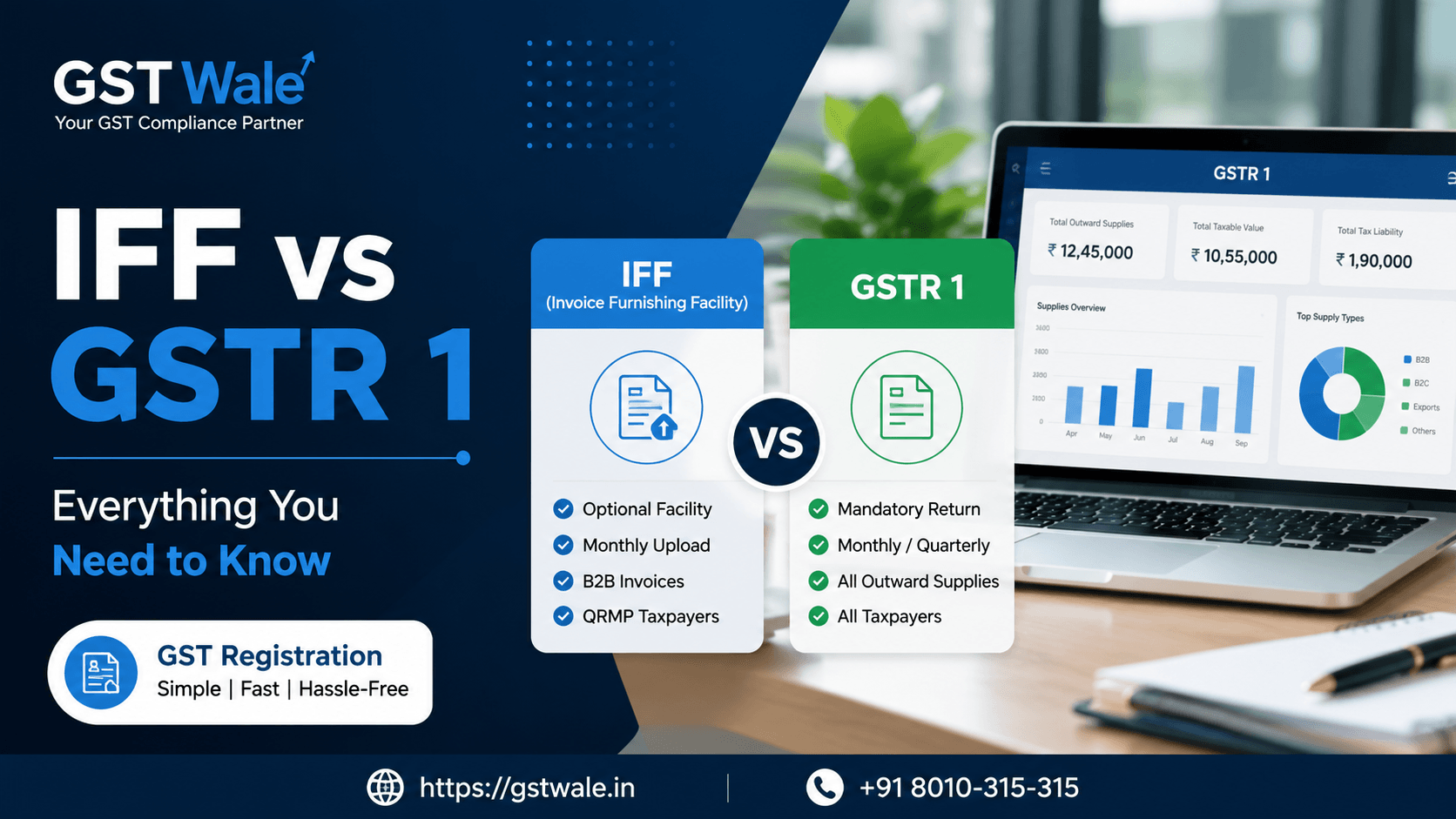
GSTR 1 vs IFF – Key Differences
Purpose
gstr 1 is the primary return for reporting all outward supplies.
IFF is an optional facility for reporting selected B2B invoices before filing quarterly gstr 1.
Who Can Use It?
gstr 1 is filed by all eligible registered taxpayers according to their filing frequency.
IFF is available only to taxpayers registered under the QRMP Scheme.
Filing Frequency
- gstr 1 can be monthly or quarterly.
- IFF supports iff monthly filing during the first two months of a quarter.
Invoice Coverage
gstr 1 includes all eligible outward supplies.
IFF allows reporting only selected B2B invoices.
Mandatory or Optional
Filing gstr 1 is mandatory.
IFF is completely optional.
When Should You Use IFF?
IFF is useful when your customers want immediate Input Tax Credit instead of waiting until the end of the quarter.
For example, suppose a supplier under QRMP issues invoices worth ₹4,00,000 in April to registered buyers. Instead of waiting until July to file gstr 1, the supplier can upload those invoices through IFF during April itself. This enables buyers to claim ITC much earlier.
This is one of the biggest advantages of iff monthly filing.
B2B Uploading Limits Under IFF
Businesses should also understand the applicable b2b uploading limits before using IFF.
Some important points include:
- Only B2B invoices can be uploaded.
- Uploading is available only during the first two months of each quarter.
- Uploaded invoices should not be reported again in gstr 1.
- Businesses should maintain accurate invoice records before submission.
Understanding these b2b uploading limits helps avoid duplication and compliance issues.
Benefits of GSTR 1
Using gstr 1 properly offers several advantages:
- Complete reporting of outward supplies.
- Smooth Input Tax Credit flow for customers.
- Better GST compliance.
- Reduced notices from the GST department.
- Accurate reconciliation with books of accounts.
- Improved transparency.
Timely filing of gstr 1 also builds trust among customers and vendors.
Benefits of Invoice Furnishing Facility
IFF offers several practical advantages for QRMP taxpayers.
Faster ITC for Customers
Customers need not wait until quarter-end.
Better Customer Relationships
Timely invoice reporting improves business confidence.
Reduced Follow-Up
Customers are less likely to request immediate filing.
Improved Cash Flow
Businesses benefit indirectly because buyers receive ITC sooner.
Supports Quarterly Taxpayers Compliance
IFF makes quarterly taxpayers compliance easier while keeping customers satisfied.
Should You Choose IFF or Only GSTR 1?
The answer depends on your business model.
If most of your customers are registered businesses that regularly claim Input Tax Credit, using IFF can be highly beneficial.
However, if your customers are mainly end consumers or unregistered buyers, filing only quarterly gstr 1 may be sufficient.
A professional GST consultant can evaluate your transaction pattern and recommend the best approach.
Common Mistakes to Avoid
Many businesses make avoidable errors while filing gstr 1 or using IFF.
Avoid these mistakes:
- Uploading incorrect GSTIN numbers.
- Reporting the same invoice twice.
- Missing filing deadlines.
- Ignoring reconciliation with accounting software.
- Not checking customer invoice details.
- Misunderstanding QRMP eligibility.
Simple precautions can save businesses from notices and penalties.
Step-by-Step Filing Process
Filing GSTR 1
- Log in to the GST portal.
- Select the relevant return period.
- Enter outward supply details.
- Verify invoice information.
- Validate all entries.
- Submit the return.
- File using DSC or EVC.
Filing Through IFF
- Log in to the GST portal.
- Select Invoice Furnishing Facility.
- Choose the relevant month.
- Upload eligible B2B invoices.
- Verify details carefully.
- Submit successfully.
Later, while filing gstr 1, ensure those invoices are not uploaded again.
Practical Example
Consider a wholesaler registered under the QRMP Scheme.
The business supplies goods worth ₹3,50,000 every month to registered retailers. If the wholesaler waits until the quarterly gstr 1, retailers cannot claim ITC immediately.
By using IFF for April and May, retailers receive invoice details earlier, improving business relationships while the wholesaler continues filing quarterly gstr 1.
This simple approach demonstrates how quarterly taxpayers compliance becomes more efficient without increasing filing complexity.
Frequently Asked Questions
Is IFF compulsory for QRMP taxpayers?
No. IFF is completely optional. Eligible taxpayers can directly file quarterly gstr 1 if they do not require monthly invoice reporting.
Can monthly taxpayers use IFF?
No. IFF is available only for taxpayers registered under the QRMP Scheme.
Does IFF replace GSTR 1?
No. IFF never replaces gstr 1. It is only an optional facility for uploading selected B2B invoices before the quarterly return.
Can invoices uploaded through IFF be reported again in GSTR 1?
No. The same invoices should not be reported again while filing gstr 1, as this may lead to duplication.
Who benefits the most from IFF?
Businesses dealing primarily with registered customers benefit the most because buyers receive Input Tax Credit earlier through iff monthly filing.
Understanding the difference between IFF and gstr 1 is essential for every GST-registered business. While gstr 1 remains the primary return for reporting outward supplies, IFF offers additional flexibility for QRMP taxpayers who want to provide faster Input Tax Credit to their customers. Choosing the right filing approach improves compliance, strengthens customer relationships, and supports efficient business operations.
At GST Wale, we help businesses with GST registration, return filing, QRMP compliance, reconciliation, and expert GST advisory. Whether you need assistance with gstr 1, understanding QRMP provisions, or ensuring accurate GST compliance, our experienced professionals are here to simplify every step. Contact GST Wale today and keep your business fully compliant with confidence.
 Previous