


How to Claim Correct RCM (Reverse Charge) in GST R 3b Return
How to Claim Correct RCM (Reverse Charge) in GST R 3b Return
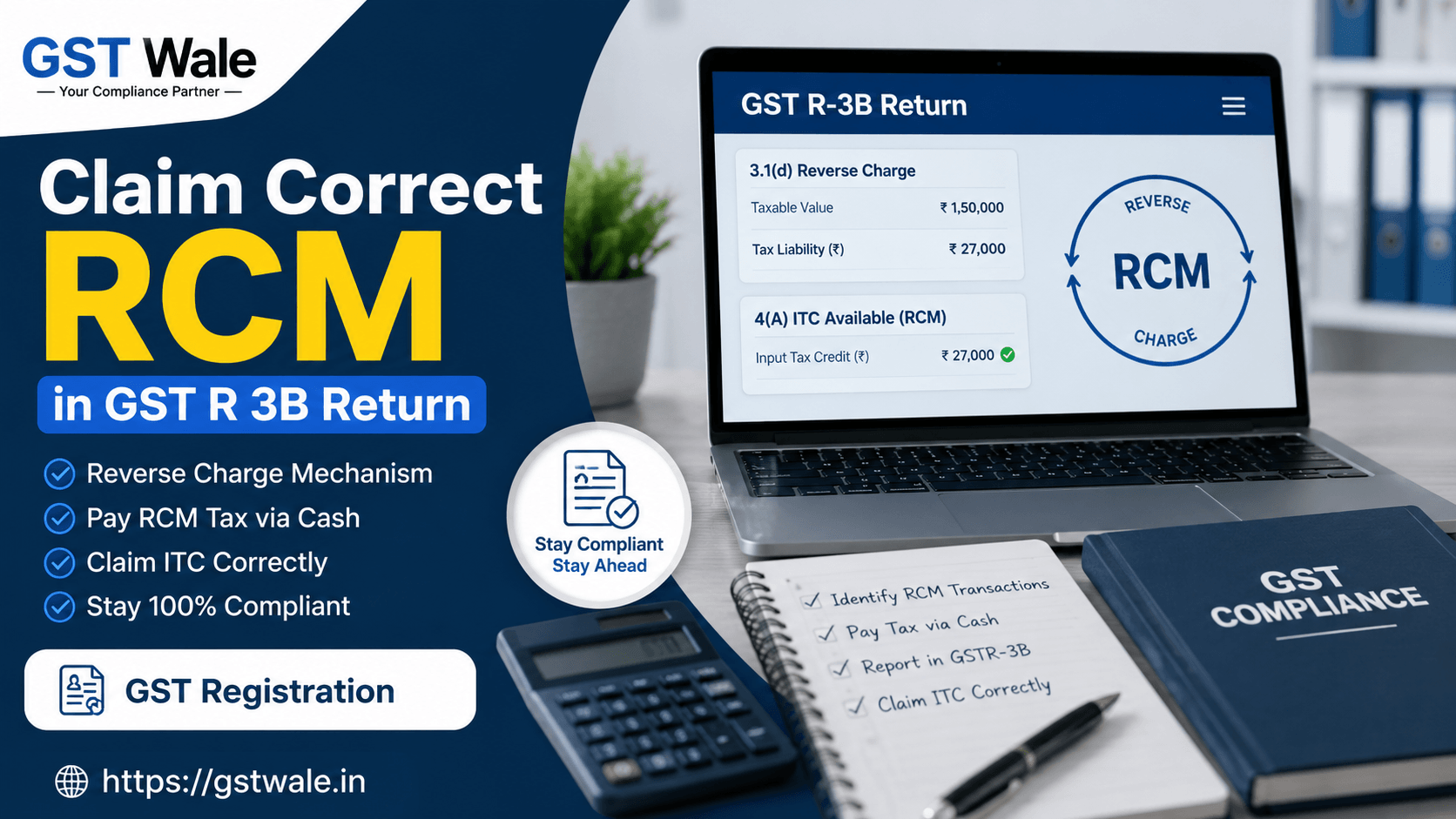
Businesses often make mistakes while reporting Reverse Charge Mechanism (RCM) transactions in gst r 3b, which can lead to notices, interest, or denial of Input Tax Credit (ITC). Understanding the correct method of reporting RCM is essential for every registered taxpayer. Whether you receive legal services, transport services, or any other inward supplies liable to RCM, proper disclosure in gst r 3b is necessary to remain compliant.
If you are starting a new business or becoming liable under GST, obtaining proper GST Registration is the first step towards hassle-free compliance. Once registered, understanding returns like gst r 3b becomes equally important to avoid unnecessary tax disputes.
Understanding Reverse Charge Mechanism in GST R 3B
The Reverse Charge Mechanism (RCM) shifts the responsibility of paying GST from the supplier to the recipient. Instead of the supplier collecting and depositing GST, the registered recipient pays the tax directly to the Government.
While filing gst r 3b, taxpayers must correctly disclose these transactions, pay the applicable tax, and then claim eligible ITC according to GST provisions.
What is Reverse Charge Mechanism?
Under the Reverse Charge Mechanism, GST liability is transferred to the recipient of goods or services. The recipient is responsible for calculating, paying, and reporting the GST.
Common examples include:
- Legal services provided by advocates.
- Goods Transport Agency (GTA) services under specified conditions.
- Import of services.
- Certain notified goods and services.
Correct reporting of these transactions in gst r 3b ensures proper tax compliance and avoids future litigation.
Who Should Report RCM in GST R 3B?
Every registered taxpayer receiving notified supplies under reverse charge is required to report them while filing gst r 3b. The responsibility lies entirely with the recipient.
Businesses should regularly review purchase invoices to identify any inward supplies liable to rcm before filing returns.
Examples of Inward Supplies Liable to RCM
- Advocate and legal consultancy services.
- Goods Transport Agency services.
- Import of services.
- Director services received by companies.
- Security services under notified conditions.
Maintaining proper records of these transactions helps in accurate filing of gst r 3b.
Where to Report RCM in GST R 3B?
Many taxpayers are confused about the exact tables for reporting reverse charge transactions. Understanding the return format helps avoid reporting errors.
Table 3.1(d)
All inward supplies liable to reverse charge should be disclosed under the appropriate section in gst r 3b. This table captures the taxable value and tax payable under reverse charge.
Table 4(A)
After paying the tax, eligible taxpayers can report the Input Tax Credit under the ITC section while filing gst r 3b.
Failure to disclose either liability or ITC correctly may result in mismatched records during departmental scrutiny.
Step-by-Step Process to Claim Correct RCM in GST R 3B
Step 1: Identify RCM Transactions
Review all purchase invoices received during the tax period. Verify whether any supplies fall under reverse charge notifications.
Step 2: Calculate GST Liability
Calculate CGST, SGST, or IGST applicable on the transaction based on GST provisions.
Step 3: Make RCM Tax Payment via Cash
One of the most important rules is that rcm tax payment via cash is mandatory. GST payable under reverse charge cannot be discharged using available ITC.
The payment must be made through the Electronic Cash Ledger before filing gst r 3b.
Step 4: Report Liability in GST R 3B
Enter the taxable value and tax amount under the reverse charge section while filing gst r 3b.
Step 5: Claim Eligible ITC
Once the tax has been successfully paid, taxpayers can proceed with claiming itc on rcm, provided all eligibility conditions under Section 16 of the CGST Act are fulfilled.
This allows businesses to recover the tax paid under reverse charge and reduce their overall tax burden.
Reverse Charge Mechanism Entries in Accounting
Proper accounting entries are equally important for accurate GST reporting.
Typical Reverse Charge Mechanism Entries
At the time of recording expense:
- Expense Account – Debit
- Supplier Account – Credit
At the time of RCM liability:
- Input CGST/SGST/IGST – Debit
- RCM GST Payable – Credit
After payment:
- RCM GST Payable – Debit
- Bank/Cash – Credit
These reverse charge mechanism entries help maintain proper books and simplify GST audits.
Example of RCM Reporting in GST R 3B
Suppose ABC Traders receives legal services worth ₹50,000 from an advocate.
- Taxable Value: ₹50,000
- GST @18%: ₹9,000
- GST Payable under Reverse Charge: ₹9,000
The business pays ₹9,000 through the Electronic Cash Ledger while filing gst r 3b. After payment, it becomes eligible for claiming ITC of ₹9,000 in the same return, subject to eligibility.
This example demonstrates how legal services gst transactions should be handled correctly.
Common Mistakes While Filing GST R 3B Under RCM
- Missing inward supplies liable to rcm.
- Using ITC instead of cash for tax payment.
- Incorrect reverse charge mechanism entries.
- Claiming ITC before paying RCM tax.
- Reporting RCM under the wrong table.
- Ignoring legal services gst liability.
- Mismatch between books and GST returns.
A thorough monthly reconciliation helps avoid these errors while filing gst r 3b.
Documents Required for Proper RCM Compliance
- Purchase invoices.
- Self-invoices where applicable.
- Payment vouchers.
- Electronic Cash Ledger payment details.
- GST working papers.
- Vendor agreements.
Keeping organised documentation strengthens compliance and supports your claims during departmental verification.
Benefits of Correct RCM Reporting in GST R 3B
- Avoids interest and penalties.
- Ensures seamless ITC availability.
- Improves GST compliance rating.
- Reduces departmental notices.
- Maintains accurate accounting records.
- Supports smooth GST audits.
Consistent and accurate filing of gst r 3b builds confidence during tax assessments and keeps business operations stress-free.
Frequently Asked Questions
1. Can RCM liability be paid using Input Tax Credit?
No. Under GST law, reverse charge liability must be discharged through the Electronic Cash Ledger. ITC cannot be utilised for payment of RCM tax.
2. When can ITC be claimed on RCM?
After the reverse charge tax has been paid through cash and all eligibility conditions under the GST law are satisfied, the taxpayer can claim the eligible Input Tax Credit.
3. Are legal services always covered under reverse charge?
In many cases, legal services provided by advocates to business entities are covered under reverse charge provisions. Businesses should verify the applicable notifications before filing returns.
4. Is RCM applicable to all purchases?
No. Reverse charge applies only to specific notified goods, services, and transactions prescribed under GST law.
5. What happens if RCM is reported incorrectly in GST R 3B?
Incorrect reporting may result in tax notices, interest liability, delayed ITC, penalties, and reconciliation issues. It is advisable to review all reverse charge transactions carefully before filing the return.
Correct reporting of Reverse Charge Mechanism in gst r 3b is essential for every GST-registered business. From identifying inward supplies liable to rcm and completing rcm tax payment via cash to claiming itc on rcm and maintaining proper reverse charge mechanism entries, every step plays an important role in ensuring compliance. Businesses receiving legal services gst or any other notified supplies should carefully review their transactions before filing returns to avoid costly mistakes.
Need Expert Help with GST Compliance?
At GST Wale, our experienced GST professionals help businesses with GST registration, return filing, reverse charge compliance, ITC reconciliation, and complete GST advisory services. Whether you need assistance in accurately filing gst r 3b or resolving complex GST issues, our experts are here to provide practical, reliable, and timely support. Get in touch with GST Wale today and ensure your GST compliance is always accurate and hassle-free.
 Previous