


Mistakes to Avoid in Choosing an ITR Return Filing Plan for Small e-Commerce Sellers
Mistakes to Avoid in Choosing an ITR Return Filing Plan for Small e-Commerce Sellers
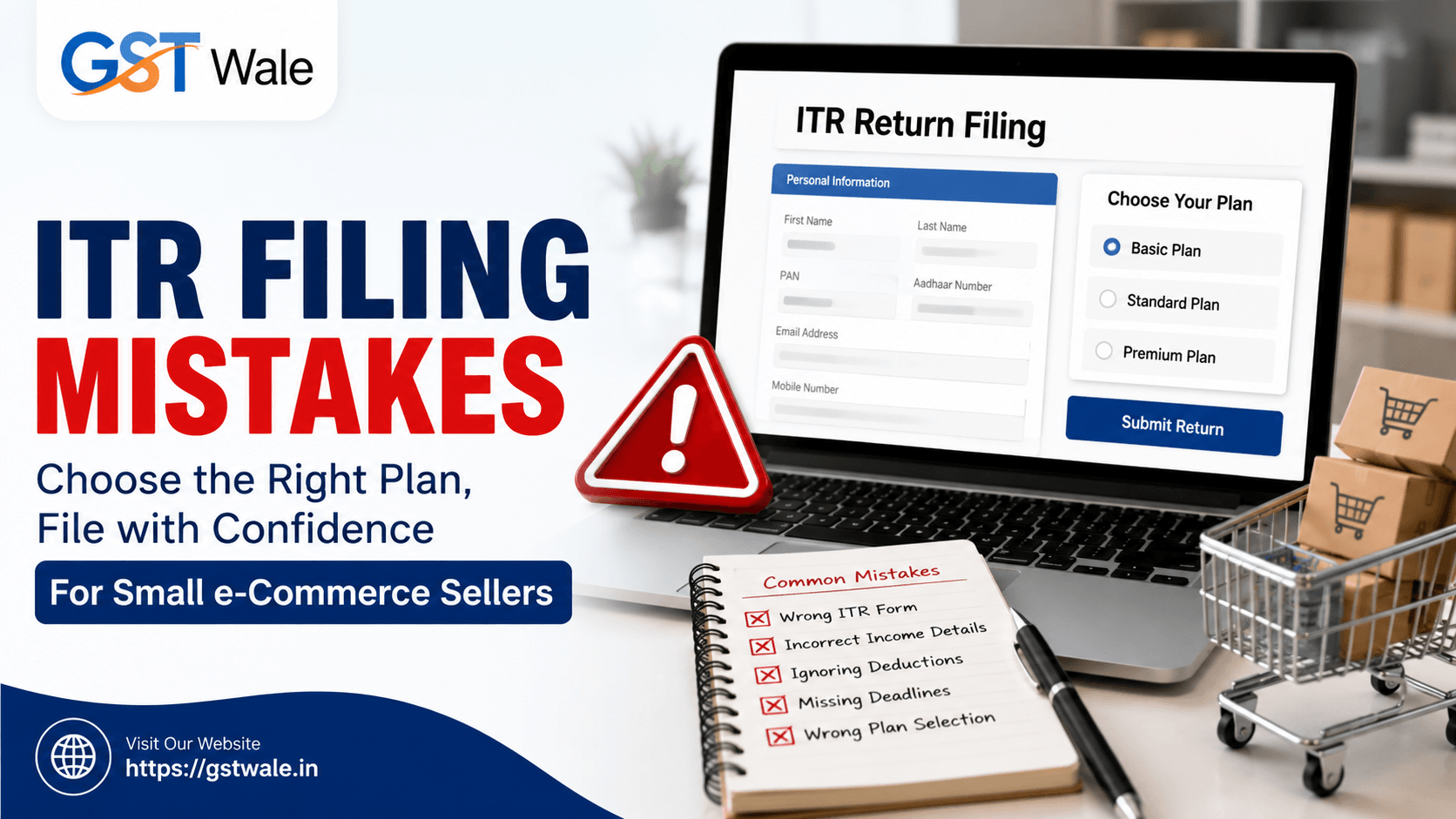
Running an e-commerce business in India is an exciting journey, but let’s be honest—the taxation part can feel like navigating a maze. Whether you are selling on Amazon, Flipkart, or your own website, keeping your finances in order is critical. Many sellers often get confused when choosing the right plan for their ITR Filing, which is a foundational step in your financial compliance. Proper ITR return filing isn’t just about avoiding penalties; it’s about ensuring your hard-earned profits aren't eaten away by avoidable tax liabilities or notices from the Income Tax Department.
At GST Wale, we interact with hundreds of small business owners daily. We’ve noticed that when it comes to ITR return filing, many sellers fall into traps that can be easily avoided with a little foresight. Let’s break down these mistakes so you can focus on growing your brand.
Ignoring the Nuances of E-commerce Tax Rules
One of the biggest mistakes we see is sellers treating their business tax exactly like a standard salaried return. E-commerce is different. You have to account for commission charges, platform fees, logistics costs, and returns.
When looking at ITR return filing, many sellers fail to understand e-commerce tax rules. For example, platforms like Amazon and Flipkart deduct TCS (Tax Collected at Source). If you don’t reconcile these deductions correctly in your tax records, you are essentially paying more tax than you owe. Always ensure your accounting software or manual ledger matches the Form 26AS generated by the Income Tax portal.
Falling for the Wrong Tax Plan: Presumptive vs. Regular
A common query we get is, "Should I opt for the presumptive business tax plan" While Section 44AD of the Income Tax Act is popular because it allows you to declare 6% or 8% of your turnover as profit without maintaining detailed books, it isn’t for everyone.
The Trap: If your actual profit margin is lower than 6%, opting for the presumptive business tax plan might result in you paying more tax than your actual profit warrants.
The Reality: ITR for Amazon Flipkart sellers often involves high operating costs. If you aren't calculating your net margins carefully, you might be opting for a plan that doesn't save you money. Always perform a cost-benefit analysis before selecting your tax scheme.
Lack of Documentation for Retail Tax E-filing
Many small sellers think that because they aren't a large corporation, they don't need to keep invoices or receipts. This is a dangerous oversight. Proper retail tax e-filing requires you to have a trail of your purchases and sales.
If you get flagged for scrutiny, you need to prove your expenses. If you cannot provide supporting documents for the business deductions you claimed during your ITR return filing, the tax officer has the power to disallow those expenses. This can lead to a sudden, massive tax demand that could cripple a small business.
Treating Digital Sales Tax Return as a One-Time Activity
Many sellers view their digital sales tax return as a task they can finish in an hour on July 31st. We strongly advise against this. Compliance is a year-round process. By waiting until the last minute, you lose the opportunity to plan your taxes, maximize your deductions, and rectify errors in your books.
How GST Wale Suggests You Approach Filing
Reconcile Monthly: Don't wait for the year-end. Match your platform reports with your bank statements every month.
Separate Finances: Never mix personal expenses with business expenses. It complicates ITR return filing significantly.
Hire Professionals: If you are dealing with multiple marketplaces, the complexity is higher. Get an expert to look at your ITR return filing to ensure you aren't missing out on tax credits.
Frequently Asked Questions (FAQs)
Is it mandatory for Amazon/Flipkart sellers to file ITR?
Yes, if you are earning income through business, you are required to file an income tax return regardless of whether you make a profit or a loss.
Can I claim platform fees as a business expense?
Absolutely. All commissions, logistics fees, and advertising costs charged by marketplaces are legitimate business expenses and can be deducted during ITR return filing.
What happens if I file my ITR late?
Filing after the due date can attract late fees under Section 234F, and you may lose the ability to carry forward business losses to subsequent years.
How do I know if the presumptive scheme is right for me?
If you have a high-margin business and don't want to maintain audited books of accounts, the presumptive scheme is often better. If you have low margins or high expenses, regular accounting is usually more tax-efficient.
ITR return filing shouldn't be a source of stress for your e-commerce business. By avoiding these common pitfalls and staying organized, you can focus on what you do best—selling your products. Remember, a small investment in professional guidance can save you from huge penalties and headaches down the road.
 Previous