


How to E File ITR and Carry Forward Stock Market Business Losses to Next Year
How to E File ITR and Carry Forward Stock Market Business Losses to Next Year
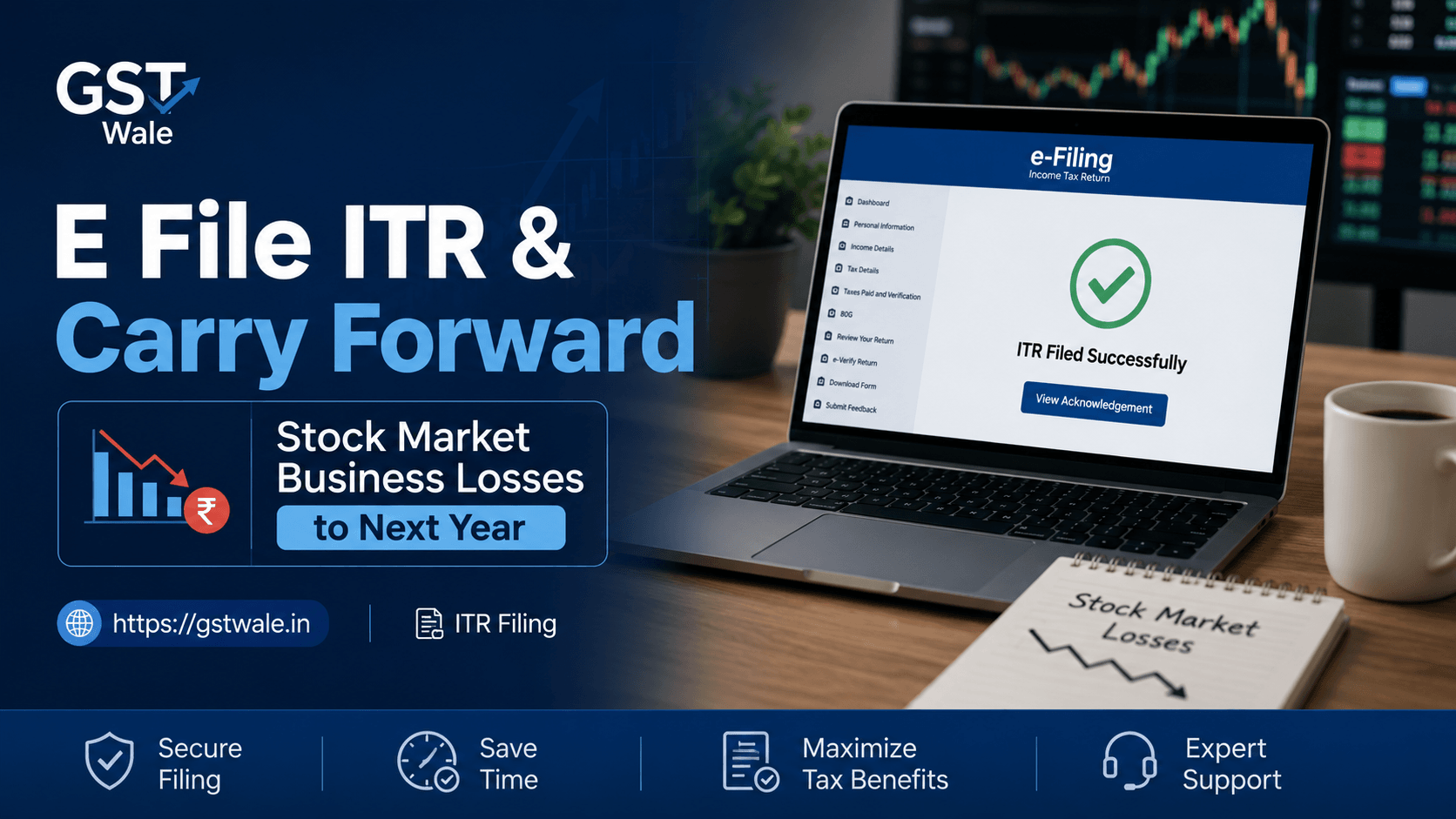
Many traders and investors enter the stock market with hopes of high returns, but often find themselves facing unexpected losses. While no one likes seeing red on their portfolio, these losses can actually serve as a tax-planning tool if managed correctly. If you are struggling with your tax obligations, our team at GST Wale provides expert ITR Filing services to ensure you don't miss out on these benefits. When you decide to e file itr, you must ensure that your trading activity is correctly classified to leverage the carry forward trading losses provision effectively.
Why You Must E File ITR for Trading Losses
Many people assume that if they have incurred a loss, they do not need to file an Income Tax Return (ITR). This is a common and costly mistake. To claim the benefit of a business loss tax offset, filing your return before the due date is mandatory. If you fail to e file itr by the deadline, the Income Tax Department will not allow you to carry forward your losses to subsequent years.
Think of it as an insurance policy. By declaring your losses today, you create a "tax asset" that can reduce your taxable income when you finally turn a profit in the future.
Understanding the Difference: Speculative vs. Non-Speculative Losses
Before you e file itr, it is crucial to distinguish between the types of trading activities you have engaged in. The Income Tax Act treats these differently:
Speculative Business Income: Intraday trading in equity (cash segment) is considered speculative. The loss from this can only be set off against speculative profit.
Non-Speculative Business Income: Trading in F&O (Futures and Options), even if done intraday, is treated as a non-speculative business activity. This is a massive advantage because non-speculative business losses can be set off against any other head of income, except salary.
How to Carry Forward Trading Losses Correctly
To successfully carry forward your losses, you need to follow a systematic process during the e file itr procedure.
Step 1: Audit Your Books
Ensure your P&L statement and balance sheet are ready. Even if you are an individual trader, if your turnover exceeds the specified limit, a tax audit may be required.
Step 2: Choose the Right ITR Form
Selecting the correct form is vital. For traders with business income, you generally need to file ITR-3. Using the wrong form can lead to a defective return notice.
Step 3: Reporting in the Portal
When you log in to e file itr on the official portal, navigate to the "Schedule BP" (Business or Profession) section. Here, you must report your turnover and net profit/loss.
Step 4: Applying Set Off Rules
You must adhere to the set off rules. For instance, a short term capital loss ITR reporting allows you to set off the loss against short-term or long-term capital gains. If you still have a net loss after all set-offs, you can carry it forward for up to 8 years (for business losses) or 8 years (for capital losses).
Practical Tips for Traders Filing Taxes
Don't Ignore Your Documents: Keep your contract notes and tax invoices from your broker handy. They are your primary proof if the department sends a query.
Timing Matters: Always e file itr well before the July 31st deadline. Late filing strictly prohibits the carry-forward of business and capital losses.
Documentation is King: If you are claiming expenses like internet charges, trading software subscriptions, or advisory fees, keep the bills. These expenses reduce your net business income, which is a legitimate tax-saving strategy.
Frequently Asked Questions
Can I carry forward a loss if I file my return after the due date?
No. To carry forward short term capital loss ITR filings or business losses, you must submit your return by the prescribed due date. Late filing forfeits this right.
Can I set off trading losses against my salary income?
No, business losses (other than house property losses) cannot be set off against salary income. However, they can be set off against other business profits or capital gains.
Do I need to report intraday losses if I have other income?
Yes. Even if you have a salary or rental income, you must report your trading activity when you e file itr to ensure your tax profile remains transparent and compliant.
How many years can I carry forward my F&O losses?
Under current tax laws, non-speculative business losses (like F&O) can be carried forward for 8 consecutive assessment years.
Simplify Your Tax Journey with GST Wale
Navigating the complexities of stock market taxation, understanding set off rules, and ensuring your documentation is perfect can be overwhelming for any trader. Why stress over technicalities when you can focus on your next big trade?
At GST Wale, we specialize in helping individuals and business owners streamline their tax compliance. From accurate classification of your trades to ensuring your losses are carried forward in your e file itr submission, we handle it all with precision.
 Previous