


How to Claim Tax Rebate Under Section 87A in Your ITR Form
How to Claim Tax Rebate Under Section 87A in Your ITR Form
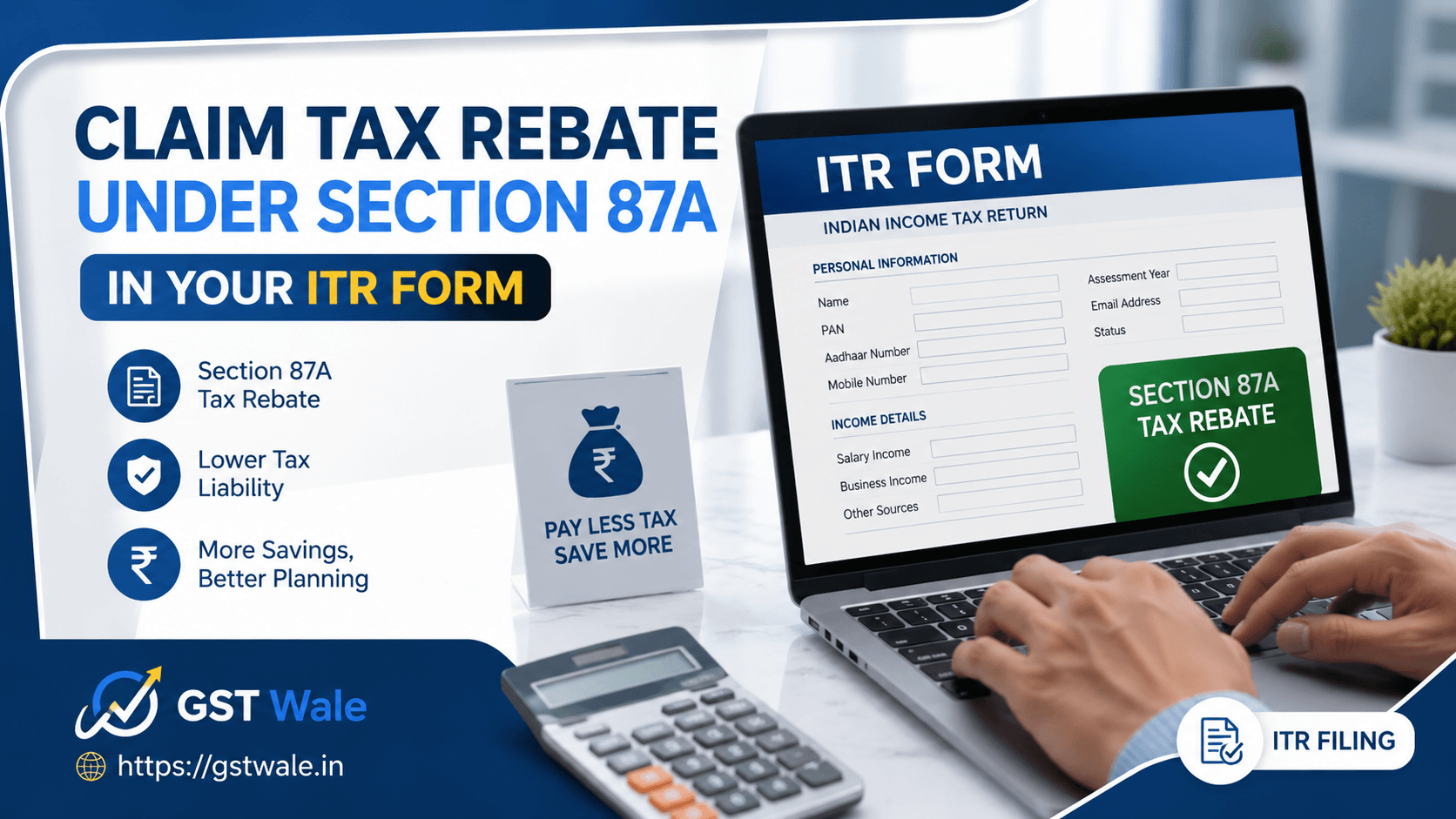
If you are preparing your itr form this year, understanding the tax rebate available under Section 87A can help you reduce your tax liability or even make it zero in eligible cases. Many taxpayers either miss this benefit or make mistakes while filing their income tax return form, leading to unnecessary tax payments. At GST Wale, we regularly help individuals and business owners complete their tax compliance accurately so they can enjoy every eligible tax benefit.
Whether you prefer ITR Filing support or wish to complete your it filing yourself, knowing how Section 87A works is essential before submitting your itr form. In this guide, we explain everything in simple language with practical examples so you can confidently file income tax return online without confusion.
What Is Section 87A in the ITR Form?
Section 87A is a tax rebate provided by the Government of India for eligible resident individual taxpayers. Instead of reducing your taxable income, this rebate directly reduces the amount of income tax payable. If you qualify, the rebate is automatically reflected while preparing your itr form, provided your income and tax calculations are correct.
This provision is especially beneficial for salaried employees, freelancers, professionals, pensioners, and small business owners whose taxable income falls within the prescribed limit.
Who Can Claim Section 87A Rebate in the ITR Form?
You can claim the rebate only if you satisfy the prescribed eligibility conditions. Before submitting your itr form, verify the following:
- You must be a resident individual.
- Your total taxable income should be within the eligible limit under the applicable tax regime.
- The rebate is not available to companies, firms, LLPs, or HUFs.
- Your income tax return form should be filed correctly with accurate income details.
Even if your income is close to the threshold, proper tax planning can sometimes help you remain eligible for the rebate.
How Much Tax Rebate Can You Get?
The rebate amount depends on the applicable financial year's tax provisions and the tax regime selected while filing your itr form. The rebate cannot exceed the actual tax payable.
For example, if your eligible rebate is higher than your calculated tax, your income tax liability can become zero. However, surcharge, if applicable, and certain other taxes may still need to be considered depending on your circumstances.
Example
Suppose your taxable income falls within the eligible limit and your calculated income tax is ₹18,000. If you qualify under Section 87A, the rebate can reduce your tax liability up to the eligible amount, making your final income tax payable nil.
This is why correctly preparing your itr form is extremely important.
Step-by-Step Process to Claim Tax Rebate Under Section 87A
Step 1: Calculate Your Total Income
Include income from salary, business, profession, house property, capital gains, and other sources before preparing your itr form.
Step 2: Claim Eligible Deductions
Claim deductions available under various sections wherever applicable. These deductions reduce your taxable income before tax is calculated.
Step 3: Compute Tax Liability
Calculate income tax according to the tax regime selected in your income tax return form.
Step 4: Check Eligibility
Verify whether your taxable income falls within the prescribed limit for claiming Section 87A rebate.
Step 5: Verify Auto Calculation
When preparing your itr form through the official portal, the rebate is generally calculated automatically if all details are entered correctly.
Step 6: Verify Before Submission
Double-check your calculations, deductions, bank details, and tax payments before you file income tax return online.
Documents Required Before Filing Your ITR Form
Keeping the necessary documents ready makes the filing process faster and reduces the chances of errors.
- PAN Card
- Aadhaar Card
- Form 16 (for salaried individuals)
- Bank statements
- Interest certificates
- Investment proof
- TDS certificates
- Capital gains statements, if applicable
- Business income records, where relevant
Common Mistakes While Claiming Section 87A
Many taxpayers unknowingly lose the benefit because of avoidable mistakes while preparing their itr form.
- Selecting the wrong tax regime.
- Incorrect calculation of taxable income.
- Ignoring additional sources of income.
- Filing an incorrect income tax return form.
- Claiming deductions without supporting documents.
- Submitting the return without proper verification.
A careful review before submitting your itr form can prevent notices and delays in processing.
Why Accurate ITR Form Filing Matters
An accurately prepared itr form offers benefits beyond tax compliance. It helps while applying for loans, visas, government tenders, and financial products. Banks and financial institutions often consider previous income tax return form records as proof of income.
Timely it filing also helps avoid late filing fees, interest, and unnecessary compliance issues. Whether you choose itr online filing or professional assistance, accuracy should always be your priority.
Tips for Hassle-Free ITR Online Filing
- Keep all income records ready before starting.
- Reconcile TDS with Form 26AS and AIS.
- Verify bank account details carefully.
- Choose the correct income tax return form.
- Review every section before submitting your itr form.
- Complete e-verification immediately after filing.
- Maintain copies of all supporting documents.
These simple practices make it easier to file income tax return online and reduce the chances of future notices.
Frequently Asked Questions
1. Can everyone claim the rebate under Section 87A?
No. Only eligible resident individual taxpayers whose taxable income falls within the prescribed limit can claim the rebate while filing their itr form.
2. Do I need to apply separately for Section 87A?
No. If you enter your income correctly in the itr form and satisfy the eligibility conditions, the rebate is generally calculated automatically.
3. Can business owners claim the Section 87A rebate?
Yes. Resident individuals earning business or professional income may claim the rebate if they meet the prescribed income conditions.
4. Can I complete my itr online without professional help?
Yes. Many taxpayers successfully complete itr online. However, if your income includes multiple sources, capital gains, or business income, professional guidance can help avoid errors.
5. What happens if I make a mistake in my itr form?
If you discover an error after submission, you may be able to file a revised return within the applicable timelines, subject to the Income Tax Department's rules.
Conclusion
Claiming the tax rebate under Section 87A is one of the easiest ways to legally reduce your income tax liability, but only when your itr form is prepared accurately. Understanding your eligibility, selecting the correct income tax return form, and reviewing your calculations carefully can save both money and unnecessary stress. Whether you plan to file it returns online yourself or seek expert assistance, paying attention to every detail is essential for successful tax compliance.
Choose GST Wale for Stress-Free Tax Filing
At GST Wale, we help salaried employees, professionals, freelancers, and business owners complete their itr form accurately and on time. Our experienced tax professionals ensure every eligible deduction and rebate is claimed while maintaining complete compliance with the latest income tax rules. If you want reliable guidance, faster processing, and error-free it filing, GST Wale is ready to assist you every step of the way.
 Previous