


Spotting Anomalies: How to Cross-Reference GSTR-2B vs Your Purchase Books Using a Vendor's GSTIN Number
Spotting Anomalies: How to Cross-Reference GSTR-2B vs Your Purchase Books Using a Vendor's GSTIN Number
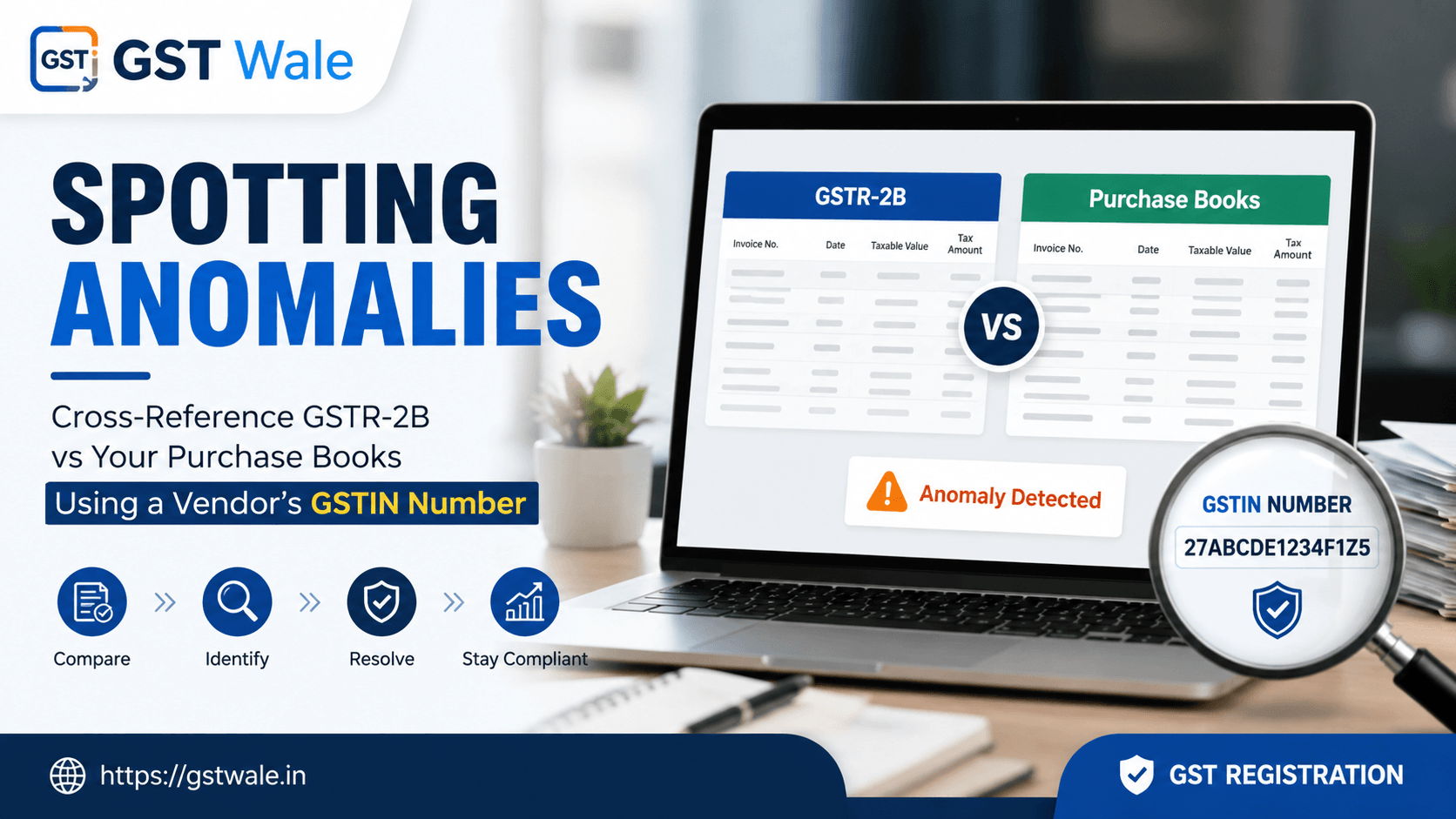
Managing GST compliance in India can often feel like solving a never-ending puzzle, especially when it comes to Input Tax Credit (ITC). At GST Wale, we constantly hear from business owners who struggle with the discrepancies between what they have recorded in their books and what reflects on the GST portal. Before you worry about these gaps, ensure your business is fully compliant by getting your GST Registration done correctly from the start. A primary tool in this reconciliation process is the vendor’s gstin number, which acts as the unique identifier for every transaction in the GST ecosystem.
If you aren't reconciling your books regularly, you are likely leaving money on the table or inviting notices from the tax department. Let’s dive into how you can effectively spot anomalies by leveraging the gstin number.
Understanding the Power of the GSTIN Number in Reconciliation
The gstin number is more than just a 15-digit alphanumeric code; it is the backbone of the entire Goods and Services Tax framework. When you engage in goods and services tax registration, you are assigned this number to track every movement of credit and liability.
When you perform internal financial auditing, your goal is to ensure that the invoices received from your suppliers match exactly with the data they have uploaded in their GSTR-1, which eventually populates your GSTR-2B. If there is a mismatch, the gstin number is your first point of reference to identify which specific vendor is causing the discrepancy.
Step-by-Step Guide: Comparing GSTR-2B vs. Purchase Books
To keep your records clean, follow this systematic approach to cross-referencing:
Download Your Data: Extract your purchase register for the month, ensuring you have a column dedicated to the gstin number of every vendor.
Pull GSTR-2B: Log in to the GST portal and download the GSTR-2B statement. This statement is a snapshot of all invoices reported by your suppliers.
Use Tax Matching Algorithms: While manual checking is possible for small businesses, relying on reconciliation automated software is far more efficient. These tools use advanced tax matching algorithms to pair invoice numbers, dates, and amounts against the specific gstin number provided.
Isolate Discrepancies: Once the software runs, you will likely find three categories:
Matched: Everything is in order.
Missing in GSTR-2B: You have the invoice, but the vendor hasn't uploaded it.
Mismatch in Values: The invoice amount or tax rate differs between your books and the portal.
The Role of Vendor Scoring in Risk Mitigation
Not all vendors are created equal. One of the best practices we recommend at GST Wale is the creation of bad vendor scoring sheets. By tracking how often a specific gstin number appears in your "discrepancy list," you can assign a risk score to that supplier.
If a vendor repeatedly fails to file their returns on time, your ITC remains blocked, affecting your working capital. A vendor with a high risk score is a signal that you should either renegotiate your payment terms or reconsider your procurement strategy with them.
Why Manual Reconciliation is Risky
Many business owners still rely on Excel spreadsheets to match entries. While this might work for a handful of transactions, it is prone to human error. A single typo in a gstin number can lead to incorrect data mapping.
Automated tools eliminate these errors by instantly flagging any invoice where the gstin number doesn't match the supplier’s master record. This level of precision is essential for avoiding the interest and penalties associated with wrongly claimed ITC.
Frequently Asked Questions
What happens if I don't reconcile my GSTR-2B with my purchase books?
Failing to reconcile can lead to the reversal of ITC, payment of interest, and potentially being flagged by the department for scrutiny. Always ensure your gstin number records are accurate to protect your credit.
How often should I perform this reconciliation?
We recommend a monthly reconciliation. Doing it before you file your GSTR-3B is the golden rule of tax compliance.
Can a wrong gstin number on an invoice invalidate my ITC?
Yes. If the gstin number on the invoice does not match the GST registration details of the supplier or your own, the system may not reflect the invoice correctly, making it difficult to claim legitimate credit.
What is the advantage of using reconciliation automated software?
It saves hours of manual labor, reduces the chances of human error, and provides a clear audit trail for your internal financial auditing processes.
Does GST Wale assist with reconciliation?
Absolutely. At GST Wale, we don’t just help with goods and services tax registration; we guide you through the entire lifecycle of tax management, including complex reconciliations.
Take Control of Your Tax Compliance
Your gstin number is your window into your tax health. By staying disciplined with your purchase book reconciliations and keeping a close eye on your vendors, you ensure that your business remains healthy and audit-ready. Don't wait for a notice to realize your accounts are misaligned.
If you find the process of cross-referencing overwhelming, reach out to the experts at GST Wale. We specialize in simplifying the complex world of GST, ensuring your business stays compliant while you focus on growth. Contact GST Wale today—let’s ensure your gstin number reflects the success your business deserves.
 Previous